What You Need to Know
Kenya’s economic growth has historically lifted millions out of poverty, but recent findings indicate a significant slowdown in poverty reduction. A joint study reveals that even as the economy expands, fewer individuals escape deprivation, raising concerns about meeting Sustainable Development Goals. The report highlights structural weaknesses and calls for policy reforms to address these issues.
Africa-Press – Kenya. KENYA’s economic growth has helped lift millions out of poverty over the past two decades, but new findings show the pace of progress has slowed sharply.
This has left the country at risk of missing key global development targets with the pace of poverty reduction slowing significantly.
The joint study by Kenya Institute for Public Policy Research and Analysis, Kenya National Bureau of Statistics, the World Bank, United Nations Children’s Fund and researchers from the University of Nairobi highlights a troubling shift.
Poverty is now less responsive to growth, meaning that even when the economy expands, fewer people are escaping deprivation.
“Before the Covid-19 pandemic, Kenya had made gradual gains in reducing poverty. However, the economic shock triggered by the crisis reversed much of that progress, pushing poverty levels back above pre-pandemic levels and exposing underlying structural weaknesses,” the report reads in part.
While inequality has declined, measured by a drop in the Gini coefficient from 47 per cent in 2005-06 to 38.4 in 2022—the report finds that economic growth has not been sufficiently inclusive.
Gini coefficient is a standard statistical measure of economic inequality, representing income or wealth distribution within a nation on a scale from 0 to 1 (or 0 to 100).
A score of 0 represents perfect equality, while 1 indicates maximum inequality, commonly used to track income distribution trends.
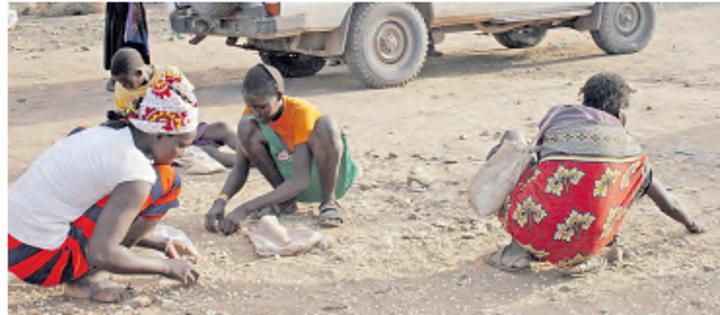
According to the report dubbed “Poverty and Distributional Impacts of Fiscal Policy in Kenya”, poverty remains heavily concentrated among rural populations, particularly in Arid and Semi-Arid Lands (ASALs), where livelihoods are more vulnerable to climate shocks and limited infrastructure.
Female-headed households and children are also disproportionately affected, with children facing high levels of multidimensional poverty that extend beyond income to include education, health and living standards.
This uneven distribution underscores a key concern: growth has not translated into broad-based improvements in living conditions.
A major factor is the nature of job creation. Although Kenya boasts a relatively high labour force participation rate of 73.7 per cent, most employment is informal, low-paying and characterised by low productivity.
Formal job creation has lagged behind population growth, limiting opportunities for upward mobility.
The Federation of Kenya Employers has pegged the recent wage pressures on government policy.
“Increased statutory deductions have reduce employees’ take-home pay while raising employers’ costs, particularly where employers are required to match contributions,” FKE executive director Jacqueline Mugo, told the Star.
Employers are increasingly restructuring and freezing hiring.
The FKE Annual Survey 2025 conducted between December 4 and 15 2025, shows overall employment dropped by 12 per cent , with the slowdown most visible in manufacturing, wholesale and retail trade, accommodation and food services, transport, and financial services.
Unemployment has more than doubled, rising from 2.6 per cent in 2014 to 5.6 per cent in 2023, KNBS data shows, with youth and women disproportionately affected.
Labour underutilisation remains widespread, further weakening the link between growth and poverty reduction.
The findings raise serious questions about Kenya’s ability to meet the Sustainable Development Goals, particularly the targets of ending extreme poverty and halving overall poverty by 2030.
Analysts warn that without significant policy shifts, the country is unlikely to achieve these goals.
At the same time, fiscal constraints are tightening. Rising public debt, increasing interest costs and slowing economic growth are limiting the government’s ability to expand social spending.
These pressures have been compounded by persistent poverty, creating a difficult balancing act for policymakers.
Public dissatisfaction with taxation has also intensified, most notably during the Generation Z protests of 2024, which forced the withdrawal of the Finance Bill 2024 and highlighted growing resistance to additional tax burdens.
The report takes a deep dive into the role of fiscal policy—taxation and public spending—in shaping poverty and inequality outcomes.
It finds that while fiscal policy in Kenya reduces inequality to some extent, its overall impact is weaker compared to other countries. More strikingly, the current fiscal system may actually increase poverty levels.
Indirect taxes, such as value-added tax, have a broad impact across all income groups, often placing a heavier burden on lower-income households relative to their earnings.
In contrast, direct taxes, particularly personal income tax, are more progressive and largely borne by higher-income earners.
The government has sustained social protection programmes, including cash transfers, which provide critical support to vulnerable households.
However, the report emphasises that in-kind transfers, especially in education, play an even more significant role in cushioning poorer households.
Without these in-kind benefits, most households would be net contributors to the fiscal system, meaning they pay more in taxes than they receive in benefits. Only the poorest decile would remain net beneficiaries.
Rural and ASAL regions benefit the most from these transfers, largely due to investments in education. Urban households, on the other hand, tend to be net payers, contributing more through taxes and social insurance.
While primary and secondary education spending is pro-poor, benefits at the tertiary level are less equitably distributed, reflecting unequal access to higher education.
Despite legal and policy frameworks aimed at promoting gender equality, the report finds that significant disparities remain.
‘Women are more likely to experience poverty and economic vulnerability due to unequal access to income-generating opportunities and the disproportionate burden of unpaid care work,” the report reads in part.
Fiscal policies, the study notes, do not always adequately address these structural inequalities.
Children, too, remain highly vulnerable. Multidimensional poverty among children remains elevated, pointing to gaps in access to essential services such as education, healthcare and nutrition.
By incorporating gender and child-focused analysis, the report underscores the need for more targeted and inclusive policy interventions.
National Treasury Cabinet Secretary John Mbadi said the findings highlight the urgency of aligning fiscal policy with inclusive growth objectives.
“Economic progress over the past two decades has brought about significant gains yet, persistent poverty, widening inequality, evolving demographic challenges and increased fiscal pressures call for bold, evidence-driven policy choices,” he said.
“The social contract demands that public investments not only fuel growth, but also tangibly improve the welfare of all Kenyans, especially the most vulnerable.”
Economic Planning Principal Secretary Bonface Makokha also noted that that the report provides actionable recommendations to strengthen the redistributive impact of fiscal policy.
Among the proposed reforms are reducing the burden of indirect taxes on low-income households, expanding targeted social protection programmes, improving the quality and equity of public services, and promoting job creation in the formal sector.
Treasury last month said there was a proposal to exempt citizens earning Sh30,000 or less from PAYE (Pay As You Earn) tax, which would raise the threshold from Sh 24,000.
Kenya’s long-term development blueprint, Kenya Vision 2030, places poverty eradication and equity at the centre of national policy.
Over the years, the government has invested heavily in education, healthcare and social protection in line with this vision.
However, the report suggests that these efforts have yet to fully translate into inclusive growth. Comparisons with other countries show that Kenya’s fiscal system has untapped potential to reduce inequality more effectively.
In many countries, in-kind transfers play a dominant role in reducing inequality, while in Kenya, the impact is more evenly split between taxes, cash transfers and in-kind benefits.
Crucially, while fiscal systems elsewhere often reduce both inequality and poverty, Kenya’s current framework risks increasing poverty—an outcome that underscores the need for reform.
Experts warn that without decisive action, the disconnect between growth and poverty reduction could widen further, leaving millions behind.
The report notes that achieving inclusive development will require a comprehensive approach, one that combines sound fiscal management, targeted social investments, job creation and policies that address structural inequalities.
Over the past two decades, Kenya has made notable strides in economic growth, which has contributed to poverty alleviation. However, the COVID-19 pandemic reversed many of these gains, exposing vulnerabilities in the economy and social structures. The recent report underscores the need for urgent policy shifts to ensure that growth translates into broader improvements in living conditions for all Kenyans, particularly the most vulnerable populations. Historical investments in education and healthcare have not yet fully addressed the persistent inequalities that remain.