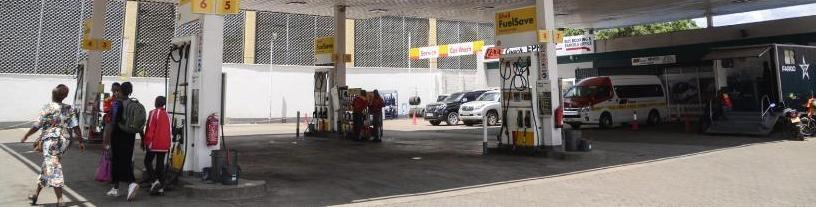
Africa-Press – Kenya. On Tuesday evening, Antony Mwangi, a taxi driver in Nairobi moved between six petrol stations in the Embakasi area before getting a fuel.
Peter Chege, a motorist who was traveling from Thika to Kangema, decided to cut short his journey in Murang’a due to uncertainty.
“I don’t have enough to get to my destination or even go back to Thika and I can’t move without the assurance that I’ll get fuel, so I’ll have to wait until I get it,” he said as he trailed tens of others in a queue at a pump station in Murang’a town.
Motorists and boda boda riders queued for hours in one petrol station that had fuel on Tuesday night, as others travelled to nearby towns in search of the commodity.
Shell and Total petrol stations along Spring Valley, Nairobi were also out of stock on Tuesday evening.
Shell Festival in Malindi among other service stations were out of product yesterday, a spot check by the Star showed, with the situation spreading all the way to Kilifi town.
In Mombasa, petrol stations had long queues than usual. “I think people feel there will be a shortage and are trying to fill their tanks,” Ann Wanyina, a motorist, said.
Ali Wiza, a petrol station attendant at Shell Bamburi, said boda boda riders have changed their routines.
“They used to buy fuel worth Sh100 and Sh200 at most, now I am surprised they are buying fuel worth Sh500 and Sh1,000. I have never seen this,” Wiza said, even as he confirmed that the station had enough fuel.
The fuel shortage has also affected most parts of the North Rift region with many petrol stations running out of stocks.
Matatu operators and Boda Boda riders complained that they were experiencing challenges in getting fuel at most petrol stations in Eldoret.
“We have about two or three stations with fuel while the rest have run out of supplies,” said one of the riders Patrick Barasa.
Collins Boinet who runs several petrol stations in the North Rift region said there was a shortage, but hoped to get more supplies.
The situation was the same in Kitale, Iten and Kapsabet towns where dealers source most of their supplies from Eldoret.
The shortage is for both supper and diesel. Diesel is mostly used in heavy machinery and farmers expressed fear that if the shortages worsen, it may affect ongoing farming activities.
“We hope the crisis will be short-lived so that we can continue with the planting activities smoothly,” said Ben Marus, a farmer.
Independent dealers, who serve the wider parts of the country have blamed the shortage on failure to have a wholesale cap and product for the smaller traders.
They are forced to buy at the pump from the major Oil Marketing Companies (OMCs), who are also limiting quantities they sell to them, with some completely locking the small dealers out of the supply chain.
“It is a systemic problem,” the Petroleum Outlets Association of Kenya (POAK) chairman Martin Chomba said.
“They have made it difficult for independents to get product. This means the people I am serving are forced to all rush to town to fuel at the same station, which leads to the shortages we are seeing.”
Independents account for up to 68 per cent of fueling points across the country, moving 40 per cent of the industry volumes.
There are concerns that major OMCs are hoarding products in anticipation of a price increase on Tuesday next week, when the Energy and Petroleum Regulatory Authority (EPRA) moves to make the monthly reviews for the April-May cycle.
Yesterday, transporters raised an “urgent concern” over fuel supply disruptions and market contradictions.
Kenya Transporters Association said over the past several days, transporters across the country, particularly those operating along key logistics corridors, have reported widespread fuel rationing.
There is refusal by marketers to supply in bulk and a complete withdrawal of credit facilities by oil marketing companies.
“This is happening despite repeated public assurances from government agencies and regulators that the country has sufficient fuel stocks and that there is no shortage,” KTA chairman Newton Wang’oo said.
Sources familiar with the industry told the Star OMCs have been pushing the government to increase prices in relation to the Middle East war.
The government has been adamant since stocks in the market came in before the war affected the supply chain.
Pump prices are, however, expected to go up by between Sh12 and Sh15 next week.
Yesterday, the National Assembly Committee on Energy said it expects a comprehensive, transparent, and accountable briefing from the ministry on the state of the country’s petroleum industry, both existing stocks and imports.
According to the Energy and Petroleum Ministry, the country’s petroleum stock levels as at March 30, stood at super petrol: 138,623 metric tonnes (16 days cover), diesel: 207,841 metric tonnes (19 days cover) and jet fuel: 150,398 metric tonnes (49 days cover)
To meet both domestic consumption and regional transit obligations, the monthly import requirements are Super Petrol 255,000 metric tonnes, diesel (170,000 metric tonnes and jet fuel (80,000 metric tonnes).
Expected deliveries under the March-April 2026 import schedule were super petrol 290,000 metric tonnes (47 days cover), Diesel 182,900 metric tonnes (20 days cover) and jet fuel 60,000 metric tonnes (25 days cover).