What You Need to Know
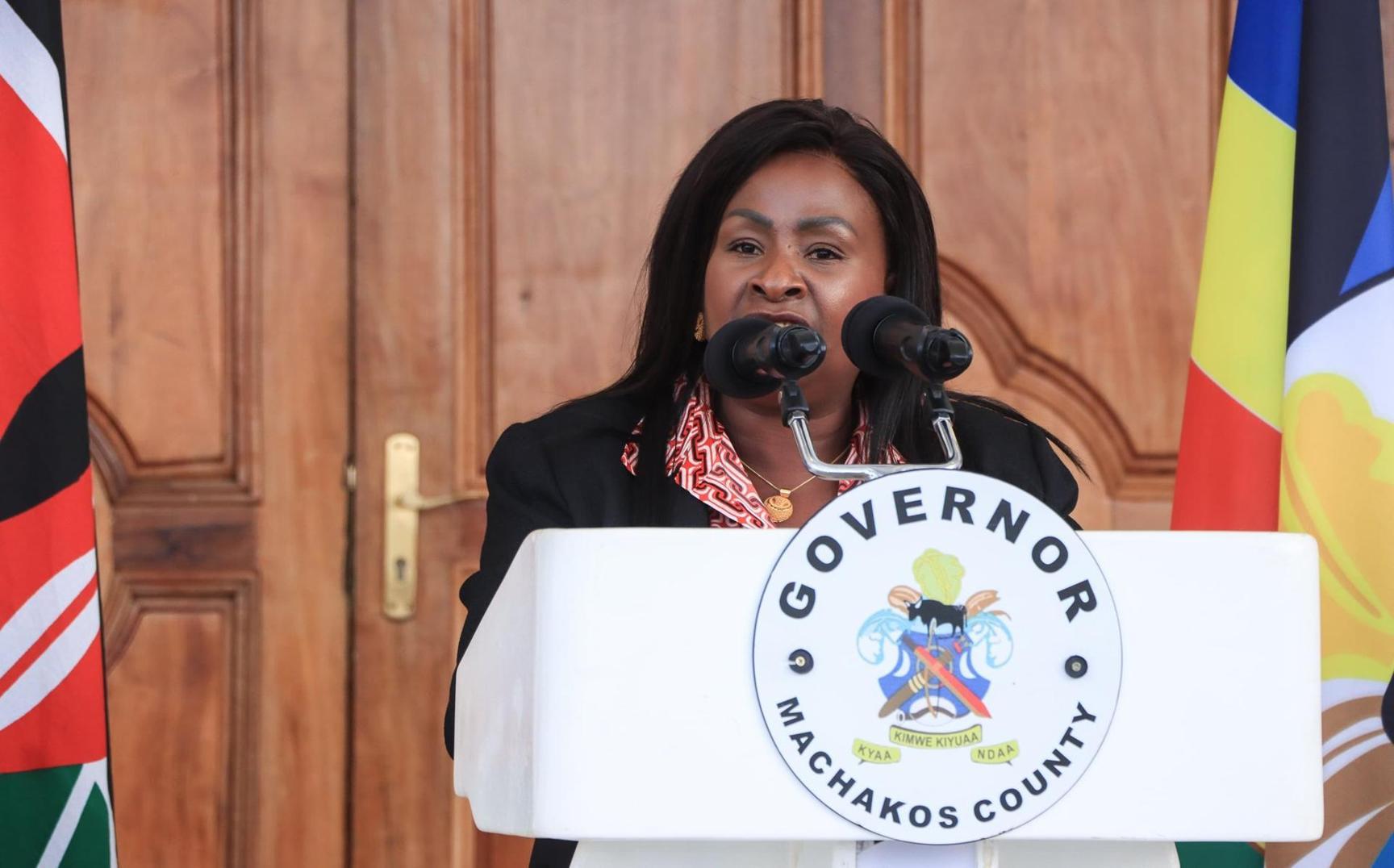
Machakos Governor Wavinya Ndeti has defended her academic qualifications, asserting that her educational background in artificial intelligence from 1992 surpasses that of her male competitors. As the 2027 elections approach, she emphasizes the importance of education in effective leadership, positioning herself as a highly qualified candidate.
Africa-Press – Kenya. Machakos Governor Wavinya Ndeti has defended her academic credentials, saying none of her male political competitors matches her level of education, while highlighting her early academic work in artificial intelligence dating back to 1992.
Speaking during a public address, the governor said she has invested heavily in education over the years and holds multiple academic qualifications, which she believes set her apart from other leaders seeking elective positions.
“I hear others saying they are professionals. Mimi Nimesoma,” Wavinya said.
She added that she holds three diplomas and three degrees, dismissing claims by some of her rivals that they are more qualified for leadership positions.
“I have got three diplomas and three degrees. The others have one degree, and they are calling themselves professionals,” she said.
The governor further said her academic work dates back decades, noting that she conducted research in artificial intelligence in the early 1990s, long before the field gained global prominence.
“I was just laughing with somebody when I told them I did my thesis in artificial intelligence in 1992,” she said.
Her remarks come amid heightened political activity ahead of the 2027 general election cycle, where competition for key seats is expected to intensify.
Wavinya’s comments appeared to be directed at potential political challengers.
The governor, however, maintained that academic excellence and experience are key components of effective leadership, arguing that education equips leaders with the knowledge and skills needed to manage public resources and drive development.
Her remarks come at a time when leaders have increasingly not shied away from disclosing their academic credentials in public discourse.
Among them is President William Ruto, who has on several occasions been vocal in showcasing his academic qualifications, particularly when responding to critics, arguing that his credentials are unmatched.
“Na mkiona wale wanalalamika ni watu sijui wamesomea wapi. Si mimi niko na PhD… si mimi naelewa nini inaendelea Kenya? Sasa mimi napata watu wako na elimu kidogo kidogo hapa wanajaribu kunifundisha, mnanifundisha kazi gani?” he previously posed.
(And when you see those complaining, you wonder where they even studied. I am the one with a PhD… I am the one who understands what is happening in Kenya. Now I find people with little education here trying to teach me — what exactly are you trying to teach me?)
This reflects a growing trend in which political leaders highlight their academic backgrounds as part of their leadership credentials while engaging critics and competitors in the public arena.
Wavinya Ndeti’s emphasis on her academic credentials reflects a broader trend among political leaders in Kenya, where educational qualifications are increasingly used to bolster political legitimacy. The practice of showcasing academic achievements has gained traction, especially in the context of upcoming elections, as candidates seek to differentiate themselves in a competitive political landscape. This trend highlights the intersection of education and politics in shaping public perception and voter trust.