What You Need to Know
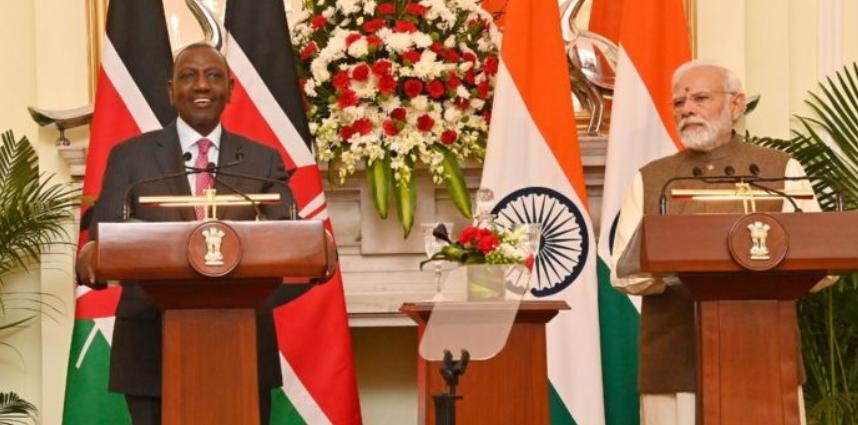
Kenya is negotiating a free trade agreement with India to address a significant trade imbalance and enhance exports. Prime Cabinet Secretary Musalia Mudavadi emphasized the importance of formalizing trade rules to benefit both economies, as Kenya seeks to deepen its economic ties with India amid ongoing bilateral discussions.
Africa-Press – Kenya. Kenya is moving to unlock a Ksh271 billion trade opportunity with India through a proposed free trade agreement aimed at fixing a widening trade imbalance and boosting exports.
This agreement was hinted at by Prime Cabinet Secretary Musalia Mudavadi during the 2nd Khumbhabhisheka Mahotsavam ceremony at Sri Kalyana Venkateswara Temple in Nairobi on April 12, which brought together a powerful expression of faith, culture and community.
“Perhaps it’s time that Kenya and India went a notch higher and discuss a free trade agreement,” highlighted PCS Mudavadi.
He added, “Because we’ve been cooperating, now we have conversations of a trade agreement with the European Union, a trade agreement with the SEPA, with the United Arab Emirates. We are now talking of a bilateral trade agreement with the United States; thus, the agreement will not start from scratch.
According to Mudavadi, the push signals a shift toward deeper economic ties between Kenya and India, with the government now seeking to formalise trade rules that directly affect businesses, traders, and consumers across both economies.
At the centre of the talks is a stark imbalance, with Kenya exporting goods worth USD147.4 million, roughly Ksh19 billion, to India while importing products valued at USD2.03 billion, roughly Ksh262 billion, a gap that continues to shape pricing and market dynamics locally.
Kenya primarily exports agricultural products and raw materials to India, with tea, soda ash, edible vegetables like peas, coffee, and metal scraps like copper and aluminium being key items. Recently, tea has become a top export, alongside significant volumes of vegetables, inorganic chemicals, and raw materials such as hides and skins.
On the other hand, Kenya mainly imports petroleum products, pharmaceuticals, machinery, and rice from India, which serves as one of its largest trading partners. Other major imports include refined petroleum, automobiles and parts, plastics, iron and steel products, as well as textiles, often driven by demand for affordable medicines and industrial equipment.
Mudavadi also stressed that the proposed agreement would align India with other key partners like China, where Kenya already enjoys preferential trade arrangements, and within Africa under Forum on China-Africa Cooperation (FOCAC), expanding the country’s broader global trade strategy.
He also acknowledged the contribution of the Indian community, which was recognised as the 44th tribe of Kenya in July 2017, in facets like health, education, and business.
“I also recognised the enduring contribution of the Kenyan Indian community to our nation’s growth, across education, health, investment and philanthropy, strengthening the social and economic fabric of our country,” stated Mudavadi
This comes at a time when Kenya and India confirmed a joint military operation on April 7, with the arrival of an Indian guided-missile frigate, INS Trikand, which docked at the Port of Mombasa for a four-day port call aimed at strengthening military cooperation between India and Kenya.
This is through the Operational Turnaround (OTR), whose strategies across various sectors aim to improve efficiency, reduce costs, and boost economic growth for India, an operation that the Indian government is keenly undertaking.
Kenya and India have a long-standing relationship, with trade between the two nations evolving significantly over the years. Currently, Kenya exports primarily agricultural products to India, while importing a wide range of goods, including petroleum and machinery. The proposed free trade agreement aims to rectify the existing trade imbalance and strengthen economic cooperation, reflecting a broader strategy to enhance Kenya’s global trade relations.
The Indian community in Kenya has also played a crucial role in the country’s development, contributing to various sectors such as health and education. Recognized as the 44th tribe of Kenya, their influence underscores the deep-rooted ties that