What You Need to Know
Deputy President Kithure Kindiki has cautioned opposition leaders against inciting youth protests over rising fuel prices, attributing the crisis to global market disruptions. He emphasized that the government has implemented measures to alleviate the burden on Kenyans and warned that protests could lead to violence and economic disruption.
Africa-Press – Kenya. Deputy President Kithure Kindiki has warned opposition leaders against mobilising young people for protests over rising fuel prices, saying demonstrations will not resolve the crisis and risk plunging the country into disorder.
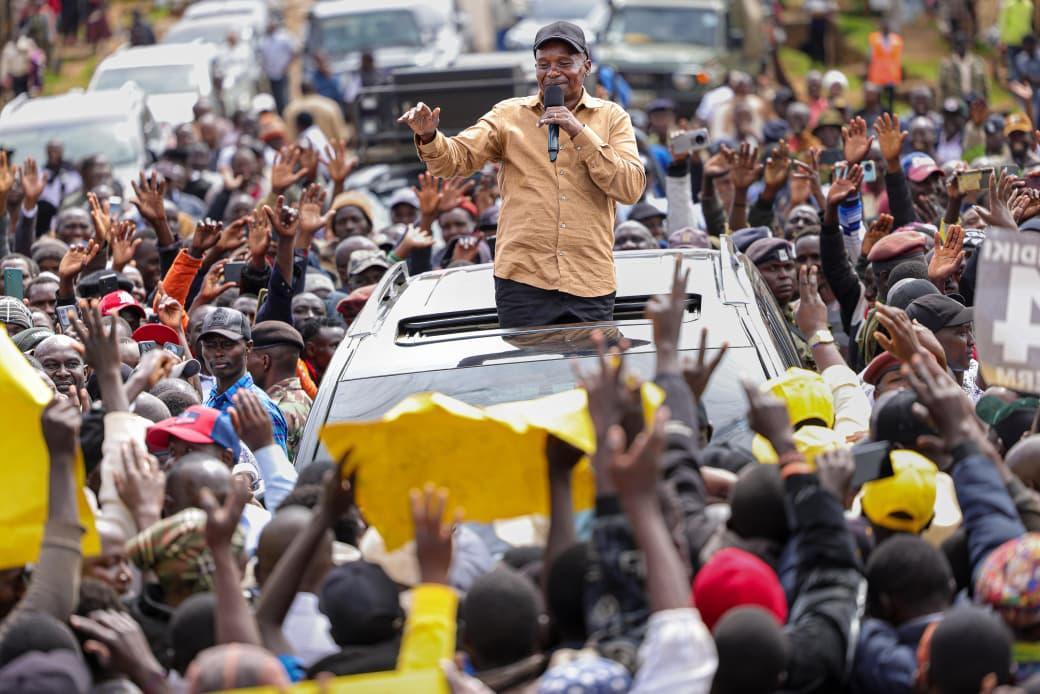
Speaking on Wednesday in Eldama Ravine, Baringo county, the Deputy President attributed the surge in fuel prices to global factors, particularly disruptions in the international oil market linked to tensions in Iran.
He said Kenya, like many other countries, is grappling with increased importation costs as a result of the crisis, dismissing claims that the government is solely to blame for the situation.
“All countries in the world have been affected by the disruption and have reported higher fuel prices. Kenya is not an exception,” Kindiki said.
The Deputy President accused opposition leaders of exploiting the situation for political mileage instead of offering solutions, warning that calls for protests could escalate into violence.
“Nobody should incite the people of Kenya to break the law or destroy their country because the solution to the fuel challenge is in the interventions which the government has already instituted,” he said.
His remarks come amid growing public frustration over the cost of fuel and a rising wave of calls, particularly from opposition figures and civil society groups, for demonstrations to push for government action.
Kindiki maintained that the government has already taken steps to cushion Kenyans from the impact of high fuel prices, including reducing Value Added Tax (VAT) on fuel from 16 per cent to 8 per cent and releasing Sh6.2 billion to stabilise pump prices.
He argued that such measures are more effective than protests, which he said could disrupt economic activity and damage property.
The Deputy President also took aim at political leaders he accused of encouraging young people to take to the streets while shielding their own families from the risks involved.
“I am asking our young people not to fall prey to incitement by leaders who are urging them to engage in violent acts yet their own children are not participating,” he said.
“Those calling for demonstrations must ensure their children are at the forefront.”
Kindiki spoke after inspecting several government-funded projects in the region, including the Esageri ESP Market, the Torongo–Mosomboriet Road and the Ibobor Last Mile Electricity Supply Project.
He used the visit to highlight ongoing development initiatives, saying the government remains focused on infrastructure expansion and economic growth despite current challenges.
According to the Deputy President, Baringo County has been allocated Sh32 billion for the construction of 854 kilometres of tarmac roads, including the Timboroa–Eldama Ravine road, which is already underway.
An additional Sh22 billion has been earmarked for modern markets, hostels and affordable housing projects, while Sh712 million has been set aside to connect about 4,000 households to electricity.
“We are focused on development. We do not have time for distractions,” Kindiki said, pledging that the projects would be completed on schedule.
His comments reflect the government’s broader strategy of countering criticism over the rising cost of living by emphasising development programmes and external economic pressures.
However, the remarks are likely to further deepen the standoff between the government and opposition leaders, who continue to insist that policy decisions and taxation remain key drivers of the high fuel prices affecting Kenyans.
Kenya has faced rising fuel prices due to various global factors, including geopolitical tensions affecting oil supply. The government has attempted to mitigate the impact on citizens through tax reductions and financial allocations aimed at stabilizing fuel costs. This situation has sparked public frustration and calls for protests, particularly from opposition leaders and civil society groups, who argue for more accountability and action from the government. The ongoing discourse reflects broader economic challenges faced by many countries in the wake of international market fluctuations.