What You Need to Know
President William Ruto has called for a unified approach among African governments to reform health systems. Speaking at the World Health Summit in Nairobi, he emphasized the need for comprehensive strategies and sustainable financing to address Africa’s health challenges, including non-communicable diseases and climate change impacts. Ruto highlighted the continent’s reliance on external health,
Africa-Press – Kenya. President William Ruto has called on African governments to adopt a coordinated, continent-wide approach to overhaul health systems.
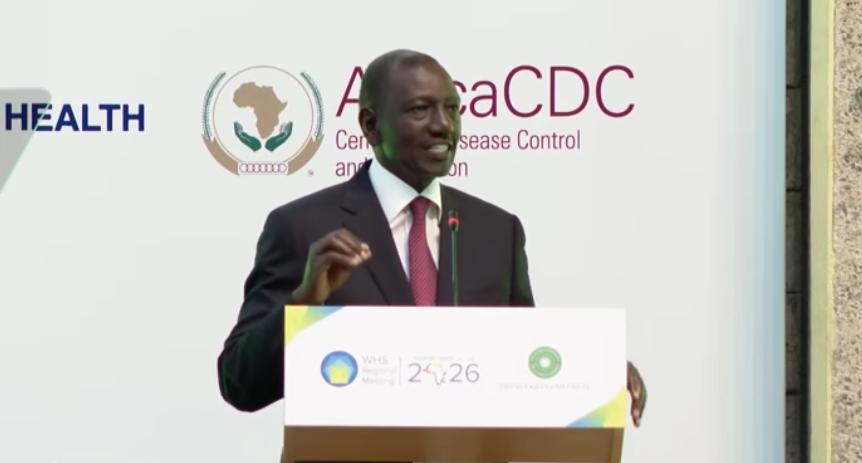
Speaking in Nairobi during the World Health Summit Regional Meeting 2026, Ruto warned that fragmented interventions will not deliver the scale of transformation needed to meet current and future challenges.
He urged leaders to move away from piecemeal solutions and instead embrace comprehensive, system-wide reforms anchored in clear strategies, sustainable financing, and accountable governance.
He stressed that Africa’s health future depends on collective action that addresses longstanding structural gaps while responding to emerging pressures such as non-communicable diseases, mental health conditions, and the growing impact of climate change on public health.
“The future of Africa’s health systems must be shaped through collective continental action,” Ruto said. “We carry more than 25 per cent of the global disease burden, yet account for less than three per cent of global health expenditure.”
The President highlighted the continent’s heavy reliance on external supply chains, noting that Africa produces less than two per cent of the medicines and vaccines it consumes.
He also pointed to critical workforce shortages, saying that despite the dedication of health workers, staffing levels remain far below global standards.
Ruto challenged African nations to reposition themselves as leaders in medical innovation by investing in biotechnology, genomics, vaccine development, and local pharmaceutical manufacturing.
He said such investments would enable the continent to shift from being a consumer of global health solutions to a producer of innovations with worldwide relevance.
The summit brought together policymakers, health experts, and development partners to explore ways of reimagining Africa’s health systems through innovation, integration, and interdependence.
Participants were urged to design practical, scalable solutions that can deliver measurable improvements in healthcare outcomes.
At the same time, Ruto sent a clear message to international partners, calling for a reset in how global health collaborations are structured.
“To our global partners, Africa seeks partnerships grounded in mutual benefit, aligned with national priorities, and focused on long-term investment rather than short-term assistance,” he said.
The President emphasised that unlocking Africa’s health potential will require coordinated investments, policy alignment, and strong institutions capable of delivering impact at scale and speed.
He pointed to Kenya’s ongoing reforms as an example of this approach in action.
Through the Social Health Authority, the government is rolling out a unified financing model aimed at expanding risk pooling, reducing out-of-pocket costs, and ensuring equitable access to healthcare regardless of income or location.
Ruto also underscored the role of digital transformation in strengthening health systems.
He said Kenya is investing in integrated digital health platforms to improve data management, enhance transparency, and support evidence-based decision-making.
While acknowledging that the reforms have faced challenges, Ruto maintained they mark a significant break from past inefficiencies and signal meaningful progress.
The call for reform in Africa’s health systems comes amid ongoing challenges such as inadequate funding and a heavy reliance on imported medical supplies. Historically, many African nations have struggled with fragmented health policies that fail to address the continent’s unique health needs. The World Health Summit serves as a platform for leaders to discuss innovative solutions and collaborative efforts to improve health outcomes across the region. As the global health landscape evolves, the emphasis on local production and innovation is increasingly seen as vital for sustainable health development in Africa.