Africa-Press – Kenya. Amid a court order requesting a halt to construction and angry protests around the town of Nanyuki, a quarantine facility associated with the Ebola risk has gradually emerged within the Laikipia Air Base in central Kenya.
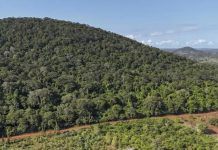
Satellite images captured by a local source between May 27 and June 8, 2026, show rapid progress in the site preparation for the quarantine and field monitoring facility, which Washington states is designated for Americans who may be exposed to the Ebola virus while working in outbreak areas.
Comparing the images reveals a swift transformation of the site from nearly empty land to a cleared and leveled area, with tents and field equipment appearing within the base’s boundaries, coinciding with rising legal and public debate regarding the project.
According to analysis from an open-source unit, the satellite images indicate that work at the site has accelerated in a short period, including land clearing, leveling, and preparing a field area within the airbase.
The total area that has been cleared within the site is estimated at about 40,000 square meters, equivalent to approximately 10 acres. By June 2, clear signs of construction activity began to emerge, evidenced by changes in surface color and the appearance of pathways, leveling, and temporary structures.
The images not only reveal the nature of each facility within the site or their readiness level but also document a rapid transition in land condition within less than two weeks, reinforcing indications of ongoing work despite the surrounding controversy.
What is the stated purpose of the facility?
Washington states that the facility is intended for quarantine and field monitoring of Americans who may be exposed to the Ebola virus while working in outbreak areas, particularly in the Democratic Republic of the Congo and Uganda, rather than transporting them directly to the United States.
According to American statements, the plan aims to subject at-risk individuals who show no symptoms to a 21-day quarantine. Those who later exhibit symptoms will be transferred to another site for treatment.
American officials have stated that the initial capacity of the facility is 50 beds and that it is designed in its first phase for asymptomatic individuals at risk of the virus.
Court Order and Ongoing Work
The pace of construction gains additional significance as it coincides with a legal dispute within Kenya. A local source reported that a Kenyan court initially ordered on May 28 to halt work on the facility, later extending the ban for an additional three weeks, demanding the government disclose the agreement made with Washington.
However, the source noted that American military flights continued to arrive at the base, and work persisted at the site.
Satellite images provide a visual dimension to this narrative, showing rapid changes within the area designated for the facility during the period following the court’s decision.
Ruto Defends While the Public Protests
In contrast, Kenyan President William Ruto defended the project, stating that his government is doing “the right thing” by allowing the United States to establish the facility, adding that rejecting the American request would be “inhumane.”
Ruto also presented the project as part of a broader plan to enhance Kenya’s health readiness and capacity to deal with epidemic threats.
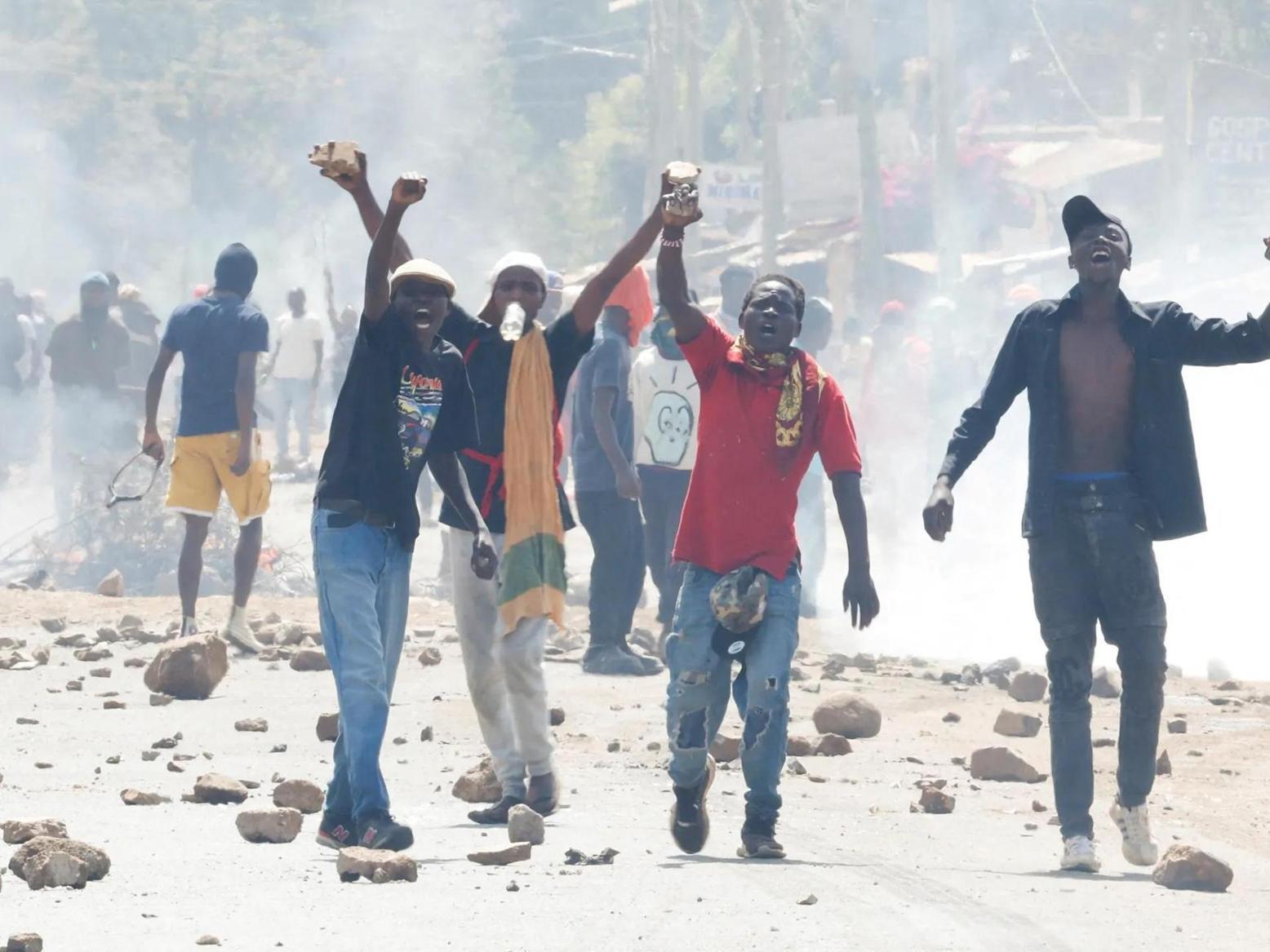
However, these reassurances have not quelled the controversy, as Nanyuki has witnessed escalating protests against the facility, amid public fears of bringing the Ebola threat to the region and criticisms from opponents regarding a perceived lack of transparency in the decision and agreement with the United States.
Police used tear gas and water cannons to disperse gatherings amid security tensions in the area, with media reports indicating at least two fatalities among the protesters.
Health Project or Crisis of Trust?
The project has shifted from a field health facility, as presented by Washington and Nairobi, to a political and public issue within Kenya. Concerns extend beyond the Ebola virus itself to who holds the decision-making power for establishing the facility, the nature of the agreement with the United States, safety and transparency guarantees, and the location of the project within a military base in a populated area.
Satellite images reveal that the controversy has not slowed the pace of progress at the site as much as protesters or the initial court decision anticipated, as the facility appears to be transitioning from an announced plan to a rapidly forming reality.
Between the American narrative that the facility is intended to protect at-risk citizens and the Kenyan protests viewing it as a potential health and sovereignty threat, the satellite images pose a new question to the Kenyan government: why is construction advancing so quickly while the court and the public demand more transparency?
The Democratic Republic of the Congo is experiencing an outbreak of the “Bundibugyo” strain of the Ebola virus, announced on May 15, which has so far resulted in over a thousand suspected cases and around 220 deaths, heightening fears of broader regional implications.
The administration of former President Donald Trump had opted not to receive Americans exposed to the virus on its territory, instead directing Washington to send some infected citizens to European countries, as an American doctor working in the Democratic Republic of the Congo was transferred to Germany for treatment, and another American missionary was sent to the Czech Republic.