Africa-Press – Kenya. Kisumu is the historical hub of East African co-operation and the intellectual incubator of some of the leading ideas behind Kenya’s liberation movement.
The national motto of “Harambee”, introduced as a political rallying-call in Kisumu city during the 1950s.
Led by Jaramogi Oginga Odinga, Kisumu was the epicenter of the push to release Mzee Jomo Kenyatta and the “Kapenguria Six” from their illegal detention. During the detention, union leaders from Luo Nyanza stepped into the gap to ensure that the liberation momentum was not lost.
The Doctrines of our Founding Fathers:
National Conversation and Burden of Choice
Under the 2010 Constitution, the fields of individual freedoms have expanded and citizen participation has become emboldened.
Our independent institutions have occupied their rightful positions, because of the 2010 Constitution. Ours is probably the most progressive constitution in the continent of Africa and the World. Since the 2010 Constitution expanded our individual fields of freedom, it also expanded the burden of the consequences of the choices we make.
Our Founding Fathers urged the liberated patriots to shift from the status of being subjects to that of citizens when their fields of freedom were expanded.
The framers of the 2010 Constitution did not envisage a situation where the expanded fields of rights result in diminished responsibility by citizens and institutions. They saw a balance between freedoms and choice and the consequences of choice.
The balance between freedoms and the consequences of choice has been challenged by the growth of our independent institutions. Their growth has stretched our democratic boundaries to the limit; but it has not cracked them. It has bent the will of the people; but it has not broken it.
From nullification of a presidential election in 2017 to an attempt to stop the will of the people as expressed through BBI, the Judiciary has tested our constitutional limits, but not broken them.
We must follow the Rule of Law and obey the decisions of the courts but the sovereign and supreme voice of the People of Kenya must also be followed. And that is why our National Conversation today must focus on the Burden of Choice.
Citizens are required to exercise their will and shoulder the burden of their choices, and so should our independent institutions. The field of independence has been expanded in the Judiciary, and so the field of their responsibility should respond to the summons of nationhood. Their decisions should also be accompanied by a burden of choice. This is what the national conversation should ponder.
When the Presidential election was nullified in 2017, we lost 1 Trillion Shillings as an economy in only 123 days. We were losing 1 billion shillings every working hour for the 123 days we held the 2017 election. The citizens will have the burden of losing 30% of our national budget every five years due to the toxic politics.
The question the National Conversation should ask is; who carried the burden of this choice? Was it the Judiciary or the people? it is the people who carried the burden of this choice. Development programmes meant to make a difference in their lives were shelved; courtesy of the decision by the Judiciary.
BBI is meant to build bridges, create inclusive politics, and to end the ethnic majoritarianism of two tribes.
If the decision to stop BBI had been subjected to a cost benefit analysis, in other words if it had considered the burden of choice: If we are in a constitutional moment, is a decision against BBI a decision in support of status quo?
Economic Acceleration
Economic acceleration is about increasing the speed of achieving our national goals at the national, county, and individual levels:
After 74 years of colonial occupation, the Colonizers left us with a Gross Domestic Product (GDP) of approximately Ksh 6.4 billion in 1963.
Post-independence, within a period of 50 years, the combined administrations of Mzee Kenyatta, Mzee Moi, and Mzee Kibaki increased GDP by Ksh 4.5 Trillion.
President Uhuru’s administration, in only 8 years, has doubled what the colonizers and the first three administrations did in 128 years. GDP is now at Ksh 10.3 Trillion.
In 7 years, Ksh 2.3 Trillion devolved to counties, this is equivalent to about 16% of current GDP. This is also equivalent to the GDP between 1885 when the colonizers came to Kenya and when President Moi retired in 2002.
The BBI dream, proposes to raise minimum revenue allocation to 35%, sending even more resources to the counties to catalyze their accelerated development.
The previous administrations issued 6 million title deeds in 50 years. President Uhuru’s Administration has issued 5.1 million title deeds in 7-years only. On a pro rata basis, this is seven times what previous administrations had done combined.
20% of the titles issued are in the Nyanza Region, and most of are in Kisumu County.
The title deed is what our Founding Fathers fought for when they made land ownership a central plank of our independence struggle. And by accelerating land adjudication and settlement, the President’s intention is to give security of tenure to as many Kenyans as possible.
Big Push Investments
The Big Push Investments are about laying the ground for our economic take-off.
The brick-and-mortar investments of roads, rail and ports are not the dream. The dream is what these “Big Push Investments” will do for Kenya; and how they will transform Kenya’s standing in the society of nations.
Metre Guage Railway. 566 Kilometres of the dead Metre Guage Railway have been revived.
The revived 200-Kilometer Nairobi-Nanyuki railway has now become one of the most popular train routes in Kenya. Every trip, the train transports 1,600 passengers, which is the equivalent of a convoy of 120 matatus. And the cost per passenger is only Ksh.200 compared to Ksh 500 by Matatu. The passengers on the train make a 60% saving using the revived train system; all while travelling at greater comfort and safety.
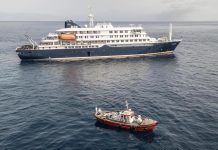
Revival of the Port of Kisumu and the reconditioning of the MV Uhuru vessel. The economics of the decision to revive MV Uhuru:
Restoration of Dignity
Liberation from the ‘poverty of dignity’ was a central motif of our independence struggle. Our Founding Fathers taught us that self-rule will not be fully attained until self-worth is restored.
In our Constitution, the restoration of dignity is a continuous process rather than a one-off activity. The question this Madaraka Day is how well we have rendered this aspect of our freedom.