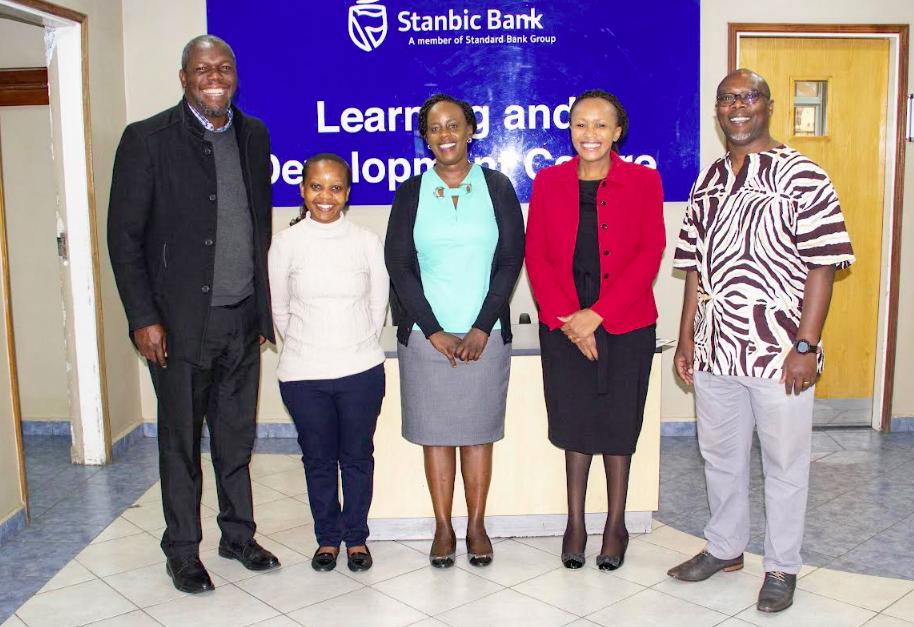
Africa-Press – Kenya. Stanbic Bank Kenya has partnered with the Kenya Bankers Association (KBA) to offer a series of financial literacy training for hard of hearing Small and Medium-sized Enterprises( SME) business owners.
The training will be conducted under KBA’s Inuka SME programme, which aims to reach 200 hard-of-hearing business owners,with participants being drawn from Kajiado, Kiambu and Nairobi environs.
The inuka SME program has empowered more than 50,000 Micro, Small and Mediaum Enterprises (MSMEs )with key skill and knowledge, enhancing their capacity to access bank finance and run their businesses.
Stanbic Bank’s head of business and commercial clients, Florence Wanja, said the programme is the first ever of its kind in the banking industry and creating an enabling environment is mandatory for businesses to succeed.
“This programme is the first-ever training for hard-of-hearing business owners in the Kenyan banking industry and through this partnership, we aim to drive further entrench inclusion as a driver of economic development in the country,”Wanja said.
She further noted that they have innovated several products and services to support SMEs.
This includes the Pamoja Trader Business Account, which comes with free cash handling for deposits below Sh500,000, in addition to personalised services, with the client, only paying for services utilised.
According to the lender, its operations are guided by Social, Economic and Environment pillars with a focus on seven key areas including, financial inclusion, job creation and enterprise growth.
Others are sustainable finance and climate change, infrastructure development, African trade and investment, education and health.
KBA has been a driving force of inclusivity in service delivery and has championed product development targeted at deaf communities.
The association has previously partnered with the Financial Sector Deepening (FSD) Kenya, and Deaf eLimu Plus launched the Deaf Elimu Banking App, a self-training tool for bank-environment Kenyan sign language.
KBA chief executive Habil Olaka said the latest developments are key in advancing financial inclusion for deaf business owners.
“The series of training reaffirms the industry’s commitment to supporting un-banked persons with disabilities, to have knowledge on how to sustain their business in the long-term and bolster their ability to access credit from banks,” Olaka said.
KBA has since 2018 championed financial literacy training, in conjunction with banks, to upskill underbanked members of the public to be financially included and support business growth for MSMEs.
Globally, there is an urgent need for increased awareness of disability-inclusive development in line with the United Nations Conventions on the Rights of Persons with Disabilities, which promotes the full integration of people living with disability in societies.
According to the Borgen Project, there have been significant positive developments for deaf people in Sub-Saharan Africa in the last decade.
Kenya has also made significant progress to ensure that the deaf members of the society have access to information.
It includes the 2010 constitution that recognises sign language as the language of the deaf, an indigenous language and one of the languages for the parliament in Kenya.
In addition, the DisabilityAct 2003 requires all public broadcasting stations to include sign language in their programming.
For More News And Analysis About Kenya Follow Africa-Press