
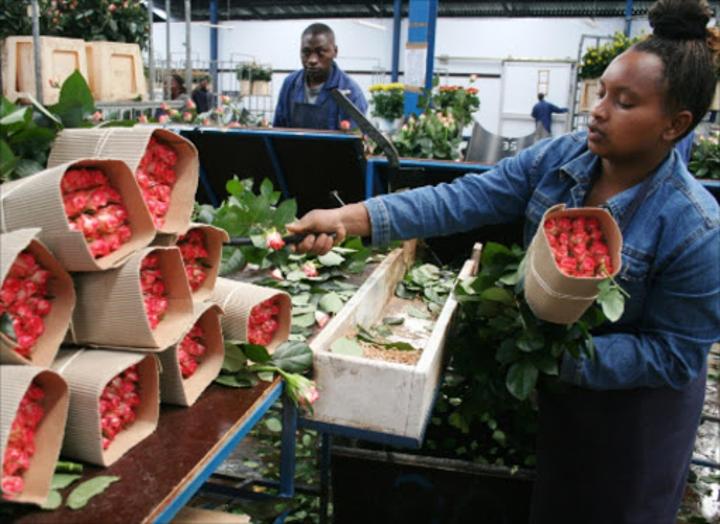
Africa-Press – Kenya. Horticultural farmers now want the government to release up to Sh12 billion in VAT tax refunds owed to them.
This, they say will help mitigate challenges brought about by drought, and the high cost of production which has impacted players in the industry.
The Agricultural Employers Association (AEA) said the monies will cushion farmers and the industry’s value chain, which has been hard hit since the onset of the pandemic.
The government owes farmers between Sh10 billion and Sh12 billion and this can go a long way in expansion and addressing emerging challenges,” association CEO Wesley Siele said.
He spoke at a Naivasha hotel during the association’s AGM, where the issue of the high cost of production dominated the meeting.
According to Siele, the drought had affected the agricultural sector heavily leading to a drop in production.
Kenya Revenue Authority (KRA) had stopped payment of tax refunds and instead, it has been offsetting overpaid duties against future tax obligations.
The Finance Act, 2022 however amended Section 47A of the Tax Procedures Act, 2015 by introducing a provision where a person may be allowed to apply for a refund.
Initally, the time limit for application for the tax refund was six months for Value Added Tax (VAT) and five years in relation to other taxes.
However, was subjected to approval by the cabinet secretary.
KRA has for years delayed making tax refunds to businesses and individuals citing audit delays of the claims made.
It has also had inadequate cash flow from the Treasury at the back of perennial revenue shortfalls.
Circumstances that attract tax refunds include failure by employers to grant their staff relief education and life insurance policies and where tax deducted at source is more than the final liability.
The taxman is also required to give refunds for value-added tax (VAT) when duty is erroneously paid on any supply, bad debt, excess input tax on zero-rated supplies and overpayments or credits resulting from withholding VAT.
Meanwhile, the association has noted that the fertiliser concern by farmers has been largely addressed, though demand for calcium nitrate among flower farmers was on the rise.
“We are happy that the sector has not faced industrial action from the workers and we are keen on addressing their wages,” Siele said.
Labor CS Florence Bore lauded AEA for its role in making sure that there were no industrial actions in the sector.
“In reviewing the status of industrial relations in the country, in the last four years, the agricultural sector has remained stable and calm as opposed to others,” she said.
She noted that Agricultural Wages Council and the Floriculture Wages Councils had not been operational for years.
“This unfortunate situation has denied the government the necessary advisory on issues of terms and conditions of employment as well as salaries and remuneration,” she said.
The AEA chairman Stephen Strong identified livestock and poultry farmers as the hardest hit by the high prices of animal feeds.
He warned of major job losses in the coming days if the shortage and the high prices of livestock feed are not addressed.
“The prices of livestock had risen by over 100 percent in the last 12 months and this will definitely affect production and workforce,” he said.
Mzurrie Flower farm managing director Andrew Wambua identified the on-going drought, and high cost of production as some of the major challenges facing them.
“Currently demand in the EU market has dropped as the consumers’ purchasing powers have been affected by the financial crisis in the region,” he added.
For More News And Analysis About Kenya Follow Africa-Press