
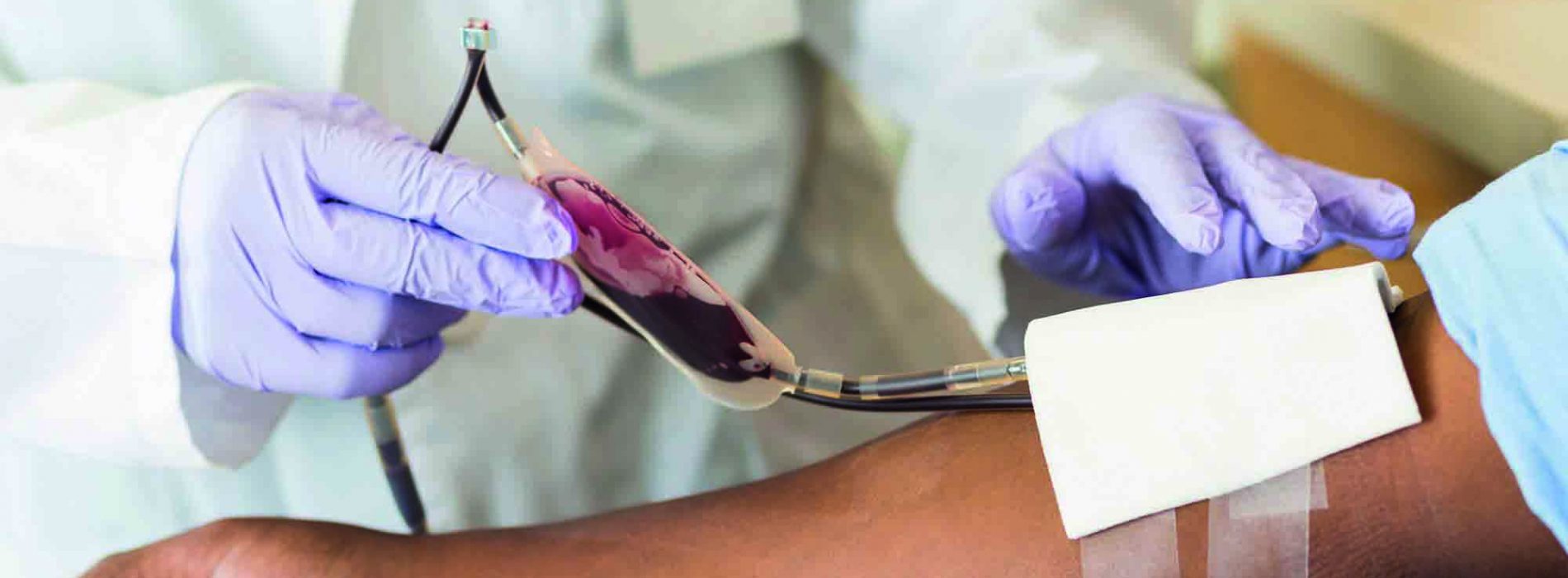
THE Lesotho Blood Transfusion Services (LBTS) had to discard 1 795 units of blood because they were contaminated with viruses and disease.
HIV and syphilis were the main sources of the contamination.
This information is contained in the Auditor General’s report submitted to the parliament on Tuesday.
The main reason for the high number of discarded units is that the LBTS doesn’t follow proper procedure when getting blood donations.
Nor does it test potential donors.
It doesn’t contact mandatory interviews to screen donors.
The LBTS director, ’Maleqhoa Nyopa, told thepost yesterday that she does not have enough staff to conduct thorough tests and counsel blood donors before donating blood.
“There have to be counsellors who conduct counselling sessions for potential donors so that when they finally decide to offer their blood they will have tested for HIV and other diseases,” Nyopa said.
“As you can see, most cases are sexually transmitted diseases and we need to know whether our donors have a healthy lifestyle and it is the counsellors who are better equipped to deal with them,” she said.
“The information required from donors is so sensitive that one cannot just feel comfortable sharing with everyone.”
“We seriously need counsellors, people the donors will feel comfortable talking to about their very private lives”.
According to Auditor General Monica Besetsa’s report, the total blood units collected between 2015 and 2018 was 24 728.
Out of this amount, the units that were discarded because they had HIV were 617. Those with the hepatitis B virus were 220, hepatitis C virus 112 and syphilis 846.
Besetsa found that the position of a counsellor, responsible for advising on a healthy lifestyle, had been vacant for some time.
“Procedures for corrective and preventive actions for non-conforming blood units were found to be ineffective as there was the escalating rate of TTIs especially syphilis,” Besetsa’s report reads.
“The increase in non-conformances resulted in a decrease in total blood collected,” she said.
Besetsa also found that “there was indeed a shortage of staff as there were 15 staff members at LBTS headquarters”.
“The proposed creation of positions indicated that there was a shortage of 17 positions,” she said.
She found that because of this dire shortage of staff, the LBTS had not been able to attend invitations to educate potential donors and collect blood and blood products.
She said when the staff took field trips there would be no services at the headquarters, which is based in Maseru.
Besetsa also found that the LBTS could not go to public places such as shopping malls to disseminate information on blood transfusion as required.
When Queen Elizabeth II Hospital was still open, the LBTS had only two workers there, a nursing officer and an office assistant.
Nyopa said when the hospital was closed the two workers were taken to other stations.
Besetsa said in Leribe, which covers the northern region, the LBTS had eight vacancies yet to be filled.
Mohale’s Hoek, which covers the southern region, needs ten more employees.
10 positions.
Nyopa said a hospital in Qacha’s Nek sent a nurse for training and she is the only one collecting blood in the district.
“When she is off no one collects blood,” Nyopa said.
Besetsa found that there has been a shortage of staff at the LBTS ever since it was established in 1984 because it was created as a section of the laboratory services.
“It depends on laboratory services for all resources, both human and financial,” Besetsa said.
She also found that in 2006 the LBTS was allocated its own budget for goods and supplies but there was no money to hire staff.
Nyopa said “until today we still have a serious shortage of staff despite our many efforts to the authorities to consider this”.
“Maybe something will happen now that this report has reached parliament.”
Besetsa said the shortage of staff resulted in work overload for existing staff members and “had a negative impact on the services offered by LBTS”.
Besetsa blames the whole LBTS problems on the absence of the National Blood Transfusion Committee (NBTC), which is provided for in the Lesotho National Blood Transfusion Policy of 2006.
The committee is responsible for advising the Minister of Health on conducting periodic reviews and evaluation of LBTS activities to enhance performance.
“The committee had not been established and there was no reason provided,” Besetsa said.