By: Kefuoe Phate
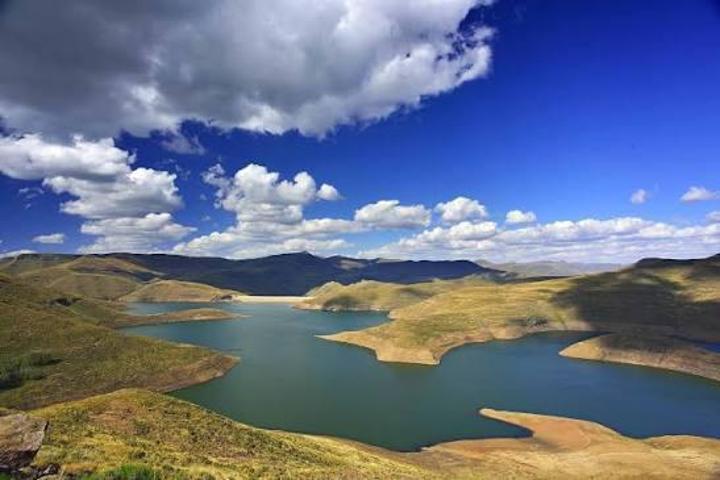
Africa-Press – Lesotho. High in the Maloti Mountains, where clouds kiss rugged peaks and valleys cradle crystal streams, lies the “Kingdom in the Sky”, Lesotho. Here, water is not only life, it is currency, diplomacy, and hope. The country’s abundant highland waters feed mighty rivers that sustain livelihoods far beyond its borders.
Through the Lesotho Highlands Water Project (LHWP), one of Africa’s largest trans-boundary infrastructure undertakings, Lesotho exports billions of cubic meters of water annually to South Africa’s industrial heartland, Gauteng, while generating hydropower to electrify homes and stimulate local economies.
This partnership, born from a visionary agreement between Lesotho and South Africa, has become more than a bilateral project. It is a model of SADC regional integration through shared natural resources, proving that water, often a source of conflict elsewhere, can instead build bridges, drive infrastructure investment, and nurture mutual prosperity across the Southern African Development Community (SADC)
In a region where over 70 percent of surface water resources are shared among member states, water is both a vital asset and a shared responsibility. SADC’s Revised Protocol on Shared Watercourses (2000) acknowledges this, urging member states to cooperate in managing Trans-boundary Rivers such as the Orange–Senqu, Limpopo, Zambezi, and Okavango, all lifelines crossing multiple borders.
Integration in water management has proven to be one of the most effective vehicles for regional cooperation, fostering sustainable development, peace, and economic growth. Shared waters encourage joint infrastructure projects, cross-border energy generation, and agricultural expansion, delivering tangible benefits for communities and industries alike.
“Water connects us far more deeply than any border divides us,” remarked a SADC Water Division official at a regional forum in Gaborone. “Our economies drink from the same rivers. Therefore, our development must also flow together.”
The Lesotho Highlands Water Project optimises what SADC envisions in its Regional Strategic Action Plan on Integrated Water Resources Development and Management. Conceived in the 1980s and strengthened over successive phases, the project channels pristine water from Lesotho’s high-altitude reservoirs, including Katse and Mohale Dams, to South Africa’s Vaal River System, which supplies millions in Johannesburg and Pretoria.
In return, Lesotho earns substantial royalties that fund education, healthcare, and infrastructure, while the Muela Hydropower Station provides clean, renewable energy for domestic use. The ongoing Phase II is generating thousands of jobs, building roads, and empowering communities in the highlands, a ripple effect of regional cooperation.
More importantly, LHWP demonstrates how water infrastructure binds economies. It stimulates construction, trade, and engineering across borders. It shows that when nations share natural resources equitably, economic integration becomes more than policy, it becomes progress made visible.
Lesotho’s success story mirrors a broader SADC reality. The Zambezi River Basin, which flows through eight member states from Angola to Mozambique, sustains over 40 million people through agriculture, hydropower, and fisheries. The Zambezi Watercourse Commission (ZAMCOM) coordinates basin management to promote joint investment and prevent conflict, proving that cooperation is cheaper than confrontation.
Further west, the Okavango River Basin unites Angola, Namibia, and Botswana under the OKACOM Commission, a symbol of environmental diplomacy and sustainable tourism.
The Okavango Delta, one of the world’s largest inland wetlands, depends on upstream coordination to preserve its biodiversity, a perfect balance between ecology and economy.
To the north, the Congo and Cuvelai basins feed lush ecosystems that support millions, while the Limpopo Basin, shared by South Africa, Botswana, Mozambique, and Zimbabwe, anchors regional agriculture and industrial growth. These shared systems underscore a central truth: regional integration in water management is inseparable from economic transformation.
Across the SADC region, water fuels every sector, from agriculture and hydropower to manufacturing and trade. Agriculture contributes over 20% of GDP in several member states, while hydropower supplies more than 60% of the region’s electricity.
Through regional integration, these shared resources are magnified, trade and Infrastructure. Cross-border dams, pipelines, and irrigation networks strengthen logistics and open new markets that include amongst others hydropower initiatives like Cahora Bassa (Mozambique) and the Batoka Gorge Project (Zambia–Zimbabwe) showcase regional energy interdependence.
For Food Security, coordinated water use ensures efficient irrigation and climate-resilient farming, vital amid recurring droughts, and joint water projects that attract investors, create skilled jobs, and expand rural economies.
As climate change intensifies, such collaborations are not optional, they are essential for resilience, sustainability, and economic diversification.
SADC’s long-term Regional Infrastructure Development Master Plan (RIDMP) and Water Sector Plan emphasise that water security is key to achieving economic transformation. The vision is ambitious yet achievable to make Southern Africa a region where every member state can harness shared water resources sustainably and equitably.
These frameworks prioritise integrated river basin management, trans-boundary governance, and infrastructure development, from multipurpose dams to rural water supply systems. They also advance the Water–Energy–Food Nexus, recognising that water is the thread linking all sectors of growth.
As former SADC Executive Secretary Dr. Stergomena Lawrence Tax once said, water is “the silent diplomat”, compelling nations to cooperate and dialogue. Indeed, regional water meetings often lay the groundwork for broader collaboration in trade, climate policy, and security.
Yet, progress faces headwinds. Climate variability is disrupting rainfall patterns, population growth is heightening demand, and some basins remain underdeveloped due to limited financing and technical capacity.
Still, the SADC Water Division, in collaboration with partners such as the African Ministers’ Council on Water (AMCOW) and the Global Water Partnership Southern Africa (GWPSA), continues to strengthen institutional and technical cooperation. Regional initiatives now include joint monitoring systems, flood forecasting, and early warning mechanisms, vital steps toward climate resilience.
In Lesotho, the ReNOKA (We Are a River) programme exemplifies climate-smart water management. Supported by international and regional partners, it promotes watershed rehabilitation and sustainable land use, proof that local stewardship can drive regional sustainability.
Beyond the statistics and treaties lies the human story, where ordinary lives reflect extraordinary cooperation.
In Lesotho’s highlands, Mrs. ’Mampho Thabane sells vegetables nourished by irrigation channels fed from LHWP tributaries. “This water brings us food, work, and dignity,” she says with quiet pride.
In Southern Malawi, farmer Mr. Thokozani Banda stands beside a newly irrigated field of maize, nourished by a transboundary water project along the Shire River, ”we used to pray for rain”, he says, smiling. ”Now, thanks to cooperation between our countries, our fields never run dry.”
In Lesotho, again, 27-year-old Mrs. ‘Masechaba Nkomo operates a small hydro powered bakery in Thaba-Tseka, part of a local development scheme funded through LHWP royalties. ”The water that leaves Lesotho to help South Africa also helps me to feed my family,” she says.
”That is what shared growth means.”
In Mozambique, fishers along the Zambezi rely on joint basin policies that sustain fish stocks across borders. In Namibia, communities around the Okavango Delta earn livelihoods from eco-tourism grounded in water conservation. These stories echo across the region, vivid proof that when nations collaborate, citizens prosper.
Water diplomacy has quietly shaped SADC’s reputation as a region of cooperation, not confrontation. Where other regions have seen rivers ignite disputes, Southern Africa has turned its shared waters into instruments of dialogue and trust.
The Orange–Senqu River Commission (ORASECOM) comprising Lesotho, Botswana, Namibia, and South Africa ensures equitable management and joint development of basin resources, preventing tensions and building transparency.
Similarly, ZAMCOM and OKACOM embody the SADC principle of shared benefits, shared responsibilities.
Through these mechanisms, SADC demonstrates that shared water builds shared peace, transforming natural interdependence into political stability.
As SADC advances toward Vision 2050, water will define its path. Projects like LHWP Phase II, Batoka Gorge Hydropower, and the Limpopo Watercourse Development are shaping a future where integration is visible through electricity that powers homes, crops that cross borders, and trade that lifts nations.
From the snowy peaks of Lesotho to the warm deltas of Botswana, from the roaring Zambezi to the tranquil Limpopo, water flows as the pulse of a united region. It nurtures fields, powers turbines, and inspires cooperation.
In the evolving story of Southern Africa’s integration, water is the invisible thread weaving together economies, communities, and futures. And as Lesotho’s highland streams descend into South Africa’s valleys, they carry a timeless truth that when we share water, we share growth. When we share growth, we share destiny.
Source: Lesotho News Agency