
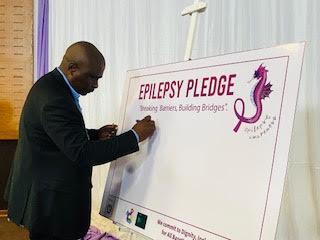
Maseru, Feb. 09 — As the world marks World Epilepsy Day, the Ministry of Health has joined global efforts to break barriers and build bridges toward greater awareness, dignity and inclusion for people living with epilepsy.
In his keynote address, the Minister of Health, Mr. Selibe Mochoboroane reaffirmed the government’s commitment to strengthening support systems for Basotho affected by epilepsy.
He emphasised that the ministry, together with its health partners, is dedicated to promoting dignity, inclusion and hope for all patients.
Mr. Mochoboroane highlighted that the primary goal of this year’s commemoration is to raise public awareness about epilepsy, its causes, management and the stigma surrounding it.
He noted that according to the research he reviewed, Lesotho is performing better than several countries in managing epilepsy, although more work remains to be done.
The Minister admitted that for many years, the health sector has concentrated heavily on communicable diseases, unintentionally neglecting non-communicable diseases (NCDs), which now account for a large proportion of deaths in the country.
“The burden is heavy, non-communicable diseases, including epilepsy, continue to claim many Basotho lives and it is time we give these conditions the attention they deserve,” he said.
Mr. Mochoboroane further pledged that epilepsy patients will, from today, receive comprehensive care and respect they rightfully deserve, including better access to treatment, improved referral systems, and strengthened community education programs.
Speaking on behalf of the World Health Organization (WHO), Dr. Sirak Hailu reaffirmed WHO’s full commitment to supporting Lesotho in reducing the burden of epilepsy, currently the most common neurological health condition in the country.
He emphasised that one of WHO’s key missions is to help drive patients toward seizure-free lives, noting that epilepsy is not contagious and that many forms of the condition are highly treatable with proper medication and consistent follow-up care.
Dr. Hailu added that WHO continues to work closely with the Ministry of Health to ensure that epilepsy patients across all districts have access to essential health services, including diagnosis, medication, and community-based support.
The Head of Non-Communicable Diseases, Dr. Malitaba Litaba, revealed that Lesotho currently has an estimated 5,000 people living with epilepsy, a number she described as high considering the country’s population size.
She explained that the leading causes of epilepsy in Lesotho include trauma, infections, and idiopathic cases where the cause is unknown.
Trauma-related cases, she noted, often result from road accidents and traditional physical practices such as the use of fighting sticks (melamu) during conflicts. Many of these causes, she stressed, are preventable.
Dr. Litaba also encouraged communities to seek immediate medical support when seizures occur, highlighting that early diagnosis and consistent medication can significantly improve quality of life and reduce complications.
This year’s World Epilepsy Day observance serves as a reminder that greater awareness, reduced stigma, and early treatment remain key pillars in improving the lives of those affected by epilepsy in Lesotho.
Ends/KP/tl