What You Need to Know
A delegation from Lesotho, led by Ambassador Lebeko Sello, visited an Italian livestock farm to explore agricultural practices beneficial for Lesotho. The visit focused on livestock management and value addition, particularly buffalo farming, which could enhance Lesotho’s agricultural sector and open new markets for local products.
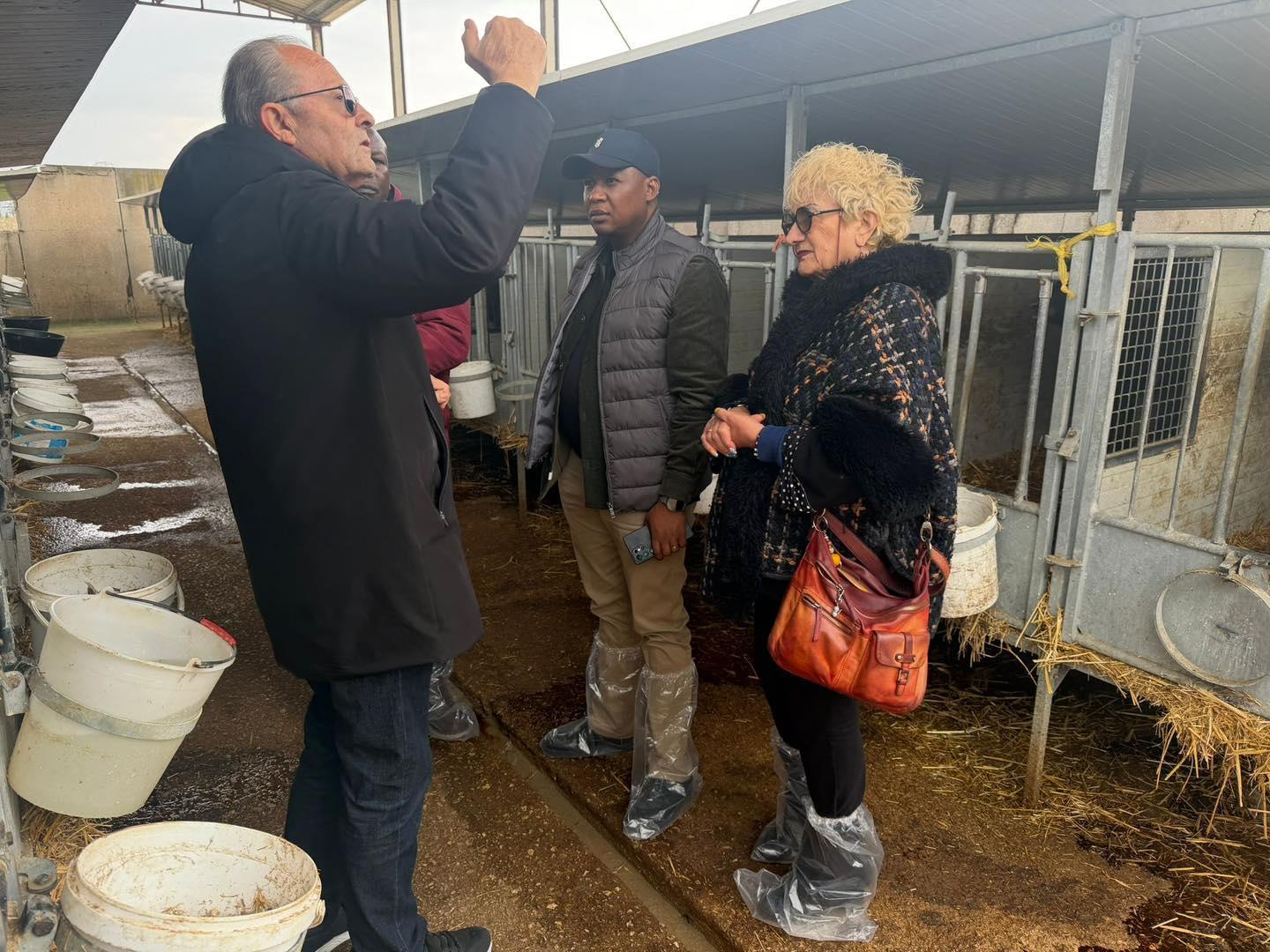
Africa-Press – Lesotho. His Excellency Ambassador Lebeko Sello, accompanied by a delegation from the Embassy of the Kingdom of Lesotho in Rome, visited a livestock farm in Aprilia, Italy, as part of efforts to learn from the Italian agricultural system and explore practices that could benefit Lesotho.
The delegation was received by farm owner Mr. Giorgi Nello and Ms. Michelina Sanquest of Globe Trotters. A brief introduction of the delegation was followed by an overview of Lesotho’s geographical context.
The farm focuses on livestock and horticulture, including buffaloes, which are reared for both local and export markets. Their products such as milk, mozzarella, other buffalo-derived products, and meat are commercially processed and sold. Notably, buffalo meat is largely exported to international markets, particularly the Philippines and many countries around the world.
The visit provided valuable insights into efficient livestock management and value addition, buffalo’s milk and meat uniqueness and its high demand locally and globally, its nutritional value and low cost of rearing. The farm visit offered useful lessons for strengthening Lesotho’s agricultural sector and tapping into other different agricultural markets.
Lesotho’s agricultural sector has faced numerous challenges, including climate change and limited resources, impacting food security and economic stability. Learning from successful agricultural systems, such as Italy’s, can provide valuable insights into improving local farming practices and enhancing productivity, ultimately benefiting the economy and livelihoods in Lesotho. The exchange of knowledge and practices can foster innovation and adaptation in Lesotho’s agricultural landscape, paving the way for sustainable growth and development.