Africa-Press – Liberia. When Evelyn Kpadeh Seagbeh, correspondent for Radio Deutsche Welle, approached Giftee Wesseh with the new L$10 coins to buy a sachet of water, she rejected it.
“Aaay aunty, what is this,” she murmured. “I don’t want it,” said Giftee.
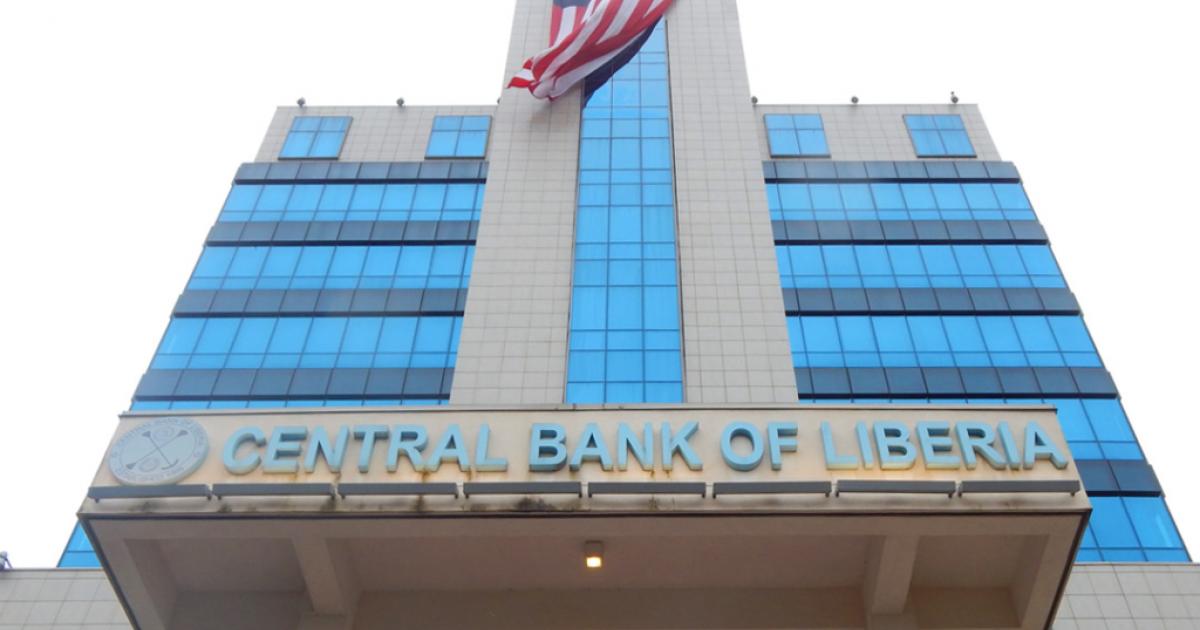
Giftee had never seen a Liberian dollar coin before it was introduced to the public late November, so she was unaware that the small, flat, silver metal placed in her palm is real money. The Central Bank of Liberia (CBL), has reintroduced coins into the country’s economy to meet the needs of citizens’ liquidity demands.
The minted coins are round and nickel-plated steel, with the L$5 weighing 3.6 grams and the L$10 weighing 4.8 grams. The L$5 has the image of President Edward James Roye, while the L$10 has the image of President Joseph Jenkins Roberts.
It would be the first time in post-war Liberia that coins would be introduced again. After gaining independence in 1847, coins known as copper 1 and 2 cent pieces were first produced. These coins remained in circulation until 1862 before being changed.
Younger people like Giftee, who were born after the civil war, may not be familiar with the coins. When seeing one for the first time, they will undoubtedly associate it with false money.
According to William Jlopleh, director of Banking and Finance at the CBL, there have been several awareness campaigns through the country by the Liberia Media Democratic Initiative (LMDI). He also revealed that fifty million of the coins have entered the market through commercial banks, ensuring that there are enough coins available.
Jlopleh claimed on the CBL’s regular ELBC program, “Money Matters”, that the coins were printed in response to public demand for lesser denominations.
“We were in Nimba county. We went to Karnplay and Saclapea. Everybody was excited, but their only concern was how it would reach us,” he said .
According to him, for those in rural areas, the coins will be released through the county village saving loans facilities. “The education will continue,” said Jlopleh. “A whole generation has not seen the coins and we have a public that has used coins.”
However, it appears that the CBL awareness campaign, now being conducted in the county, has not reached Giftee’s town, Gbarnquoi.
According to the town chief, Kesay Monleh, one of the 2,141 residents of Gbarnquoi, he had the opportunity to see and touch the coins at the heritage center that UN Women had just built as an alternative to Female Genital Mutilation under the framework of the European Union and United Nations.
Gbarnquoi town is roughly three hour’s drive from Ganta, the capital of Nimba County. In the town, there is no university or college. Important social amenities, such as safe drinking water, decent medical facilities, and high schools are still in low supply. People must travel many kilometers in an emergency to reach the police station or the court in Secleapea.
“It is not like we don’t want to accept the money, but People [don’t] know about it, that’s why they are refusing it,” said Agnes Nqueeglay, a resident of Saclepea.
Speaking at the official launch of the five and ten Liberian dollar coins on November 9, Tarlue said the new denominations will solve the liquidity needs of people in smaller denominations.
“So, again, I want to tell you thank you for the support and we want to finally launch the coins on the market,” said CBL Executive Governor J. Aloysius Tarlue.
“This whole idea is that we want to change the psychology of this country. The coins are part of a total authorization of L$48.734 billion to be minted and printed in three years — 2021, 2022, and 2024. The other denominations are L$20, L$50, L$500, and L$1,000,” the Governor said.
He reaffirmed that he wants to ensure that he brings stability to the Liberian banking sector, as well as ensure that CBL is rebranded.
But for Gbarnquoi town chief Monleh, since the coins were infused into the market, it has not reached his town. People do not know if the coins are on the market, [which] is why they are rejecting them.
“This is my first time seeing this money,” he said. Most adults in Gbanquoi, who used the coins before the civil war, recognized the coins as ‘cents’.
On May 6, a Joint Resolution of the National Legislature authorizing the Central Bank of Liberia (CBL) to print and mint the new family of Liberian currency, totaling L$48.734 billion. CBL was also instructed to get rid of the L$10 and L$5 banknotes. The resolution states that these denominations are to be minted into coins.
“That the denomination of banknotes to be printed shall be L$20, L$50, L$100, L$500, and L$1,000, and the denominations to be minted in coins shall be L$5 and L$10,” the Joint Resolution stated.
Tenneh Sumo, a resident of Songhay Town, Todee district, Montserrado County, also rejected the coins on grounds that nobody has them.
For More News And Analysis About Liberia Follow Africa-Press