Africa-Press – Liberia. Agricultural stakeholders from the government and private sectors have underscored the need to work together collaboratively in improving extension delivery in Liberia.
A meeting intended to promote coordination amongst the various players in extension, the stakeholders said without better collaboration or coordination the country will find it very difficult to improve extension delivery in order to have a productive agricultural sector.
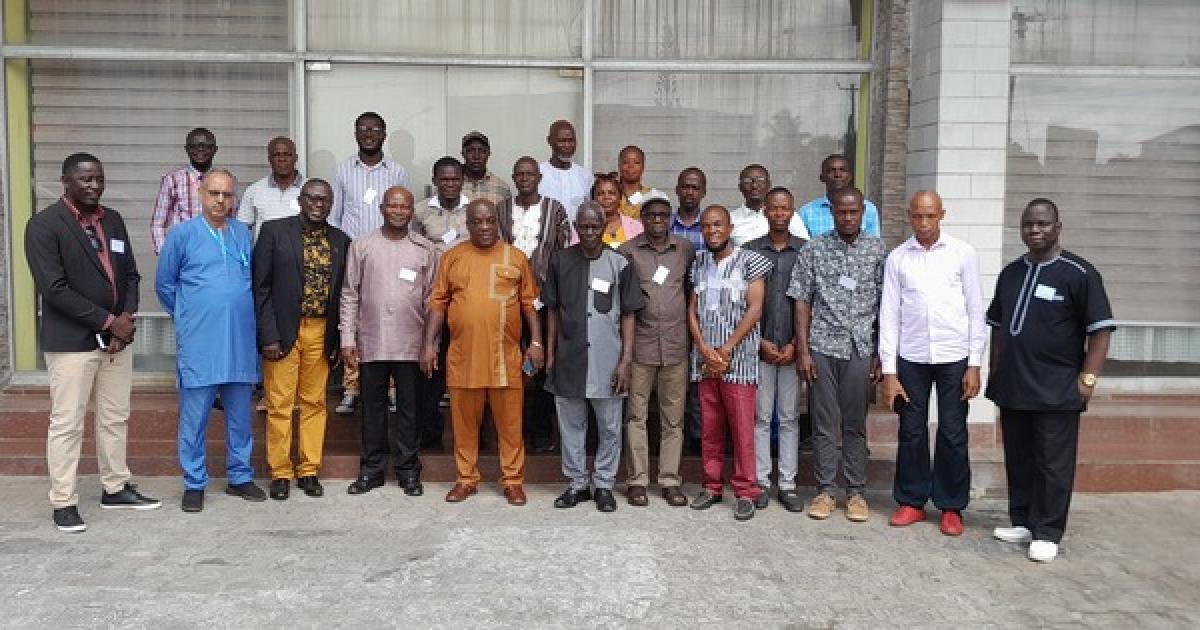
The stakeholders expressed the commitment during a 2-days multisectoral coordinating meeting held over the weekend in Monrovia. The meeting which aimed to provide orientation mainly to private sector participants about their roles in extension brought together farmers, local and international partners as well as academia.
Over the years, extension delivery has been driven largely by the public sector, mainly the Ministry of Agriculture with very limited support, thereby hindering growth in the sector. Many smallholder farmers still lack adequate extension services due to limited extension workers to reach the farmers.
But with funding from the European Union (EU) through the Food and Agriculture Organization (FAO) extension delivery for Liberia is now taking a new approach or dimension where the private sector will take the lead to ensure increased basic quality extension advisory services to farmers.
The new strategy is under the ‘Linking Extension and Research to Farmers for Sustainable Agriculture Food Security and Nutrition project.
The project has led to the development of a new extension policy for Liberia and the introduction of a new extension curriculum for the country. It has also succeeded in the validation of the Central Agriculture Research Institute (CARI) strategic plan in collaboration with the government.
The curriculum is based mainly on the new Extensionist Learning Kit (NELK) which was prepared by the Global Forum for Rural Advisory Services. It provides a holistic view of agricultural extension and rural advisory services involving multiple and diverse stakeholders to play a key role in a different part of the agricultural value chain to reach farmers with necessary services.
According to stakeholders the curriculum for extension shall be rolled out in the fifteen counties of Liberia and the University of Liberia to enhance the knowledge of farmers and students on innovative agricultural practices.
Deputy Agriculture Minister for the Department of Regional Development Research and Extension, Dr. George Tee Forpoh once said that the Liberian government wholeheartedly welcomed the new approach for extension delivery in Liberia.
Speaking at the second multi-stakeholder agriculture extension workshop over the weekend on behalf of the Minister of Agriculture, Jeanine M. Cooper, Minister Forpoh said that for an effective agricultural service delivery, the Ministry is now thinking on how private sector actors can become active participants by taking the lead for extension delivery.
“We have had a series of meetings with the private sector members on some thematic issues like governance, capacity management and advisory service methods to lead extension delivery,” he said.
However, though the government wants to drive extension through the private sector, the issue of resource mobilization to support the private sector still remains a challenge. Public spending for agriculture is still lacking, except funding from external sources.
Speaking on behalf of the FAO country representative to Liberia, Mariatou Njie, the International Project Coordinator of FAO’s Linking Extension and Research to Farmers for Sustainable Agriculture Food Security and Nutrition, Hessen Ali Abegaz said it was an important occasion for multi-sector stakeholders to meet led by the Ministry of Agriculture.
According to him the meeting meant to establish the Forum for
Agriculture Advisory Services (LIFAAS) to improve the food system in Liberia.
“Liberia’s agriculture faces several challenges, including lack of
coordination, which limits the demand and farmers driven research and limited extension and advisory service delivery among others,” he said.
He mentioned that in Liberia, the implementation of sustainable research
and extension systems are seen as a prerequisite for raising agricultural output and to improve living standards.
“The agricultural research and pluralistic extension systems
Liberia has limited linkages with farmers, private sectors, cooperatives and other stakeholders in agriculture production, processing and marketing,” he said.
He said the “Linking Extension and Research to Farmers for Sustainable Agriculture, Food Security and Nutrition project” is developed within the context of the “National Indicative Programme (NIP) (2014-2020)”, and financed by the EU to facilitate this second stakeholders coordination meeting.
“A wide range of initiatives to support creative extension services in the agricultural industry will not only strengthen the value chain but also vastly enhance livelihoods, food security, and nutrition,” he explained.
He further said while the extension system is in charge of connecting
farmers to new technologies, information, and innovations that are essential to boosting agricultural productivity, which according to him the research system also plays a crucial role in encouraging innovations, new technologies, and gathering field data.
The FAO International Project Coordinator revealed that FAO is working with the Liberian government in many ways to make sure to improve the country’s food and nutrition status.
“The success of achieving food and nutrition security, among other things, depends on sustainable linkages between research, extension services, farmers and all stakeholders established with actors along the various agricultural value chains,” he said.
For his part, the Community of Hope Agriculture Project (CHAP), Rev. Robert Bimba thanks the Ministry of Agriculture and FAO for coming up with the new strategy that largely involves the participation of the private sector actors.
Bimba promised the private sector participants’ willingness to work with the government to improve extension delivery in Liberia.
For More News And Analysis About Liberia Follow Africa-Press