Africa-Press – Liberia. As anticipation grows over the upcoming round of voting in October 2023, some recent news stories are a reminder that election fervor can quickly turn violent or lead some partisan groups or individuals to resort to threats, intimidation, and harassment.
Elections are still six months away, but there are already reports of election offense: gunfire at a campaign event; women candidates suffering harassment; and serious clashes leading to injuries and destruction of properties.
According to the 2022 United States Department of State Report on Human Rights in Liberia, the possibility of campaign-related violence and of infringements to freedom of the press, freedom of expression, and freedom of assembly, are all too real.
And, while the same report also highlights the overall success Liberians have achieved holding fair and peaceful elections in recent years, the backdrop of post-conflict social instability and divisions could increase the odds of violence, especially in an election year.
In response to these risks, some Liberians are not relying on hope alone, but are working actively to teach and promote peaceful living and nonviolent responses to conflict. In fact, global election experts point out that ensuring peaceful elections requires not only top-down security measures and sound election policies, but even more important bottom-up / grassroots level education and organizing as well.
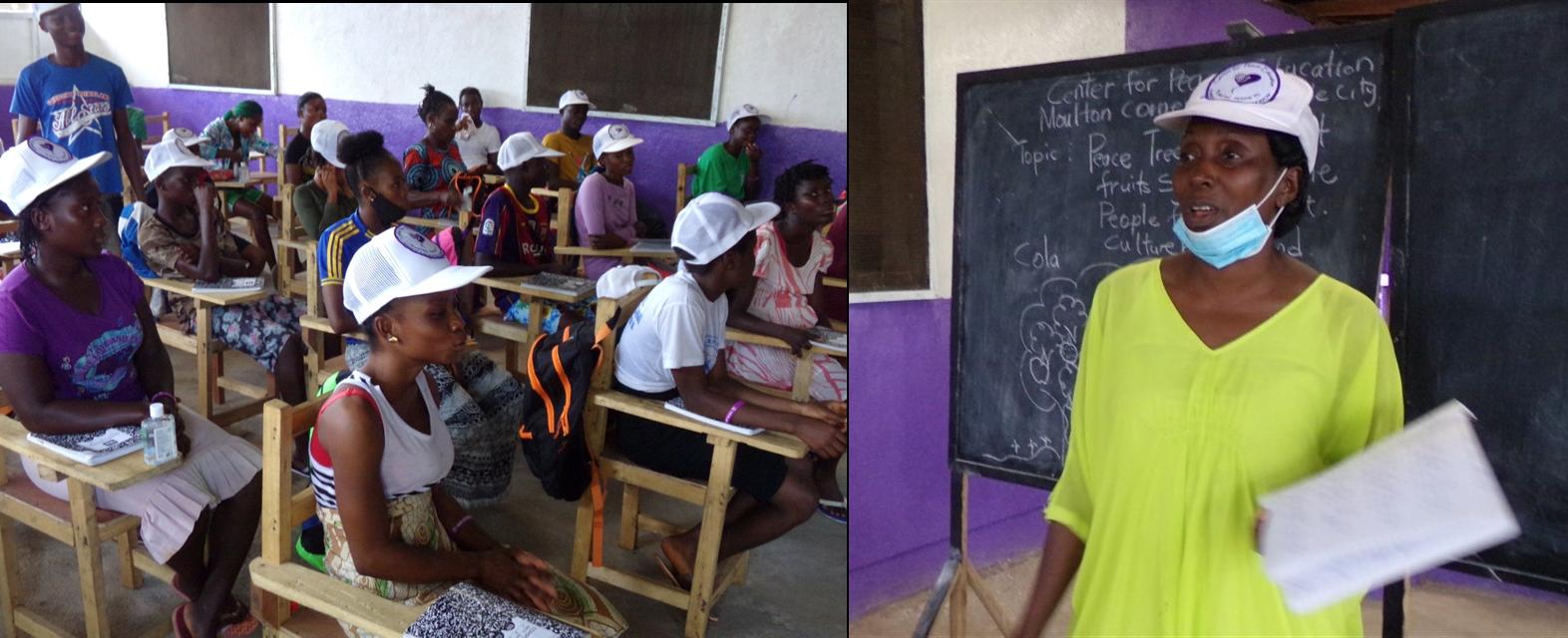
For the past 15 years, staff and volunteers with The Center for Peace Education (CPE), a nonprofit, have been on the front lines of grassroots level peace education by teaching mediation, non-violence, and conflict resolution as means to build respect for human rights, achieve harmony, and a better life for future generations. Specifically, CPE targets grade school students, vulnerable at-risk youth, and young people growing up in post-conflict conditions from all backgrounds, irrespective of religion and/or gender. CPE teach and equip youth growing-up in post-conflict settings to serve as peer mediators in their own schools and/or peace ambassadors in their local communities.
The Center’s founder and current director, Mainlehwon Ebenezer Vonhm, PhD; knows a lot about both conflict resolution, peace building, and peace education.
As a researcher, trainer, and educator, Philosopher Vonhm, in May 2009, led a team of peace and conflict resolution scholars into Liberia that conducted a baseline survey and focus group discussions on the causes and level of violence in 28 schools that included over 1,000 students, teachers, and administrators. The results were used to develop a peace education curriculum which is still being taught by CPE staff and volunteers to young people in Montserrado County.
Over the years, staff at various city schools have reported that these peace education classes improve school climate, reducing both peer conflicts and disruptive behaviors. While at the community level, local community dwellers have reported increase in positive social behavior of young people.
For this election year, CPE has been providing young people with knowledge and skills to prevent elections violence and pursue peaceful, violence-free and inclusive elections.
Meanwhile, students have also reported on the ways peace education classes impacted them personally. To find out more, we talked to some students and teachers involved in this year’s CPE programming.
The students explained that election violence doesn’t occur seldomly; instead, it grows and develops. Jallah Kollie stated that conflict can start from “chy-chy polay”, followed by “cutting eyes and throwing hints”, said Catherine Passaway; and then “palava”, as Ousman Konneh pointed out. The students mentioned that awareness of these symptoms of conflict can help them to avoid election violence before, during, and after election day.
One young student, Martha Qultal, told reporters she learned that it’s important to “never allow conflict to develop and reach an unstoppable stage…[and] to prevent conflict… [in order] to have a peaceful society.”
One of the teachers, Mr. Moseray, reported that he wants his students to think about how “conflict affect[s] the opponent and also the individual physically and emotionally.”
Many of these students and teachers also talked about their desire to share this message of peace with others, so more Liberian individuals, families, and communities can live free from the harmful effects of unhealthy and unsafe conflict.
The next several months will reveal if political candidates and their supporters can demonstrate similar restraint and positivity during this high-stakes election year.
Maybe Annie Stewart said it best when she said, “parents should guide children,” and also “avoid reprisal because it can develop and lead to conflict.
For More News And Analysis About Liberia Follow Africa-Press