Africa-Press – Liberia. Benedict Kolubah, Assistant Finance Minister for Policy, has questioned Naymote’s report on how they arrived at the promises made by President George M. Weah during and after the election.
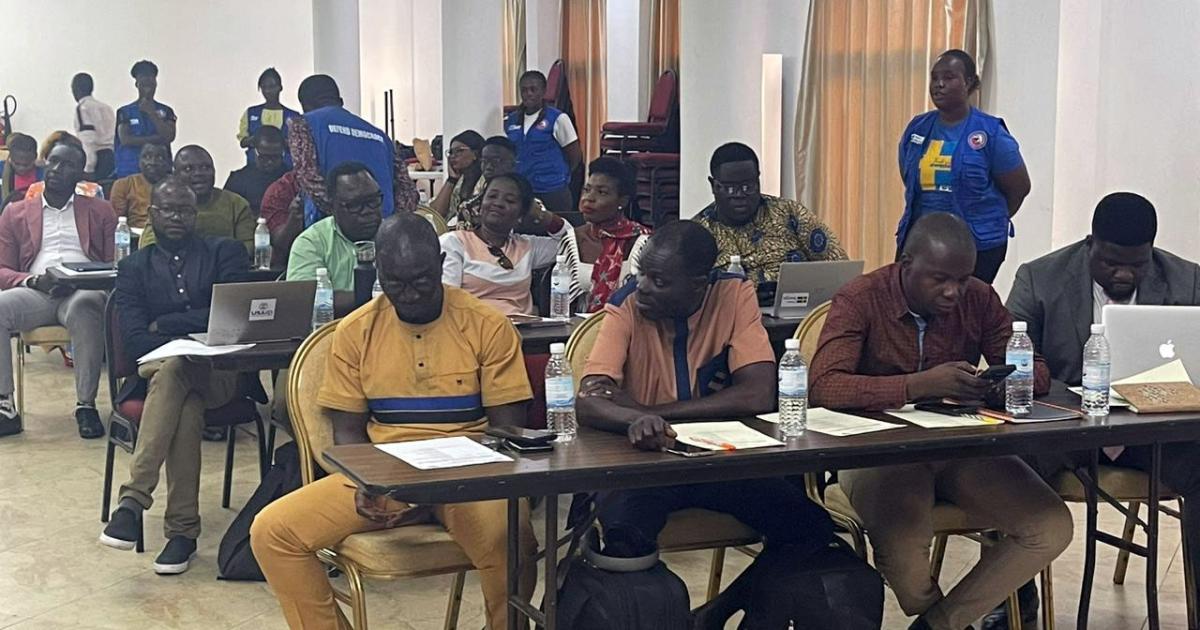
He made the remark on Tuesday, May 2, at the end of a one-day national policy dialogue on political accountability, organized by Naymote-Partners for Democratic Development under the auspices of the Democracy Advancement Program (DAP), funded by the Swedish International Development Agency (SIDA).
Kolubah claimed that Naymote did not do justice to the government and the President.
He therefore called on Naymote to define what is termed “promises” in its context because, according to him, almost all of President Weah’s promises have been fulfilled.
The latest report on the status of President George Weah’s promises made over the last five years has shown that not much has been done to improve the lives of the ordinary people.
The report, which covered January 2018 to December 2022, tracked President Weah’s promises and the status of their implementation annually. The latest report is also part of the organization’s activities in promoting good governance.
According to the report, President Weah was elected on a mantra of ‘change’ and his key promises included economic reforms that would ensure substantial Liberian participation in the economy, fighting corruption, and enhancing service delivery.
Commenting further on the 292 promises made, Kolubah stated that he sees a difference between Weah’s manifestos and speeches made during political gatherings and wondered what Naymote termed as “promises” made to the people that prompted the use of the word ‘failed promises’ made to Liberians.
As part of the report that was glanced at, he is still pondering how Naymote got the 292 promises that are being reported but, according to Kolubah, ranging from one to 10, it is not wrong to call them promises.
He claimed that Naymote’s decision to also attribute statements made by the Party’s National Chairperson, Mulbah Morlu, to the President is troubling, and it is something that also makes the report inaccurate.
The report, Naymote says, documents promises and policies made by the President during and after the 2017 presidential campaign, which aim is to promote political accountability, influence public policy and stimulate discussions among citizens and stakeholders. This discussion will hopefully empower and give voters a voice in reviewing the social contract between them and their leaders.
The report narrates that this edition of the President’s Meter Project reports on 292 promises made by the president, his political party, and the government over the last five years.
Of the 292 promises, Naymote says 65 promises came from the Coalition for Democratic Change 2017 Manifesto, 34 from campaign speeches, policy statements, presidential priority projects (3Ps), and Annual Messages to the Legislature, 6 from the COVID-19 State of Emergency (SoE) relief support, 8 from Pillar four of the PAPD, 167 from the President’s Nationwide County tours of 2021 and 2022, 8 from the President’s speech at the U.S. Summit for Democracy held in December 2021, and 4 from the President 65th Armed Forces Day Message on February 11, 2022.
The report indicates that this assessment found that only 8% (24 promises) have been fully implemented by the government over the last five years. The assessment also found that the implementation of 91 promises (31% of all promises) was ongoing during the reporting period. Therefore, out of all promises, attempts have been made on only 39% (the sum of those completed and those with ongoing activities).
Nearly two-thirds of all promises, 61% or 177 promises, were identified as ‘Not started/ not rated’ because the government had not commenced work on their implementation, and there was no available information on the status of those promises, the report indicated.
According to the report, the majority of the promises implemented are promised under Pillar 2 of the Manifesto (Economy and Jobs). These constituted (56%) of all completed promises. Specifically, promises on infrastructural development received a high completion rate — constituting 38% of all completed promises.
Pillar 1 of the Manifesto (Power to the People), which has a total of 106 promises, has the lowest completion rate of 8%. Although the completion rate under Pillar 4 (Governance and Transparency) remains the lowest, the assessment however observed that implementation of some promises under this thematic area was ongoing and these could take several years due to the complex nature of the institutional and legislative reforms that may be required to fully implement them.
Additionally, the report points out the assessment found that there were limited efforts by the government on promises centered on ‘Physically Challenge and Senior Citizens’, and action was taken on only 1 out of 10 promises under this sector. However, the government made progress by taking action on all 8 promises under ‘Gender Equality’.
“As the Weah-led government completes its six-year mandate, it is time for the government to lead internal processes of self-evaluation and prioritize specific sectors for implementation ahead of the end of the mandate.
In particular, fulfilling promises on governance, accountability and anti-corruption are crucial as they were a key part of the many policy speeches that elicited support for President Weah during the presidential campaign and after the inauguration. Implementing promises in these areas is crucial for strengthening institutions and laying the foundations for delivering on all other promises.”
This report is Naymote’s fifth edition of the President’s Meter project, which tracks and reports on promises made by President Weah and the CDC government.
The President Meter project is a democratic monitoring tool used by Naymote Partners for Democratic Development to provide an independent assessment of the implementation of the campaign and post-election promises made by President George Manneh Weah and the Coalition for Democratic Change (CDC) during the 2017 elections and after he took office in January 2018.
This initiative seeks to promote transparency and political accountability to cement the social contract between Liberians and their elected officials.
The aim of Naymote’s report is to inform citizens about the President’s performance against promises he made during the period under review and to improve communication between the people and the government.
Further, the Naymote PADD and its partners hope that citizens would use the information provided in the report to measure the performance of their government and hold the government accountable from a more informed position.
However, this year’s report was funded by the Swedish International Development Agency (SIDA). We want to appreciate the Open Society Initiative for West Africa, (OSIWA) for supporting this project over the past years. Thanks for the partnership and support to our institution over the years and for believing in our vision and supporting our work.
It can be recalled that Naymote, Partners for Democratic Development, released George Weah’s five-year performance report covering 2018 January to 2023 January, respectively.
The report also seeks to monitor, track, document, rate, and report on the performance of the President of Liberia during and after the election, as well as track his development agenda since its inception.
Johan Romare, Deputy Economic Officer and Head of Development at the Embassy of Sweden, extolled Naymote and its team, particularly Liberia, for their democracy and tolerance in allowing civil society organizations a platform to speak their minds, regardless of the content in the country.
Romare said the Swedish Embassy is very proud to support Naymote on this project because, in the end, it benefits the citizens and not Naymote.
“So, we are happy to attend this dialogue to listen to the government and political parties about how they feel about this well-researched report,” he said. Romare told the gathering that the government has done well for the level of democratic maturity in promoting CSO voices in Liberia.
Earlier in his welcome remarks, Bako Korboi Shauibu, program assistant at Naymote, informed the participants that the political accountability dialogue is a continuation of its citizen engagement exercise on the President’s Meter Project and to discuss the way forward.
Shauibu said the Liberian leader made a total of 292 promises nationwide, inclusive of the county tour.
He said out of that number, 24 promises, constituting 8%, had been fully implemented by President Weah, and 91 outstanding promises, constituting 31% of all promises, were ongoing during the reporting period.
“Therefore, out of all promises, attempts have been made on 39%, which sums up those completed and those within ongoing activities,” Shauibu indicated.
He added that nearly two-thirds of all the promises—177 promises—were identified as not started or not rated because the government had not commenced work on their implementation and there was no available information on the status of those promises.
Shauibu added that the assessment found that there were limited efforts by the government on promises entered under “Physically Challenged and Senior Citizens” and that out of 10 promises under this sector, action was only taken once, while the government made progress by taking action on all eight promises made under the “Gender Equality” sector.
For her part, Peace Thor Mahteh-Boyee further states that the majority of the promises implemented are under Pillar 2 of the Manifesto on Economy and Jobs: “These constituted 13 of all completed promises; 35 promises are ongoing, and 91 promises have not started or been rated due to a lack of information.
Mahteh-Boyee said the assessment, however, observed that implementation of some of the promises under this thematic area was ongoing and could take several years due to the complex nature of the institutional and legislative reforms that may be required to fully implement them.
She added that the findings of this assessment showed that President Weah and his government have yet to implement nearly two-thirds of the promises they have made to the people of Liberia.
Mahteh-Boyee said numerous promises have been made over the years on poverty reduction, infrastructural development, social service delivery, the rule of law, government accountability, and decentralization, among others.
According to the Civil Society Organization, delivering on promises made in campaign manifestos and policy statements is important for sustaining trust between the government and the citizens; conversely, failing to deliver undermines trust and confidence in the authority of the government.
“Undoubtedly, these reforms would build the foundation and systems required to manage public infrastructure, sustain growth, and retain jobs.” “For instance, making the Liberia Anti-Corruption Commission and the Public Procurement Concession Commission more effective and efficient would potentially reduce waste, fraud, and abuse and save resources for investment in social services and infrastructure,” she said.
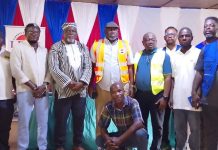
Meanwhile, the dialogue was graced by representatives of political parties, civil society organizations, and officials of the government of Liberia and was aimed at dissecting the 292 promises that the president made in Liberia.
The dialogue was held under the theme, “National Policy Dialogue on Politics and Accountability 2023: Promoting Political Accountability, Influencing Public Policy, and Stimulating Discussions among Citizens to Cement the Social Contact between Liberians and the Elected Officials.”
For More News And Analysis About Liberia Follow Africa-Press