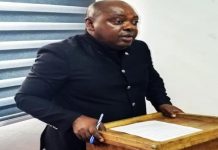
Africa-Press – Liberia. Rev. Jallah McCay, the Special Assistant to the Bishop of the Lutheran Church in Liberia (LCL), has warned the church against what he calls “romanticizing and spiritualizing the issues of justice in Liberia”.
Rev. McCay said over the years the church has continued to spiritualize the issues of justice, which he declared is unacceptable. “We cannot romanticize the issue of justice as a church. We cannot spiritualize the issues of justice, especially when it comes to the St. Peter’s Lutheran Church massacre. The church must ensure that justice is done.” Rev. McCay warned.”
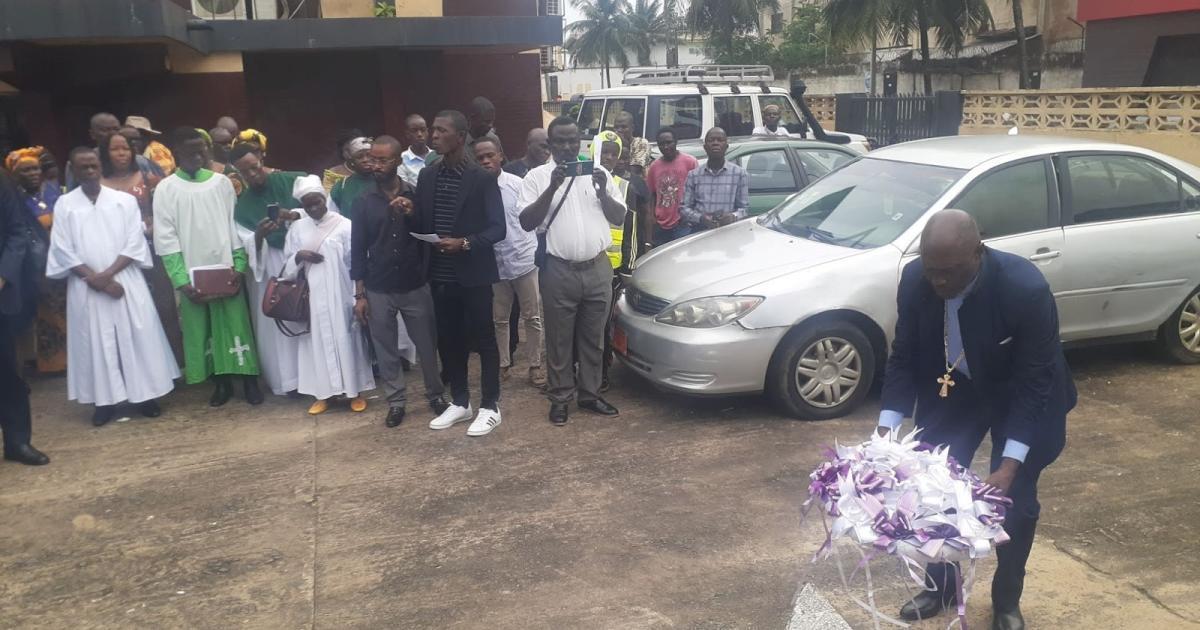
The Lutheran prelate made the assertions recently when he spoke at a program marking the 33rd memorial service of the Lutheran Church massacre on July 29, 2023 in Monrovia.
Rev. McCay, who is also a victim of the Liberian civil war, further narrated that his own father was a victim as a result of the Liberian civil conflict.
“I want to let the world know that since the church is the one that established this country, the church must stand up in the fight for justice.”
Giving some historical facts about the Lutheran Church in Liberia, he claimed that it was brought by American Missionaries who established it on April 28, 1860 for the purpose of bettering conditions of the natives.
According to him, they envisioned good governance, through democracy, a democratic governance that would have been based on the rule of law, considering that all human beings are created in the image of God, and that God made the world, including Liberia, to the extent that each person should reflect on the clearer image of God in us.
Unfortunately, Rev McCay said, corruption got rooted in the souls, emotions, intellects and willpower of the governing powers from July 26, 1847, until April 12, 1980, when the People’s Redemption Council (PRC) of the late President Samuel K. Doe violently overthrew the government of President William R. Tolbert, Jr.
“And let me just quickly remind us and the Liberian people who are listening that the government neglected the poor people of Liberia and let it go forth that one of the reasons that the PRC overthrew the government of the late Tolbert was because it claimed that the then government neglected the Liberian people.”
He narrated that when they listened to the radio and heard about rampant corruption and illegal seizures and searches across the country, “we listened that morning again on the radio there were reports of high rate of unemployment and a skyrocketing cost of living and an appalling health situation of Liberia.
“Those were the effects of political corruption and I say to all of us as Liberians today, that the Church founded this country. In other words, I say Christians from the USA were the ones who came and established this country, believing in the virtues of God as revealed in the scriptures.”
He added that because corruption got rooted in the emotions of the intellect, it was the reason unguided individuals demonically inspired, who were thirsty for blood and power at the time, came in this very (sacred place) — with no respect for God and the rule of law — and “busted-up, and murdered little kids and moved into the school building just to remain in power.”
Government fails to investigate the Massacre
In 2009, the Truth and Reconciliation Commission (TRC) recommended that Liberia establish a war crimes court in order to investigate atrocities committed during the civil wars, including the St. Lutheran Church massacre, and prosecute those responsible. However, to date the government has failed to do so.
Also in 2021, after reviewing 2,000 pages of evidence including 8 witnesses declarations and 2 expert reports, a U.S. Court found that soldiers of the Armed Forces of Liberia (AFL), especially the Special Anti Terrorist Unit (SATU), were responsible for the massacre and that it was a war crime and crimes against humanity.
The Liberian government was sued to the ECOWAS Court
It may be recalled that in 2018 the UN Human Rights Committee directed Liberia to establish an accountability process to investigate and prosecute perpetrators of civil war era crimes. In October 2022, the Global Justice and Research Project (GJRP) and three sibling survivors of the massacre sued Liberia to the ECOWAS Court because Liberia has failed to investigate and prosecute perpetrators of the massacre.
However, a hearing is set for September 27, 2023, at the ECOWAS Court in Abuja, Nigeria. From all indications, this will be the first time the Liberian government will be forced to respond in court for its failure to investigate and prosecute those responsible for the St. Lutheran Church massacre.
For More News And Analysis About Liberia Follow Africa-Press