Africa-Press – Liberia. Hand axes which are made from stone are the longest-used tools in human history. According to known examples, the first used were over 1.75 million years ago which coincides with the human ancestor Homo erectus.
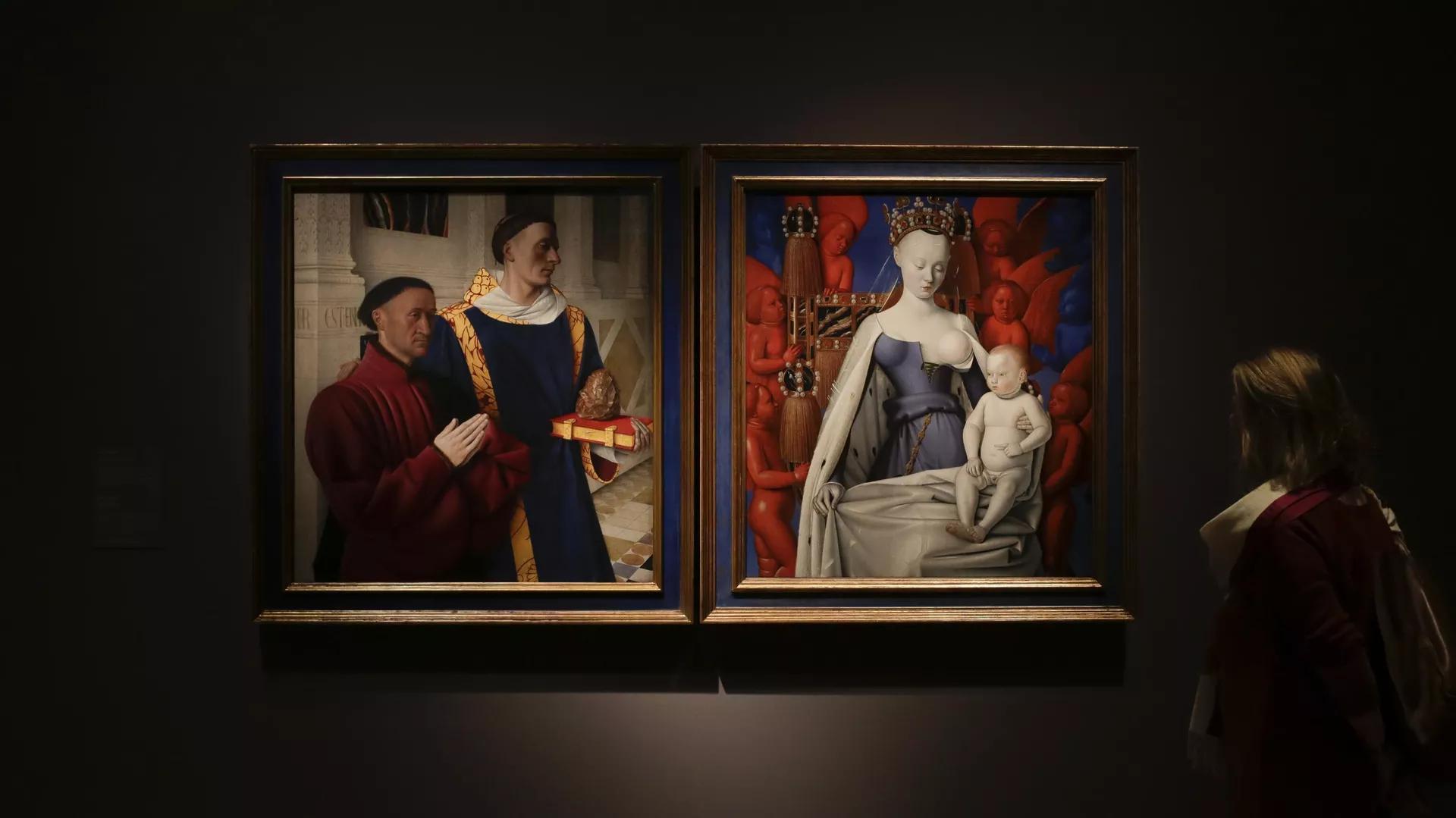
The “Melun Diptych” by Jean Fouquet is a devotional, religious painting from the mid-1400s. The right panel depicts the Virgin and Christ child surrounded by blue and red cherubim. The left panel depicts Etienne Chevalier with his patron saint; Saint Stephen, who holds a book with an oddly shaped rock placed upon it. The Northern Renaissance diptych was commissioned by Chevalier, who served as the treasurer for King Charles VII of France.
Art historians have often referred to the rock as a reference to Saint Stephen’s martyrdom, in which he was stoned to death.
But recently, a team of researchers have taken a second look at the oddly shaped stone. Experts from Dartmouth and the University of Cambridge say the stone is likely the earliest artistic depiction of an Acheulean hand axe. These devices were used by our ancient ancestors, most likely the Homo erectus, to cut meat, wood and to forage for food.
But prior to the Age of Enlightenment, people believed these mysterious rocks were “thunderstones,” according to text from the mid-1500s. They believed these rocks were not tools used by our ancestors, but were instead, rocks which had fallen from the sky during storms.
In fact, Swiss physician and naturalist Conrad Gessner featured a print of the hand axe in his book, “De Rerum fossil” from 1565, and called the stones “jokes of nature.”
Disregarding the hand axe representation, the oil on wood panel painting is already mysterious in style: the Virgin Mary and her child are painted in a ghostly white, while the rich red and blue cherubs placed behind them form a symmetrical pattern of shiny, sphere-like shapes. The image is certainly otherworldly.
The patron and saint are depicted in a more realistic, less idealized style, as the two kneel towards the Virgin Mary. The rock itself most likely intended to be a reference to Saint Stephen’s martyrdom, as Fouquet would not have known its true origin. But co-study author Steven Kangas, a senior lecturer in the Department of Art History at Dartmouth, has always had a feeling the true “rock” originated from an earlier time.
Using an infrared analysis, Kangas and other experts found that Fouquet had gone to great care in order to sketch, paint, and rework his depiction of the hand axe. The French painter’s choice of color as well—color variations of yellow, brown and red—mimics the weathering of these stone artifacts which would have been made from flint or silica-rich rocks. And using an approach called Elliptical Fourier Analysis, they found a 95% match between the shape of the stone in the painting, and the shapes of Acheulean hand axes.
“Fouquet seems to have taken a special interest in the stone object, probably because he had seen one that struck his attention and imagination,” added Kangas.
For More News And Analysis About Liberia Follow Africa-Press