Africa-Press – Liberia. A high-powered delegation from the United Nations H6 Partnership and the Liberian Legislature Health Committee committed themselves to addressing the high rate of maternal mortality in the country.
The rate of maternal mortality stands at 1,100 women in Liberia due to childbirth and other health-related complications. At a recent event held on Capitol Hill in Monrovia, the stakeholders committed to investing in maternal health in order to tackle the situation.
The UN H6 Partnership, which includes UNICEF, WHO, UNFPA, UN Women, UNAIDS, and the World Bank, aims to support countries in achieving health-related Sustainable Development Goals (SDGs), focusing on reproductive, maternal, child, and adolescent health.
The initiative builds on past achievements, addresses unfinished agendas, and integrates new strategies to improve health outcomes along the SRMNCAH (sexual, reproductive, maternal, newborn, child, and adolescent health) continuum.
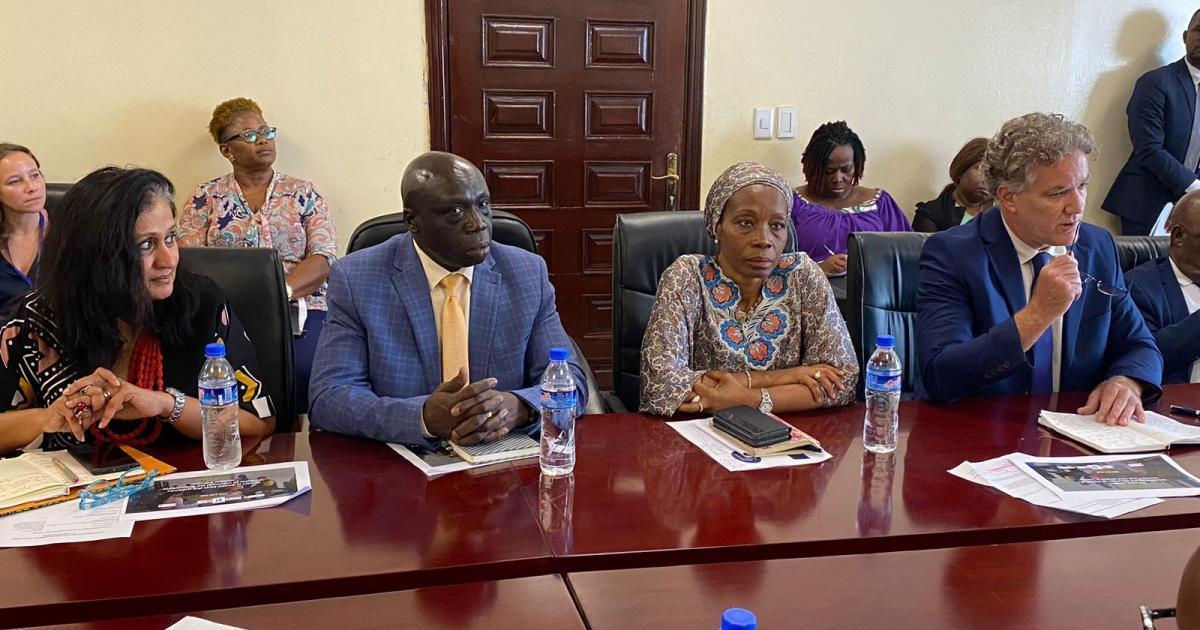
The interactive dialogue, held in the Capitol building’s conference room, gathered over 24 lawmakers from both the lower and upper house health committee chairpersons and members. The conversation was presided over by House Speaker J. Fonati Koffa and Grand Cape Mount County Senator Dabah M. Varpilah, Senate Health Committee chairperson.
The diplomatic mission from the UN H6 Partnership consists of over 14 delegates from the respective institutions who have been assessing Liberia’s healthcare delivery sector for over two weeks.
The program includes a district micro-planning exercise in the first week of the mission (April 22-26), followed by an engagement with government, local and international stakeholders, and community representatives for high-level advocacy on RMNCAH in the second week.
Dr. Anshu Banerjee, Director of the Department of Maternal, Newborn, Child, and Adolescent Health and Ageing at WHO and Assistant Director-General in the Division of Universal Health Coverage and Life Course, highlighted key findings during the last two weeks of working with the Ministry of Health and other partners on the ground.
He said, “The workshop aimed to identify where policies and lawmakers can support the reduction of maternal and child mortality. Banerjee shared key data on maternal, newborn, and child health in Liberia.”
Banerjee adds, “1,100 women die in childbirth in Liberia per year, equivalent to 27 Chinese trucks or three deaths per day. The target is to reduce this number by 50% in four years. Liberia experiences 37 newborns per 1,000 live births, or 8,510 per year, equating to 189 classrooms or 23 newborns per day. The target is to decrease this rate from 37 to 13, a 63% reduction in five years. 14,500 stillbirths occur every year, nearly one classroom per day, or 40 stillbirths per day. The goal is to reduce this by 50% in five years.”
He noted that under-five mortality is 93 per 1,000 live births, amounting to 22,041 per year, almost 500 classrooms. The target is to reduce it by more than 54% in five years. Teenage pregnancies account for 30.3% of overall pregnancies, totaling 72,000 teenage pregnancies per year. The goal is to reduce this by one-third in five years.
WHO Country Representative Dr. Clement Peters stated that the mission’s objective is to conduct an RMNCAH micro-planning exercise to assess the current RMNCAH status, resources, and needs in selected districts in two counties using a micro-planning approach.
The H6 Partnership aims to follow up on RMNCAH national policies, strategies, and plans, including the Every Newborn Action Plan and Ending Preventable Maternal Mortality (ENAP/EPMM) acceleration plan.
The mission also seeks to conduct high-level advocacy for increased focus and resources/investment in maternal, newborn, child, and adolescent health, both domestically and internationally.
Peters added that the mission’s expected outcome is to develop a roadmap for implementing recommended interventions and policy updates for accelerating the reduction of maternal, newborn, and under-five mortality in Liberia.
House Speaker Koffa and Grand Cape Mount County Senator Dabah M. Varpilah acknowledged the alarming data and committed the legislature to use the budget as a policy to shape Liberia’s healthcare system.
Two priorities for the government are healthcare and education, and lawmakers are ready to work with the UN H6 to ensure Liberia’s healthcare system provides quality and affordable service to address the data.
“We are excited to be here today. At the highest level of this government, we are committed to healthcare issues. For example, the budget was submitted to us at US$692 million, and the Wage Means and Finance Committee advised that the health budget was low. We met with the President and discussed it, and today the budget is in good shape. Now, we will work with the Ministry of Health to ensure proper spending for the benefit of the people,” they said.
For More News And Analysis About Liberia Follow Africa-Press