Africa-Press – Liberia. Government officials, civil society leaders, development partners, and youth advocates have committed to transforming Liberia’s reproductive health landscape from rhetoric to reality.
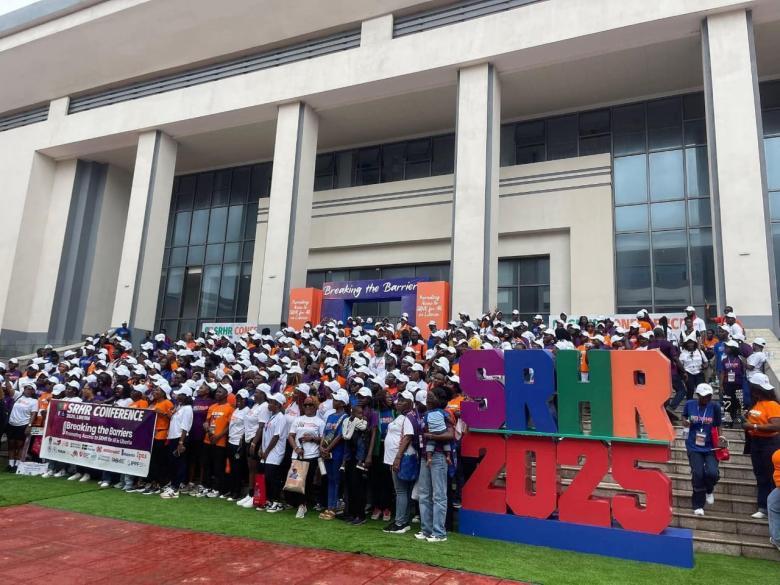
The three-day national sexual reproductive health rights conference, organized by the Amplifying Rights Network (ARN) in partnership with multiple stakeholders, concluded with a unified message: the time for talking has ended, and the era of action must begin.
“We spoke, we analyzed, we shared the painful truth. Now, I say, we must act,” declared Brittney Varpilah of LastMile Health, the conference’s keynote speaker, capturing the urgency that permeated the closing sessions.
Varpilah outlined three critical pillars that must anchor Liberia’s path forward in advancing SRHR: Power to the people, investment with impact, and accountability.
She said true change requires directly funding youth-led and women-led feminist organizations and giving them permanent seats at decision-making tables, not just speaking opportunities. “It means trusting communities to lead their own liberation,” Varpilah emphasized.
“Matching powerful words with tangible resources through increased domestic financing for health and rights, complemented by smart, flexible funding from international partners. “An investment in SRHR is not a cost for everyone here,” she stressed. “It is the smartest investment in Liberia’s peace and prosperity.”
She stressed the need to move beyond promises on paper to create real mechanisms of accountability. “We must be accountable not just for the number of contraceptives distributed, but for the dignity with which they are given. Not just for policies passed, but for lives transformed.”
Loretta Popekai, representing the National Civil Society Council of Liberia, challenged participants not to let the conference’s momentum die. “Do not sit on what you have learned over the past few days,” she urged. “What you have learned from here, you can organize meetings, you can discuss it at the community level, at the school level.”
Popekai outlined specific recommendations that emerged from the conference discussions:
Increase investment in sexual reproductive health services to ensure universal access for all individuals, including marginalized populations
Strengthen partnerships between government agencies, civil society organizations, community-based organizations, women’s groups, youth groups, and health providers
Prioritize comprehensive sexuality education in schools and communities
Advocate for policies that remove barriers to access, such as stigma, discrimination, and harmful traditional practices
The conference notably showcased youth leadership, particularly young women, driving change from mobilization to advocacy. “We saw youth, especially young women, leading the change from the playing stage to mobilizing, participating, reinforcing, and reengaging to ensure that this conference is a success,” Popekai noted.
Dr. Nuntia Gbanlon Nuah, Deputy Minister for the Family Health Division at the Ministry of Health, reaffirmed the government’s commitment to translating conference discussions into concrete actions. “As a ministry, we reaffirm our commitment to translate the commitments made here into concrete actions,” she stated, emphasizing continued partnership with civil society organizations, counties, development partners, and young people.
Representing Speaker Richard Koon, Cllr James Verdier, Chief of Office Staff, acknowledged the conference’s groundbreaking nature. “In the last 30 to 45 minutes I’ve been here, I’ve heard things that for me growing up was an abomination,” Verdier admitted, noting how openly discussing SRHR topics signals societal growth and increased awareness.
Verdier pledged legislative support: “Our offices remain open, and we look forward to an enduring partnership.”
The conference broke new ground by piloting Hub of Participation (HOP) centers across multiple counties, enabling grassroots voices to participate remotely. Coordinators from Nimba, Bong, Grand Gedeh, Gbarpolu, and Bomi counties facilitated local participation, with the Bomi HOP notably including numerous persons with disabilities.
“This is a pilot that allows more grassroots experiences to be shared,” explained Facia Harris, head of the 2025 organizing committee, urging unity among organizations and initiatives. “We can achieve more if we unite. We bring all of that expertise and all those voices and agencies together to be able to strengthen our advocacy.”
The Swedish Ambassador commended the conference’s energy and organization, encouraging participants to take their knowledge “to the streets, the villages, the dirt roads of this country.”
On behalf of UNFPA and the United Nations Development System in Liberia, representatives pledged ongoing partnership and support for the nation’s SRHR agenda.
The conference concluded with a powerful vision: “A Liberia where no woman dies giving life. Where no girl’s future is stolen. And where every person has the power to write their own destiny.”
Harris proclaimed in her closing remarks, “Together, we can break barriers and build a healthier and more equitable Liberia.”
The conference’s proceedings and county hub reports will be disseminated to ensure grassroots voices remain prominent in the national dialogue on sexual and reproductive health and rights.
For More News And Analysis About Liberia Follow Africa-Press