Africa-Press – Liberia. Monrovia — The Women NGOs Secretariat of Liberia (WONGOSOL) and the Center for Transparency and Accountability in Liberia (CENTAL) have officially launched a Qualitative Research Report assessing service delivery and the functionality of local governance structures under Liberia’s decentralization framework.
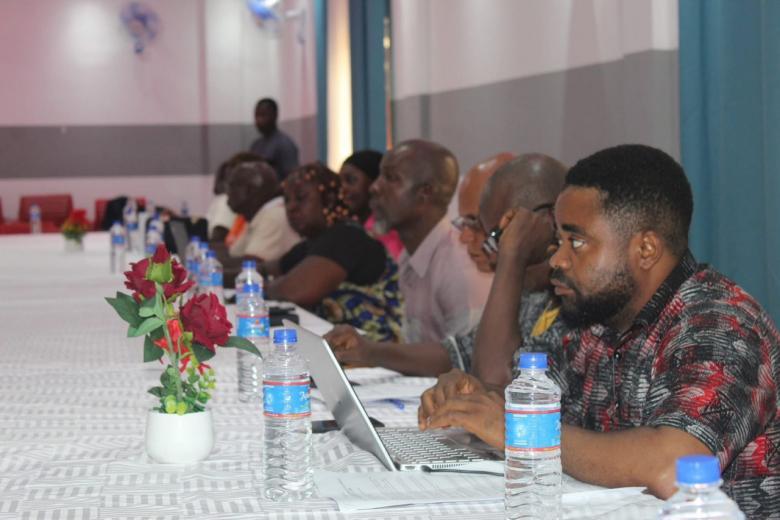
The ceremony was held Friday at A’ La Laguna, Congo Town Backroad, with support from UN Women Liberia through the Peacebuilding Fund.
The event brought together representatives from government institutions, civil society organizations, development partners, county authorities, women’s groups and persons with disabilities to discuss the findings and policy implications.
CENTAL Presents Overview of Local Governance Project
Providing an overview of the initiative, Roger Hinneh of the Center for Transparency and Accountability in Liberia (CENTAL) highlighted the purpose and scope of the ongoing project titled Enhancing Citizens Participation in Local Governance.
The initiative, jointly implemented by CENTAL and the Women NGOs Secretariat of Liberia (WONGOSOL) with support from UN Women, aims to strengthen inclusive participation in local governance across the country.
Mr. Hinneh explained that the project focuses on increasing the involvement of women, youth, and persons with disabilities in county-level decision-making processes. It also seeks to enhance the capacity of local authorities, including County Council members and staff at County Service Centers, to improve service delivery to citizens.
The project is currently being implemented in Nimba, Bong, Grand Gedeh, and Bomi Counties.
According to Mr. Hinneh, the long-term vision is to ensure that citizens engage local authorities more effectively, demand accountability, and contribute meaningfully to decisions affecting development in their communities.
“We believe local authorities play a major role in Liberia’s development,” he said. “When citizens are empowered to participate and women are fully included, we can achieve a governance structure that benefits the entire country.”
Mr. Hinneh noted that the report launched at the event provides key insights into the state of decentralization in the project counties, how governance structures are functioning, and citizens’ perceptions of service delivery. He encouraged continued collaboration among government stakeholders, civil society, and partners to ensure a more accountable and inclusive governance system nationwide.
CDG Representative Calls for Enhanced Service Delivery Through Local Governance Strengthening
Georgina Coke, a representative of the Center for Democracy and Governance (CDG), has praised CENTAL and WONGOSOL for their collaborative efforts to improve accountability and citizen engagement in local governance across Liberia. She made the remarks during the launch of a new research report focused on local governance effectiveness.
Coke stated that the newly released findings strongly complement ongoing initiatives being implemented by CDG, NEMOT, and CENTAL under the project titled Strengthening Political Governance and Accountability in Liberia, funded by the Government and people of Ireland.
As part of the initiative, CDG works closely with partners in Margibi, Grand Bassa, and Bong counties, delivering capacity-building trainings to local county councils and civil society organizations. The goal, she emphasized, is to strengthen advocacy for improved public services—particularly within county education and health offices.
“We have been doing this work for more than a year, and we believe that progress is being made,” she said. “This report will serve as a useful guide to further enhance service delivery in counties across Liberia.”
Coke extended appreciation to CENTAL, WONGOSOL, and all collaborating partners for their commitment toward advancing decentralization and responsive governance.
“Congratulations again to the team,” she concluded. “We look forward to the recommendations that this report will offer. Thank you so much.”
The event brought together local officials, civil society leaders, and development partners dedicated to building a more transparent, inclusive, and efficient local governance system in Liberia.
Purpose of the Research
The study aimed to:
Disseminate evidence-based findings to key stakeholders
Promote accountability and reforms in decentralized governance
Strengthen citizen participation, particularly among women, youth, and persons with disabilities
Project Scope
The research was conducted in four counties: Bong, Bomi, Nimba and Grand Gedeh
A total of 385 respondents participated—52% male and 48% female—representing citizens, local authorities, civil society actors, persons with disabilities, and the business community.
Key Findings
The study revealed progress in decentralization but highlighted major gaps in transparency, responsiveness, and inclusion:
The research findings show that while 79% of respondents are aware of county governance structures, only 42% have participated in county-level meetings. Transparency remains a major concern, with just 27% rating County Councils as transparent and 25% saying the same about County Service Centers. Participation of marginalized groups is significantly low as well: only 25% believe women are included in development decision-making, 20% acknowledge youth involvement, and a mere 8% say persons with disabilities are engaged in county governance processes. Additionally, the majority of respondents reported having low to very low influence over decisions related to the County Social Development Fund (CSDF), indicating that citizens continue to feel sidelined in the management of local development resources.
Respondents cited poor communication, lack of invitations, and limited access as key barriers to participation in decision-making processes.
The Superintendent’s office and County Service Centers were ranked among the least responsive service providers, especially regarding national documents such as birth certificates and IDs.
County Performance Comparison:
Nimba— Most active in citizen participation
Bong & Bomi — Moderate progress
Grand Gedeh — Weakest performance across all indicators
CENTAL
Mr. C. Rogget Chea emphasized the project’s goal to strengthen accountability and empower local citizens:
“Local authorities play a major role in Liberia’s development. When citizens are informed and included, decision-making becomes more effective and inclusive.”
UN Women
Speaking on behalf of Country Representative Madam Comfort Lamptey, Leeneh Yiatte Kiamu noted:
“This report is a critical step toward a more transparent and inclusive local governance system—especially for women, youth, and persons with disabilities who remain largely excluded.”
Government of Liberia — Ministry of Internal Affairs
Deputy/Assistant Minister Emmanuel Wheinyue officially launched the report, commending the research while urging further improvements:
“This report will serve as an important tool for strengthening local governance. However, future assessments must include both documentation and non-documentation services such as health, agriculture, infrastructure, and education core pillars of true decentralization.”
He reaffirmed government’s commitment to ensuring:
full implementation of the Local Government Act (2018)
strengthened county councils to promote transparency
decentralization of essential services away from Monrovia
Key Recommendations
Improve communication between county authorities and citizens
Enhance transparency in CSDF and local government decision-making
Strengthen inclusive participation, particularly for marginalized group Boost capacity of both citizens and local authorities
Scale up accountability mechanisms at county and district levels
Liberia Senate Political Advisor Calls for Stronger Local Governance and Decentralized Service Delivery
Political Advisor at the Liberia Senate, Lasana S. Kanneh, has underscored the urgent need for a more decentralized governance structure to enhance service delivery across the country. Speaking during a stakeholder engagement on local governance, Kanneh emphasized the importance of fully implementing the Local Government Act of 2018.
Kanneh noted that while “efforts have been made” since the passage of the Act, more must be done to ensure that local authorities are empowered and citizens in rural communities have easier access to government services.
He highlighted the recently passed Revenue Sharing Bill as a major step toward decentralization, explaining that it allows a portion of national revenues generated in rural counties to remain there for development purposes.
“The development of this country cannot continue to be centralized,” Kanneh stressed. “Almost everything is in Monrovia. Even for a birth certificate or passport, people in the rural areas still have to travel to the capital. These processes must be decentralized.”
He commended CENTAL and its partners for their continued advocacy to strengthen local governance, calling for collective action from civil society, government institutions, and lawmakers to drive accountability and equal service delivery nationwide.
Kanneh reaffirmed the Legislature’s commitment to advancing reforms that support inclusive governance and ensure that development reaches all counties across Liberia.
“We want the full and overall development of this country,” he said. “We must continue working together to make decentralization a reality.”
Conclusion
The report underscores the urgency of advancing decentralization to ensure that all Liberians regardless of location — have equal access to public services and meaningful participation in governance.
As Liberia continues implementing local government reforms, stakeholders pledged to use the findings to promote reforms that drive inclusive development and improve service delivery across the country.
For More News And Analysis About Liberia Follow Africa-Press