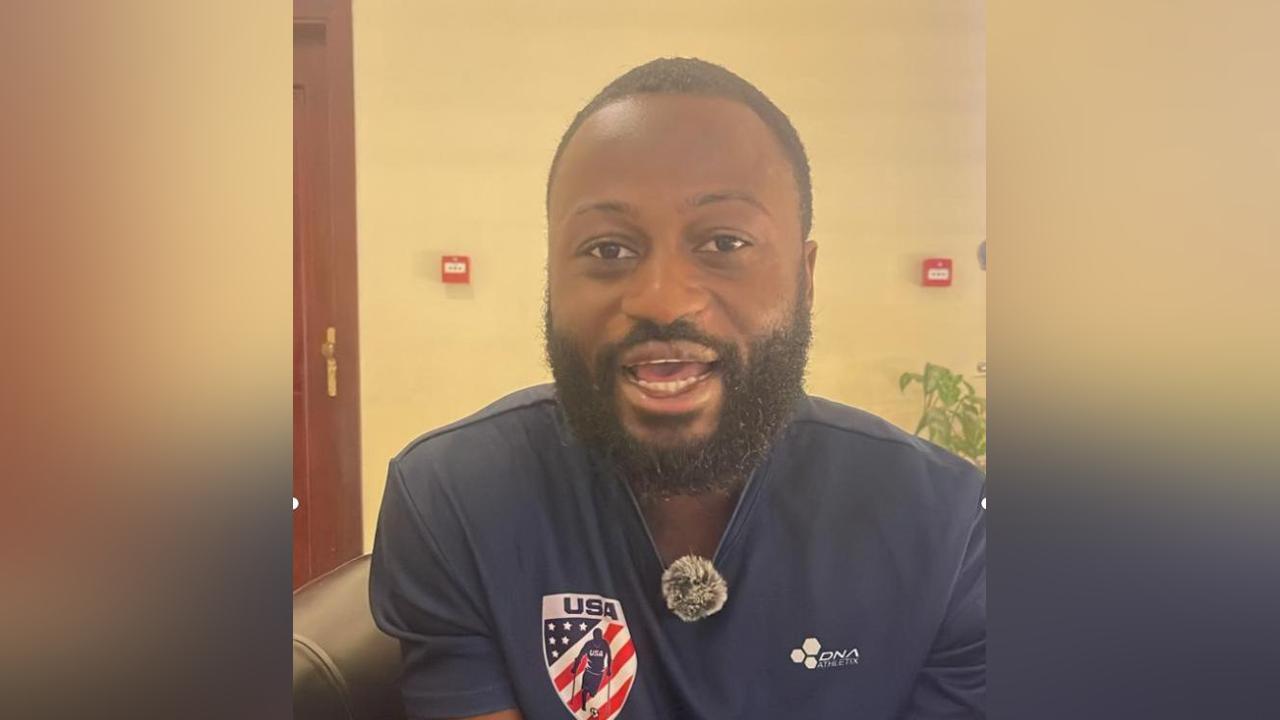
Africa-Press – Liberia. United States of America’s amputee football star Melvin Coleman is back on home soil for a visit that is already making a profound impact on players, administrators, and disability sports advocates across the country.
Coleman, a standout for the United States National Amputee Football Team, is of Liberian heritage.
His visit aims to reconnect with his roots while partnering with the Liberia Amputee Football Federation (LAFF) to bolster the development of the sport locally.
In an exclusive interview with FrontPage Africa, the amputee athlete described the trip as a deeply personal mission.
“It’s been great being back home,” Coleman said. “Enjoying the food, the weather, and spending time with family and friends. Liberia will always be home for me.”
From Cancer to the Global Stage
Coleman’s rise to the pinnacle of amputee football is defined by resilience. After relocating to the United States, he lost his leg to cancer in 2016, a devastating blow for a young man who grew up on the playgrounds of Monrovia.
“I was very active growing up in Liberia playing basketball, football, everything,” he recalled.
“After losing my leg, there was a long period where I felt like I couldn’t do any of those things again.”
That changed when he discovered adaptive soccer. Played on crutches without prosthetics, the sport offered a new lease on life.
“It changed my life,” Coleman said. “It gave me my confidence back and allowed me to play the sport I’ve always loved.”
A lifelong Arsenal supporter, Coleman noted that football helped him rediscover a sense of normalcy and independence that cancer had briefly taken away.
Representing the U.S., Remembering Liberia
While he proudly wears the colors of the United States on the international stage, Coleman emphasized that his success is a platform to show that disability is not a limitation.
“To represent something bigger than myself is a blessing,” he said.
However, he remains a staunch admirer of the Liberia National Amputee Football Team, a squad that has consistently brought glory to the nation by winning multiple African titles.
Coleman described the Liberian “Lone Star” amputees as an “elite” unit.
“They’re strong, competitive, and athletic,” Coleman said. “They’ve accomplished so much with very limited resources. They deserve far more recognition than they currently receive.”
A Call for Institutional Support
During his stay, Coleman has helped facilitate equipment donations through international partnerships. However, he was quick to point out that charity alone cannot sustain the sport; institutional reform is required.
Coleman revealed he plans to meet with the Minister of Youth and Sports to advocate for greater inclusion and the integration of disability sports into national programs, such as the National County Sports Meet.
“It’s important that the government and sporting authorities don’t forget people with disabilities,” he stressed. “Inclusion shouldn’t just be an afterthought. Whether in sports or daily life, policies should intentionally support people with disabilities.”
Message of Hope
For young Liberians facing similar physical challenges, Coleman’s message was simple: resilience is key.
“Don’t give up. Keep trying,” he said. “You never know your true potential until you try something new. This is not the end, it’s an opportunity to adapt and keep living.”
As he continues his visit, the amputee football community sees Coleman as more than just a visiting athlete; he is a living testament that with self-belief and opportunity, limitations can be transformed into a global stage for success.
For More News And Analysis About Liberia Follow Africa-Press