
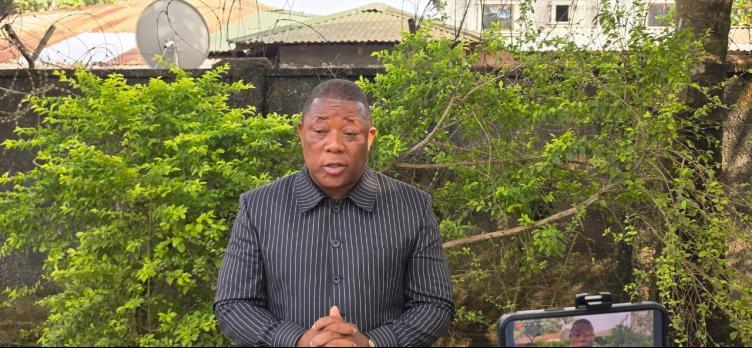
The Solidarity and Trust for a New Day, commonly known as STAND, has condemned of what it describes as an escalating pattern of human rights abuses, police brutality, selective justice and a growing climate of fear and lawlessness across Liberia.
The civil rights organization announced that it is pressing ahead with its resistance campaign against the administration of President Joseph Boakai, accusing the government of failing to uphold the rule of law and protect the fundamental rights of citizens.
In a statement Monday, January 19, 2026, STAND accused the government of presiding over the steady erosion of democratic norms while allegedly shielding individuals accused of serious crimes and deploying state security institutions to suppress peaceful dissent. The organization said these actions have created a dangerous environment in which impunity is normalized and accountability is increasingly absent.
STAND Chairman Mulbah Morlu warned that Liberia is experiencing an alarming collapse of civic freedom and institutional responsibility, a situation he said poses a serious threat to the country’s democratic foundations. He said the organization is deeply troubled by what it views as the protection of alleged rapists, the politicization of the Liberia National Police, entrenched corruption at the highest levels of government and worsening economic conditions that continue to weigh heavily on ordinary Liberians while public officials enjoy lavish lifestyles.
According to Morlu, these trends represent a direct betrayal of the Liberian Constitution as well as the country’s obligations under international human rights law.
Addressing the issue of police brutality and the suppression of peaceful assembly, Morlu accused security forces of routinely using excessive force against unarmed citizens who are exercising their constitutional rights. He said the use of tear gas, arbitrary arrests and what he described as fabricated charges against protesters reflects a pattern of political policing rather than lawful crowd control.
Morlu maintained that when the state deploys force against peaceful demonstrators while allegedly tolerating or protecting violent pro government actors, it sends a clear signal that justice is being applied selectively and that fear has become a tool of governance. He added that such conduct violates Liberia’s domestic laws as well as international conventions to which the country is a party.
The STAND chairman further criticized what he described as deliberate bias in the enforcement of public order laws, arguing that peaceful demonstrators are often targeted while counter protesters aligned with the government are allowed to engage in violence without consequence.
He warned that the increasing use of civilian provocateurs to disrupt civil society activities marks a dangerous slide toward state sponsored intimidation that could further destabilize the country and undermine public trust in democratic institutions.
On the issue of police leadership and accountability, Morlu said the continued failure of the security sector to act impartially has left it morally compromised. He argued that a pattern of protecting alleged rapists, defending individuals accused of past atrocities and violently repressing peaceful protests demonstrates a profound failure of leadership within the Liberia National Police.
According to him, the continued tenure of the Inspector General of Police under such circumstances erodes public confidence and renders the institution unfit to serve a democratic society. He called for urgent accountability measures and comprehensive structural reforms aimed at restoring professionalism, neutrality and public trust within the security sector.
Morlu also expressed concern over Liberia’s foreign policy direction, particularly the government’s diplomatic alignment with Venezuela’s leadership. He said this position contradicts Liberia’s historic commitment to democratic values and international law.
Morlu argued that aligning with a government widely criticized for election manipulation, repression and criminal activities risks undermining Liberia’s credibility and alienating long standing democratic partners. He insisted that Liberia’s foreign policy should reflect the aspirations and democratic values of its people rather than the preferences of those currently in power.
Painting a broader picture of national distress, Morlu described what he termed a multi-dimensional war being waged by the state against its own citizens. He cited widespread economic hardship, a deteriorating healthcare system, persistent insecurity and a justice system that he said often silences rape survivors while protecting perpetrators.
According to him, when citizens are trapped in poverty, denied quality healthcare while political elites seek treatment abroad, subjected to police brutality and denied justice for serious crimes, it becomes evident that the state has abandoned its social contract. He said such conditions are incompatible with human dignity and democratic governance.
Declaring civil disobedience a constitutional and moral necessity, Morlu said repeated efforts at peaceful engagement with the government have yielded no meaningful response.
He said that after nearly two years of advocacy and two peaceful mass protests, the government has chosen repression over dialogue and impunity over accountability.
Under these circumstances, he argued, sustained civil disobedience is not an act of rebellion but a lawful and moral response by citizens determined to reclaim their rights and restore constitutional order. He emphasized that all actions planned by STAND would remain peaceful and grounded in the principles of nonviolent resistance.
STAND also appealed to the international community, including donor partners, diplomatic missions and international human rights organizations, to take note of what it described as the shrinking civic space and rising threats faced by activists and ordinary citizens in Liberia.
Morlu called for enhanced international monitoring, increased pressure for accountability and the imposition of targeted sanctions against individuals responsible for gross human rights violations. He stressed that any sanctions should be carefully targeted to avoid causing harm to the wider population.
The organization urged Liberians to remain resolute, peaceful and united in their pursuit of justice, dignity and accountable governance. STAND reaffirmed its commitment to sustained nonviolent resistance and strategic pressure, insisting that the struggle for human rights, constitutional order and the rule of law remains non-negotiable as Liberia confronts what it described as one of the most critical moments in its democratic journey.