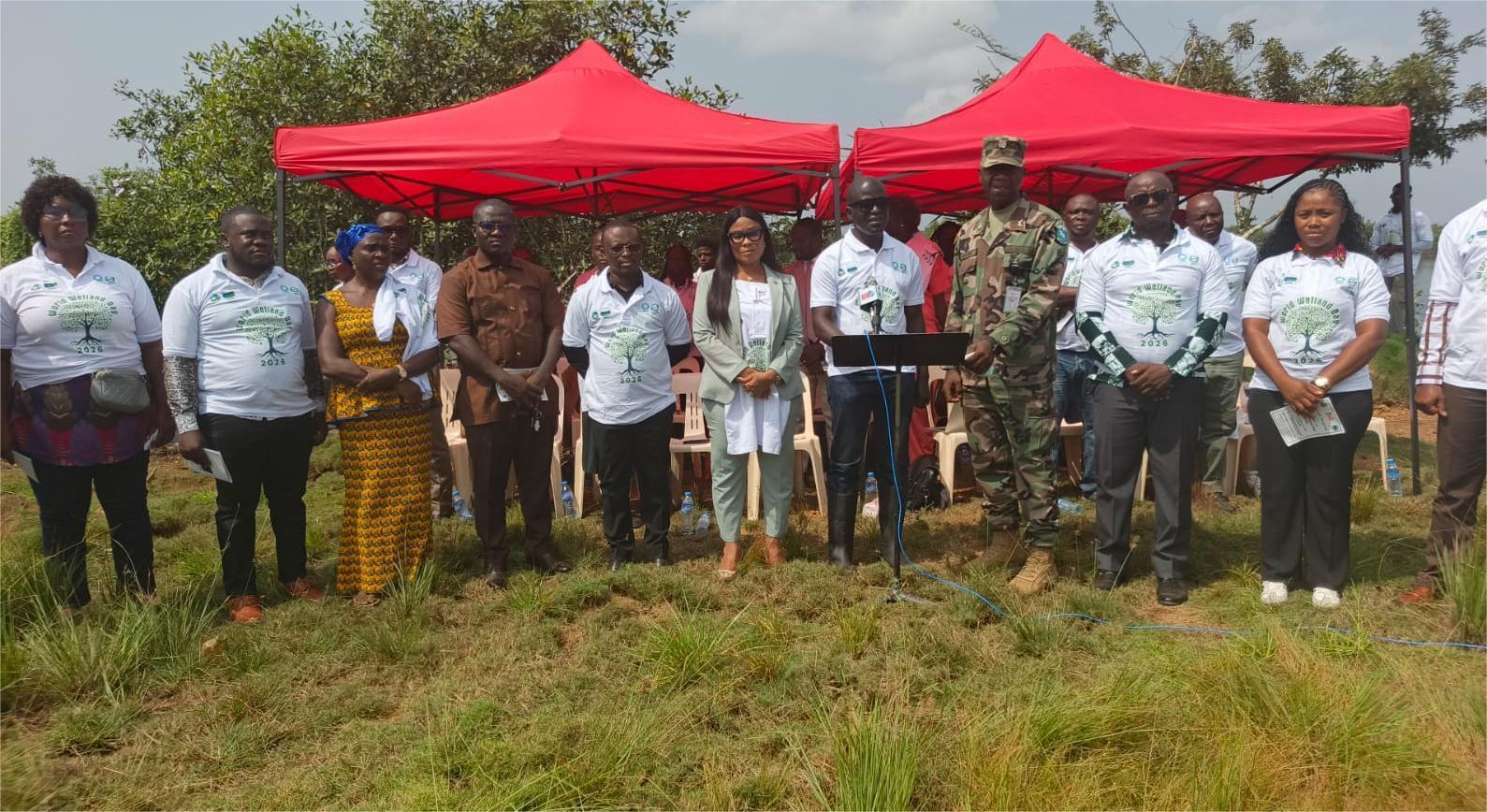
Africa-Press – Liberia. Liberia has joined the global community in commemorating World Wetlands Day under the international theme, “Wetlands and Traditional Knowledge: Celebrating Cultural Heritage.” The observance highlights the crucial role wetlands play in sustaining ecosystems, livelihoods, and cultural traditions worldwide.
At the national level, the Environmental Protection Agency (EPA) adopted a theme that speaks directly to Liberia’s identity and collective responsibility: “Protecting Wetlands, Conserving Cultural Heritage.” The theme underscores the need for citizens and institutions alike to safeguard wetlands as both environmental assets and cultural legacies.In a special statement marking the occasion, the Executive Director of the EPA, Dr. Emmanuel K. Urey Yarkpawolo, underscored the importance of wetlands to Liberia’s environmental and socio-cultural survival, noting that their value is often underestimated.
He emphasized that wetlands are not wastelands; they are among the most productive ecosystems on earth, while stressing that Liberia is blessed with extraordinary natural endowments that, if protected, can secure sustainable development for future generations.
According to the EPA, a significant portion of Liberia’s land area is covered by wetlands, including rivers, swamps, lagoons, and coastal mangrove systems. Mangroves play a critical role in climate action and are considered among the most powerful nature-based solutions for climate change mitigation.
“For Liberia, coastal erosion, flooding, and sea-level rise are growing threats. Mangroves are natural infrastructure that protect lives. Beyond ecological value, wetlands are central to cultural heritage,” Dr. Yarkpawolo noted.
However, Liberia’s wetlands are under increasing pressure from sand mining, illegal land reclamation, mangrove cutting, and rapid urban expansion. These activities are degrading wetlands nationwide, resulting in increased flooding during the rainy season, declining livelihoods, and weakened resilience to climate change.
“I am pleased to inform the public that the EPA has been taking action by breaking down illegal structures and bringing violators into compliance, but the situation is overwhelming,” he said, calling for stronger collaboration to address the threats.
Dr. Yarkpawolo further urged Liberians to take collective responsibility, stating: “The wetlands we protect today will protect Liberia tomorrow. Let us choose stewardship over destruction, sustainability over short-term gains, and hope over neglect. Together, we can conserve wetlands, protect cultural heritage, and build a resilient Liberia for generations yet unborn.”The official World Wetlands Day program was held on February 2, 2026, at the Mesurado Wetlands Ramsar Site in Paynesville City, bringing together stakeholders from government agencies, international partners, civil society organizations, and traditional institutions, who, in separate remarks, pledged their support to the EPA in conserving wetlands.
Also speaking at the program, Representative Priscilla Cooper of District #5, Montserrado County, said this year’s observance highlights the critical role wetlands play in the environment, stressing that protecting wetlands is not solely the responsibility of the EPA but a shared cultural duty.
She declared that EPA must be supported by legislation and strong policy to conserve cultural heritage, while pledging her support for EPA’s work, including backing initiatives such as the construction of security stations at the site.
Meanwhile, President Joseph Nyuma Boakai, Sr., by proclamation, reaffirmed Liberia’s commitment to the Ramsar Convention on Wetlands of International Importance and to the global effort to protect wetlands amid rising environmental threats.
For More News And Analysis About Liberia Follow Africa-Press