Africa-Press – Liberia. Conservation efforts in Liberia are facing what environmental advocates describe as an unprecedented setback under the current leadership of the Forestry Development Authority (FDA), following allegations that it has halted all processes leading to the gazettement of the Foya Proposed National Park.
On Saturday, January 31, FDA Managing Director Rudolph J. Merab reportedly announced a halt to all conservation-related activities within the proposed Foya Protected Area, which spans parts of Lofa and Gbarpolu Counties. The decision, described by stakeholders as sudden and unanticipated, has sent shockwaves through the conservation community, donor partners, and international development agencies operating in Liberia.
The move comes despite Liberia’s international commitment to place 30 percent of its forested land under conservation, a pledge aligned with global efforts to curb deforestation and limit global temperature rise to 1.5 degrees Celsius.
Donor-Funded Projects at Risk
The European Union, through the Society for the Conservation of Nature of Liberia (SCNL), is currently investing millions of U.S. dollars in the Foya Proposed National Park. The project supports biological research and the rollout of sustainable livelihood initiatives aimed at forest-dependent communities surrounding the park.
SCNL has already implemented livelihood programs in more than eight communities, including climate-smart rice and cocoa farming, honey beekeeping, and the construction of a rice mill in Zuie. According to project data, the Foya Conservation Project has created over 100 jobs, with women and youth forming the majority of beneficiaries—an effort aligned with the government’s employment and rural development agenda.
Concerns Over Shift Toward Logging
Critics argue that Mr. Merab, who has a background in the logging sector, is steering the FDA away from its long-standing “3Cs” approach—Conservation, Commercial, and Community forestry—and toward a narrow focus on commercial logging.
Environmental advocates warn that such a shift directly contradicts Liberia’s international obligations and risks reversing gains made in forest protection, climate mitigation, and biodiversity conservation.
Government Weighs In
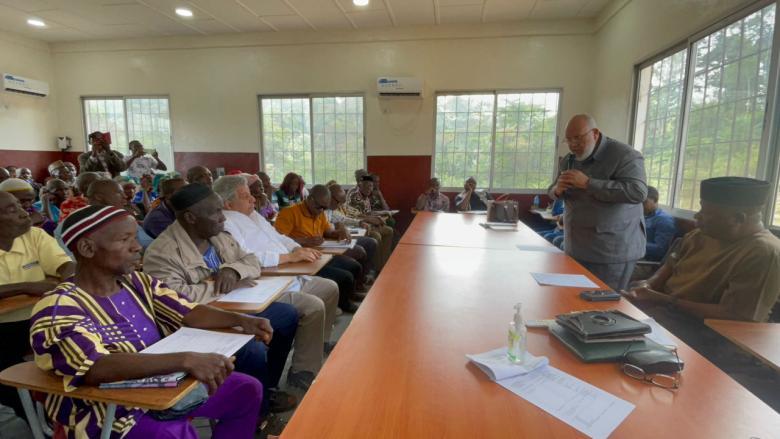
At a one-day stakeholder meeting held in Kongba, Gbarpolu County, Internal Affairs Minister Francis Nyumalin reaffirmed the government’s commitment to honoring Liberia’s international conservation obligations.
Minister Nyumalin stressed that any move to prioritize logging over conservation would require the FDA Managing Director to present a comprehensive justification to the Cabinet, given the legal and diplomatic implications of abandoning protected area commitments.
He emphasized that conserving Liberia’s forests must go hand in hand with sustainable livelihood programs for forest-dependent communities, ensuring that conservation delivers tangible socio-economic benefits.
Community Pressure and Allegations
SCNL Executive Director Michael Garbo clarified that his organization is only complementing government-led efforts under Liberia’s international conservation commitments, particularly in biodiversity hotspots such as Gola Forest National Park and the proposed Foya National Park.
Mr. Garbo’s remarks follow growing pressure from some community members demanding that donor funds be used for road construction, rather than conservation and livelihood activities. Several residents, speaking on condition of anonymity, alleged that FDA officials had suggested that only logging revenues could finance road construction, encouraging communities to deprioritize conservation in favor of commercial logging.
Longstanding Investments in Communities
Since 2009, audited records show that SCNL alone has invested over US$11.7 million in community livelihood and social infrastructure projects around the Gola Forest National Park in Gbarpolu and Grand Cape Mount Counties. These interventions include cocoa and lowland rice production, groundnut farming, micro-loans, climate-smart agriculture training, bridge construction, and the rehabilitation of the Kongba Clinic, including the installation of solar lighting.
Ecological Importance of Foya
Covering approximately 104,628 hectares, the Foya Proposed Protected Area (FPPA) forms a vital corridor within the Greater Gola Landscape, one of West Africa’s most important biodiversity strongholds.
Located within the Upper Guinean Forest ecosystem, the FPPA is globally recognized for its ecological richness. Scientific surveys have recorded 184 bird species, 40 amphibian species, and 313 plant species, underscoring its status as a critical biodiversity reservoir.
The forest also provides habitat for several threatened and endangered species, including the Forest Elephant, Chimpanzee, Zebra Duiker, and the Western Pied Colobus, all of which face mounting threats from habitat loss and hunting.
Rising Alarm
Conservationists and development partners warn that efforts to downplay or dismantle conservation initiatives risk undermining years of progress in combating deforestation, biodiversity loss, and climate change. They caution that abandoning projects like the Foya National Park could damage Liberia’s credibility with international partners and weaken long-term prospects for sustainable development.
For More News And Analysis About Liberia Follow Africa-Press