Africa-Press – Liberia. The Executive Director of the Office for the Establishment of War and Economic Crimes Court for Liberia (OWECC-L), Cllr. Jallah A. Barbu has called on civil society organizations (CSOs) across Liberia to end internal rivalries and embrace unity in order to strengthen their credibility and effectiveness.
Speaking Tuesday, February 17, 2026, at the opening of a high-level dialogue on strengthening Liberia’s civic space in Monrovia, Cllr. Barbu warned that divisions within the civil society sector risk undermining public trust and weakening advocacy efforts.
“When one CSO decides to tear down another rather than inviting a conversation and finding a common approach to a simple problem, we set the pace on how people approach civil society organizations,” Cllr. Barbu stated. “We must look in this direction during this dialogue.”
He stressed that social cohesion must begin within civil society itself, noting that escalated disputes not only damage relationships among organizations but also erode confidence in CSOs as watchdogs and governance partners.
He further urged stakeholders not to overlook systemic barriers affecting civic actors. “As we deliberate today, let us not close our eyes to the writings on the walls that inhibit the enabling conditions for civil society organizations to thrive,” Cllr. Barbu stated.
While acknowledging progress in democratic governance, Cllr. Barbu emphasized that Liberia still has significant work to do in strengthening protections for civic actors and ensuring a supportive legal and digital environment.
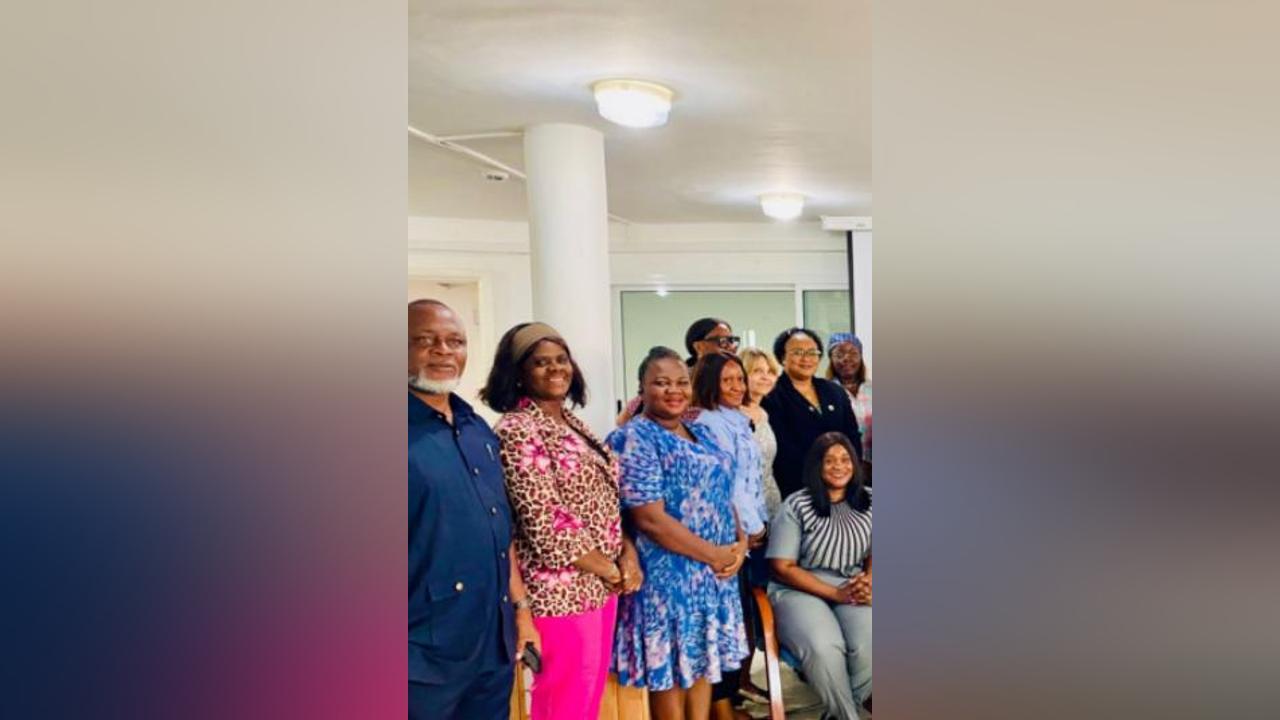
The engagement, organized by the Women NGO Secretariat of Liberia (WONGOSOL) with support from the European Union, brought together government officials, development partners, women and youth groups, and governance actors to assess Liberia’s enabling environment for civil society under the EU’s Six Principles framework.
Delivering the welcome remarks, WONGOSOL Executive Director, Madam Esther S. Davis Yango, described the initiative as timely, noting that civic space globally faces increasing restrictions and uncertainty.
She explained that the project is funded by the European Commission through Forus under the EU System for an Enabling Environment for Civil Society (EU SEE), a six-year global programme running from 2024 to 2029 and implemented in more than 80 countries.
The programme focuses on monitoring civic space trends and addressing systemic conditions necessary for civil society to thrive.
Speaking on behalf of the European Union, Marie Paule Neuville reaffirmed the EU’s commitment to supporting an enabling civic environment and challenged participants to critically assess Liberia’s legal and regulatory framework governing CSOs.
She questioned whether registration processes are accessible, whether funding opportunities are attainable, and whether advocacy work carries legal risks.
“Are civil society organizations consulted? Are their recommendations taken into consideration? Are platforms truly functioning?” she asked, while urging greater inclusion of women, youth, persons with disabilities, and organizations outside Monrovia.
Cllr. Bowoula Taylor Kelly, Vice President of the Association of Female Lawyers of Liberia (AFELL), raised concerns about bureaucratic bottlenecks, particularly sectoral clearance requirements that may hinder CSOs from fully executing their mandates.
“The implementation is what is lacking,” she said, emphasizing that shrinking civic space remains a pressing concern, especially when organizations push for accountability.
Meanwhile, Ma Kebeh Monger of the National Rural Women Structure of Liberia called for stronger recognition of grassroots organizations, particularly those led by rural women.
She noted that rural actors contribute meaningfully to national development but often lack visibility and support.
The dialogue centered on the EU’s Six Principles for an enabling civic environment, including respect for fundamental freedoms, supportive legal and policy frameworks, access to sustainable funding, constructive state-civil society relations, positive public recognition, and secure digital spaces.
For More News And Analysis About Liberia Follow Africa-Press