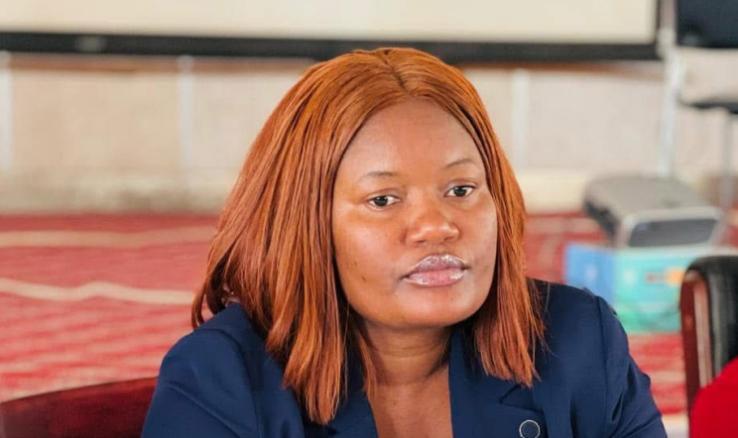
Africa-Press – Liberia. The President of the Female Journalists Association of Liberia (FeJAL), Madam Lisa Tenneh Diasay, has called for transparency and adherence to due process following the resignation of Liberia National Police (LNP) Spokesperson, Mrs. Cecelia G. Clarke.
In a statement issued Wednesday on her official Facebook page, Madam Diasay praised Clarke for what she described as outstanding leadership and professionalism during her tenure with the Liberia National Police(LNP).
“Your leadership, professionalism, and commitment to duty were visible and impactful. We are proud of the work you did and wish you all the best,” Diasay stated.
However, she emphasized that leadership transitions within public institutions must meet clear standards of transparency, fairness and procedural integrity.
According to Diasay, globally accepted public service standards require that transfers of officers—particularly those serving in technical or leadership roles—be preceded by documented performance appraisals, clear institutional justification, evidence of merit-based decision-making, and safeguards against arbitrary or retaliatory reassignment.
“Transfers should not appear punitive, politically influenced, or procedurally unclear,” she noted.
Raising concerns about the circumstances surrounding Clarke’s reported transfer prior to her resignation, Diasay posed several key questions:
Was a formal performance appraisal conducted prior to the transfer?
Were there documented performance deficiencies?
Was Madam Clarke placed on any performance improvement review?What operational justification informed the decision?
She cautioned that if these questions remain unanswered, the matter shifts from an administrative adjustment to a broader governance concern.
Diasay acknowledged that the LNP operates under a structured code of ethics and command hierarchy led by Inspector General Gregory Coleman.
However, she stressed that discipline within a command structure does not eliminate the obligation to follow due process.
“A command structure must still document reasons for transfers, protect officers from workplace hostility, and ensure fairness regardless of rank or gender,” she stated.
The FeJAL President also referenced reports that Clarke had raised concerns about being undermined in her role, creating what was described as an unfavorable working environment prior to her resignation.
“This raises critical institutional questions,” Diasay said, asking whether her complaints were formally investigated, whether mediation or an internal review was initiated, and whether safeguards were applied to prevent retaliation.
She emphasized that no professional should be expected to remain in an environment where they feel undervalued or systematically weakened, noting that unresolved complaints point to structural not personal issues.
Addressing the broader issue of gender and leadership, Diasay reminded stakeholders that Liberia has made both domestic and international commitments to promote women’s participation in leadership and decision-making roles.
“Our advocacy for women’s leadership must not be symbolic,” she said. “It must be supported by safe working environments, protection from intimidation or harassment, and equal professional standards applied fairly.”
She warned that if female leaders are transferred or resign under pressure without transparent explanation, it undermines public confidence and discourages future participation in public service.
Highlighting Liberia’s obligations under regional and global governance frameworks, Diasay reiterated the need for merit-based public service, gender equality in leadership, protection from workplace harassment, and transparent administrative processes.
As part of her recommendations, she called for: Public clarification of the administrative basis for the transfer. Disclosure, within legal limits, of whether a formal performance appraisal informed the decision. Establishment of an internal review mechanism for officers reporting hostile work environments. Development or reinforcement of standardized transfer and reassignment protocols within the LNP. Clear protections against retaliation for officers who raise professional concerns.
‘‘Transparency is not an attack on leadership; it is protection for the institution,” Diasay asserted.
She noted that Madam Clarke’s service deserves appreciation, the institution she served deserves integrity, and Liberia deserves systems that uphold fairness, merit, and justice for all. “We will fix Liberia every day with our ideas,” she declared.
For More News And Analysis About Liberia Follow Africa-Press