Africa-Press – Liberia. EJO II, a three-year Active and inclusive education program initiative aimed at improving learning outcomes for school-going children in Liberia has officially concluded, with beneficiaries and stakeholders calling on the government to integrate the program into the national education curriculum.
Participants say the initiative significantly enhanced students’ academic performance, life skills, and social development, and are urging authorities to sustain its impact nationwide.
“We have seen the difference this program has made in the lives of our children,” several beneficiaries noted, expressing concern about the program’s long-term sustainability.
Responding to these concerns, Assistant Minister for Basic and Secondary Education, Mr. Abba G. Karnga Jr., stressed the importance of adopting participatory teaching approaches within Liberia’s education system. He emphasized the need to train more educators in active learning methodologies that fully engage children in the classroom.
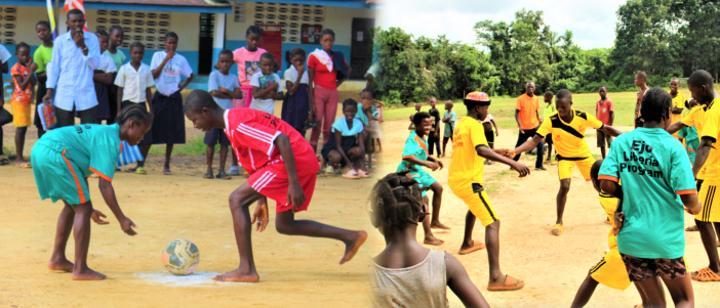
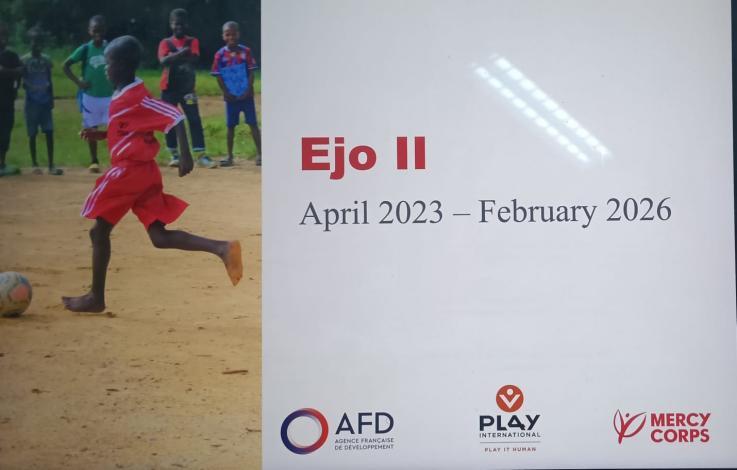
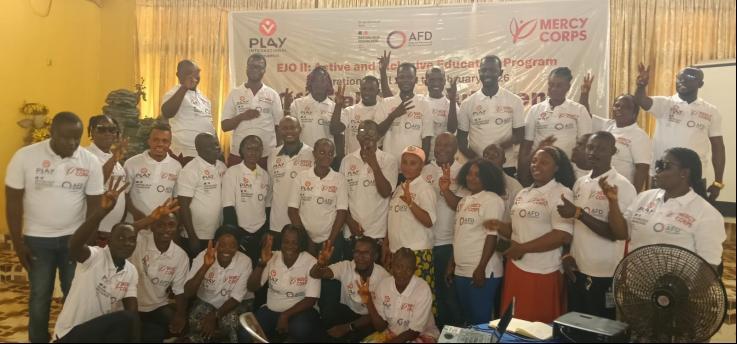
The EJO Phase II program was funded by Agence Française de Développement through PLAY International, and implemented by Mercy Corps Liberia. The initiative leveraged social-sports as a platform to deliver quality, inclusive education using participatory pedagogical techniques.
Promoting Quality Education and Gender Equality
The program aligned with the United Nations Sustainable Development Goals (SDG) #4 on Quality Education and #5 on Gender Equality.
The program targeted children aged 6 to 15, aiming to strengthen their well-being and educational development through innovative and inclusive sports-based pedagogies. These approaches encouraged children to become more aware of societal challenges while building academic competence and life skills.
Under this initiative
The program used Socio-sport activities to strengthen academic, social, and life skills among primary and secondary students, while supporting out-of-school children through health, inclusion, and empowerment initiatives. It also institutionalized sports-based learning in formal and non-formal education and strengthened community organizations to sustain these approaches.Key Achievements
Over the three-year implementation period, EJO Phase II achieved substantial results. The program impacted 45 schools, of the 45 schools reached, 30 were in Grand Bassa County and 15 in Rivercess County. The initiative strengthened capacity by training 378 education professionals. It also developed, adopted, and deployed five educational resources: three for formal education (a Gender-Based Violence kit, a counting kit, and a reading and writing kit) and two psychosocial support kits for non-formal education. In total, the initiative reached 8,845 participants, including 5,594 learners in formal education settings (47% female) and 3,251 participants in non-formal education (51% female).
As the program closes, education stakeholders and community members continue to advocate for its adoption into Liberia’s national education framework to ensure the sustainability of its gains in inclusive, participatory, and sports-based learning.
For More News And Analysis About Liberia Follow Africa-Press