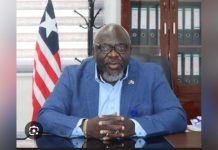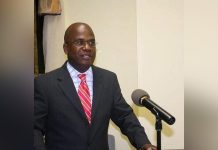
Africa-Press – Liberia. Finance and Development Planning Minister Augustine Kpehe Ngafuan has shared a comprehensive overview of Liberia’s economic strategies to mitigate the effects of global shocks, highlighting proactive planning, fiscal discipline, and strategic domestic revenue mobilization.
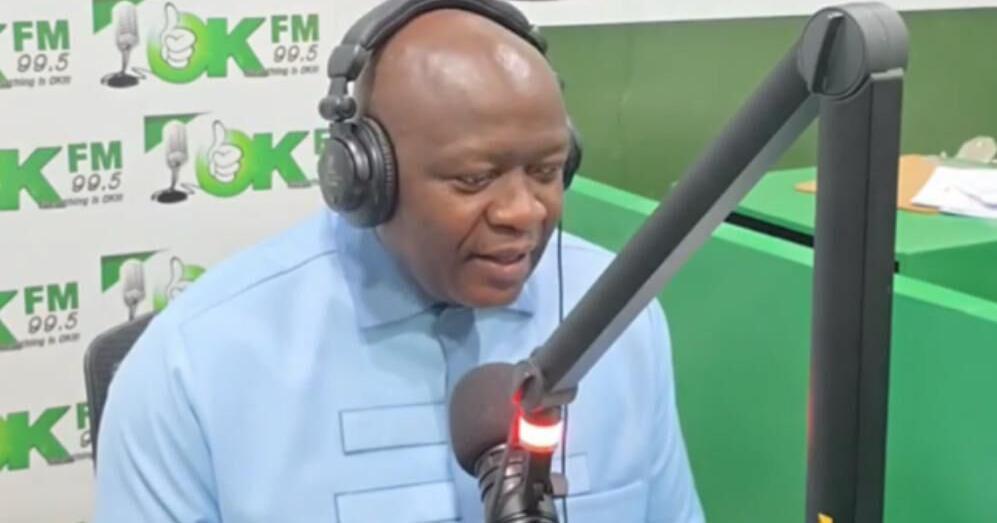
Speaking during a live broadcast on OK FM 99.5, the Minister’s reflections coincided with his 56th birthday, offering Liberians a rare window into both his personal journey and his approach to national economic management.
“Normally birthdays are a time to reflect and give thanks,” Minister Ngafuan said. “I retreat, pray to God, and take stock. Getting an extension on life’s lease is by grace, not merely by one’s brilliance. Those who have transitioned from mortality into immortality—some of them were smarter, some of them stronger—but it comes through the grace of God. Reflection is important, not just for me personally, but for the responsibility I carry in government.”
Ngafuan used the occasion to discuss Liberia’s impressive economic accomplishments despite significant challenges, emphasizing the role of domestic revenue generation in shielding the country from external shocks. “In 2025, despite tremendous odds, we recorded Liberia’s highest domestic revenue collection at over $840 million, surpassing the $700 million collected in 2024,” he said. “This achievement reflects the resilience of our economy and institutions, even amid unforeseen global challenges and aid reductions.”
The Minister cited the abrupt withdrawal of aid from USAID, Liberia’s second-largest donor, as a significant shock to the national economy. “UAID had more than 29 active projects, ranging from agriculture and education to health and school feeding programs. When most of those projects were shut down, we lost over $300 million in aid. That was a huge shock, but thanks to a good captain—President Volcker—and a strong economic team, we were able to re-strategize, work hard, and keep the economy on track,” Ngafuan explained.
He praised the collaborative efforts of revenue-generating agencies, stating that the Ministry of Finance is not alone in its efforts. “The Ministry of Finance contributes to revenue directly through policies, but the real work comes from agencies like the National Revenue Authority and other government entities. They ensure we meet targets, and that is why we broke historic revenue records in consecutive years,” he said.
The discussion quickly turned to the ongoing global shocks, including rising fuel prices linked to conflicts in the Middle East, which have had a ripple effect on Liberia’s economy. “We are not immune to global developments, particularly in petroleum. The war in Iran, for example, has sent reverberations through international oil markets. Liberia, as an oil-importing country, is directly affected,” Ngafuan said. “The government, LPRC, the Ministry of Commerce, and the Ministry of Transport are closely monitoring developments. Our priority is to ensure the availability of petroleum products, even in turbulent markets.”
Ngafuan also outlined the measures being implemented to mitigate the economic impact on essential services and the general public. “We are intervening in critical sectors. For instance, the National Transit Authority has been carefully monitored to prevent unnecessary increases in transportation costs. Hospitals impacted by fuel shortages and rising costs will also receive support. Our economists are working diligently to put interventions in place to ensure stability across all sectors,” he said.
Despite these challenges, Ngafuan expressed confidence in Liberia’s projected growth for 2026. “We projected a growth of about 5.6% and a national budget of $1.2 billion. These figures reflect our confidence in the country’s economic resilience. Yes, there are exogenous shocks—events beyond our control—but through proactive planning, we can navigate these challenges,” he emphasized.
Beyond economics, the Minister shared personal reflections on the experiences that shaped his disciplined approach to life and public service. Born in Monrovia near the old maternity hospital on the bypass, Ngafuan grew up in Logan Town and later spent formative years in Lofa County. His father, Dennis Ngafuan, worked as a supervisor at Ducor Palace Hotel, while his mother, Manan Ngafuan, had limited formal education. “My father valued education despite not finishing high school, and my mother sacrificed so much to support our studies. They instilled discipline, the importance of knowledge, and strong moral principles,” he said.
Ngafuan recounted early experiences with responsibility and community. “Growing up in a family with two mothers, I learned humility and respect. My stepmother was so close to me that I was considered her son. Family unity, respect for elders, and commitment to one’s word were part of our upbringing. Even as a child, I was taught to read newspapers, understand national events, and follow the news,” he said.
He spoke candidly about his formative years and early ambitions. Soccer was a passion that almost diverted him from academics. “I played football in Logan Town and dreamed of joining the national team. I played alongside Jonah Sawyer and Fofi Kamara, both of whom eventually made the national team. But my parents encouraged me to continue my education, which shaped the path I took in life,” he recalled.
Ngafuan also reflected on his early religious upbringing, which influenced his values and discipline. “At age 12, I committed not to drink or smoke because of the Christian principles taught in our Bible study group. I have carried those commitments throughout my life. Even when confronted with challenges, faith and discipline have guided my personal and professional journey,” he explained.
He shared how national events shaped his political and civic consciousness from an early age. “The 1980 coup d’état was a watershed moment. I was very young, but it made me curious about national affairs. I began reading newspapers, following the news, and asking questions beyond my age. That curiosity evolved into a commitment to public service and contributed to my focus on national development,” Ngafuan said.
Despite the personal and professional pressures, the Minister emphasized collective responsibility in managing the economy. “It is not only the Minister of Finance or the President who ensures economic stability. It requires coordination among government agencies, institutions, and citizens. Together, we can navigate global turbulence and maintain Liberia’s growth trajectory,” he said.
Concluding the conversation, Ngafuan reaffirmed the government’s commitment to proactive economic planning. “We are preparing for the worst while hoping for the best. By monitoring global developments, implementing timely interventions, and strengthening domestic revenue generation, Liberia can shield itself from external shocks and continue to grow. Our focus remains on protecting the Liberian people and ensuring sustainable development,” he said.
Minister Ngafuan’s reflections offered Liberians a blend of personal insight and strategic foresight, demonstrating how discipline, preparation, and collaboration are central to both personal success and national resilience. His strategies underscore the importance of domestic resource mobilization, careful fiscal management, and proactive interventions to ensure Liberia remains resilient in an unpredictable global economy.
For More News And Analysis About Liberia Follow Africa-Press