Africa-Press – Liberia. When students at the Booker Washington Institute logged onto high-speed internet for the first time under the government’s new School Connect Program, the moment carried more weight than a simple upgrade. It was a glimpse into what Liberia’s classrooms could become—and a test of whether access alone can close one of the country’s most stubborn development gaps.
Launched by the Liberia Telecommunications Authority in partnership with the Ministry of Education, the initiative aims to connect 156 public high schools in its first phase, delivering internet access, digital tools, and a pathway into modern learning. But beneath the optimism lies a harder question: is connectivity enough to fix Liberia’s deeper digital literacy crisis?
Liberia remains among the least digitally connected countries in West Africa, with internet penetration hovering between 25 and 30 percent in recent years. For a country where nearly 75 percent of the population is under 35, the implications are stark. A significant share of young people lacks even basic computer skills, while more than 40 percent of those aged 15 to 24 are not in education, employment, or training. Fewer than 10 percent advance to higher education, where digital competencies are more formally developed.
Inside many schools, especially outside Monrovia, the gap is even more visible. Computer labs are rare, electricity unreliable, and trained ICT instructors in short supply. For many students, graduation comes without ever touching a computer, sending an email, or conducting online research.
“This is not just a connectivity problem—it’s a skills problem,” one educator said. “We have a generation growing up in a digital world but without the tools to participate in it.”
The School Connect Program is designed to begin changing that reality. Through partnerships with Starlink and Telecel Liberia, the initiative will deploy high-speed satellite internet, distribute 156 internet kits with one-year free subscriptions, and expand access to digital learning resources across participating schools.
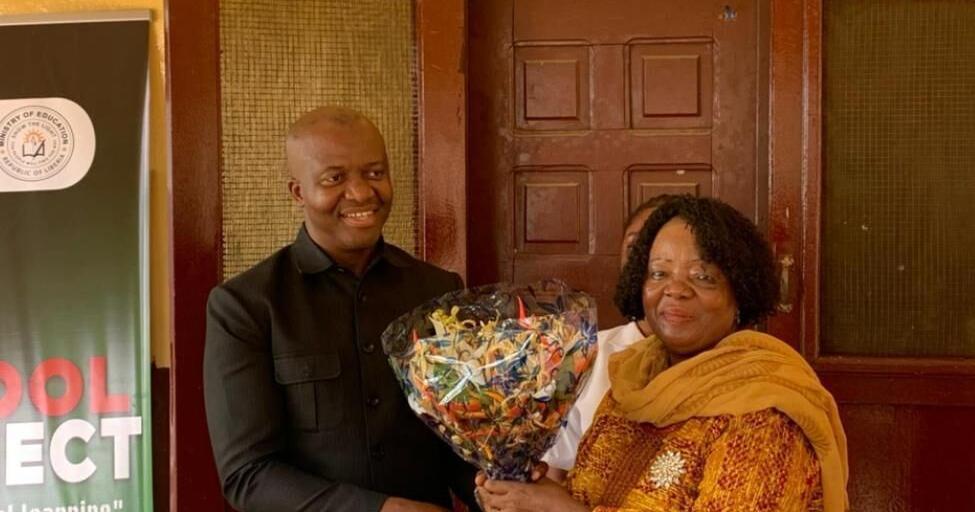
Education Minister Jarso Maley Jallah described the program as a necessary shift in approach but cautioned against overestimating its immediate impact. “The introduction of connectivity will allow students to access global knowledge beyond physical classroom limitations,” she said. “But its impact depends on how effectively it is used.”
That distinction—between access and ability—is central to the program’s long-term success. Digital literacy is not simply about being online. It requires the ability to search and verify information, use digital tools productively, understand online safety, and apply technology to solve real-world problems. These are skills that remain underdeveloped across Liberia’s secondary education system.
“Students must be trained not only to access information but also to analyze, question, and apply it responsibly,” Dr. Jallah added.
Without that foundation, experts warn, connectivity risks producing passive consumers of content rather than active digital learners.
Still, the program holds promise, particularly in narrowing Liberia’s long-standing urban-rural divide. Access to internet and digital tools has historically been concentrated in Monrovia, leaving rural counties—where most young people live—largely disconnected.
LTA Chairperson Clarence K. Massaquoi said the initiative is designed to change that. “This project will reduce disparities between urban and rural schools and prepare students for the demands of the digital age,” he noted.
If fully realized, the program could allow rural students to tap into the same knowledge resources as their urban peers, support remote learning, and open new pathways into online training and employment.
The initiative builds on earlier interventions under the World Bank-supported IRISE Program, which introduced digital labs, solar power systems, and localized educational tools. By adding connectivity, the government is now attempting to link infrastructure with access—moving closer to a functional digital ecosystem.
The stakes extend beyond education. Digital literacy is increasingly tied to entrepreneurship, agriculture, healthcare, and employment—from e-commerce and digital marketing to telemedicine and remote work. For a country grappling with high youth unemployment and a large informal sector, these skills could become a gateway to economic inclusion.
“Internet access is no longer a luxury but a critical component of modern education and national development,” said Jullion Cooper.
Yet the challenges are real. Many teachers are not yet equipped to integrate technology into their lessons. Without sustained training, the tools risk going underused. There are also questions about sustainability—what happens when the one-year free subscriptions expire—and concerns about governance, including how to manage misuse and exposure to harmful online content.
Dr. Jallah acknowledged these risks, calling for stronger systems around training, discipline, and oversight.
For now, School Connect represents a starting point—a foundation rather than a finished solution. If expanded and paired with curriculum reform, teacher development, and long-term financing, it could begin to close Liberia’s digital divide.
At Booker Washington Institute, the early impact is already visible. For students encountering the internet in real time, the experience is both simple and profound.
“This is the first time I can see the world from my classroom,” one student said.
Whether that window leads to opportunity—or remains just a moment of connection—will depend on what Liberia builds next.
For More News And Analysis About Liberia Follow Africa-Press