Africa-Press – Liberia. A major concern raised by NAYMOTE Partners for Democratic Development says a major gap between national funding systems and local development ambitions is threatening the implementation of national government’s designed County Development Agenda (CDA), shielding light on Bong County’s 92 planned projects, following a workshop organized in Gbarnga,
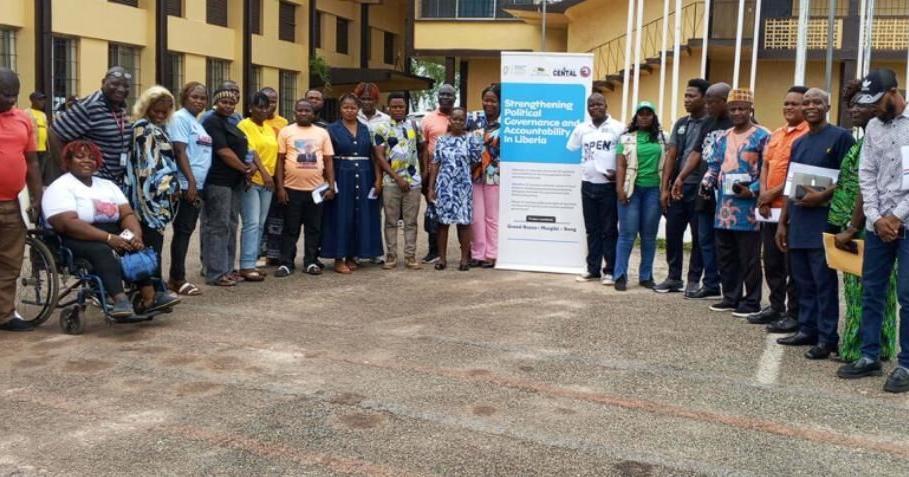
The forum, held at the Gbarnga Administration building on April 15, 2025, brought together county officials, civil society actors and citizens to scrutinize the viability of Bong County’s Development Agenda (CDA) for 2025–2029.
The discussion was centered on a stark warning, where NAYMOTE noted that millions of dollars earmarked for development may not materialize unless systemic funding bottlenecks and accountability gaps are urgently addressed.
Public unaware of development blueprint
During his opening remarks at the event, Eddie D. Jarwolo , Executive Director of NAYMOTE questioned the extent to which ordinary citizens understand the county’s development priorities.
He said his recent engagements in Grand Bassa County revealed a troubling pattern of low public awareness.
“How many citizens have seen the county development agenda? How many people know the number of programmes or interventions?” he asked.
Mr. Jarwolo said the workshop aimed not only to educate citizens, but also to expose weaknesses in how development plans are communicated and implemented.
Ambitious plan, uncertain funding
Bong County’s development agenda outlines 29 programs and 92 interventions across five key sectors—roads, agriculture, health, education and rule of law—targeting a population of more than 467,000 people.
The plan carries a projected cost of $56.7 million over five years, with annual allocations expected to rise and fall between 2025 and 2029.
However, participants heard that accessing these funds remains a persistent challenge, with local authorities often unable to secure timely disbursements from central government.
The NAYMOTE Executive Director described a pattern of institutional delays, where officials are repeatedly redirected between the Liberia Revenue Authority and multiple ministries, including Finance and Local Government.
“As long as the money is not coming into the counties, it becomes very difficult to implement the county development agenda,” he said.
“No capacity” claim under scrutiny
A key issue raised at the workshop was the government’s position that counties lack the capacity to manage increased funding—an argument often cited in delaying revenue-sharing reforms.
Civil society groups, however, argue that this justification risks becoming a convenient excuse for inaction.
They say without deliberate investment in local governance systems, counties will remain trapped in a cycle where lack of capacity is used to justify withholding resources, and lack of resources prevents capacity from being built.
The discussions also examined how the government’s ARREST Agenda for Transformation aligns with county-level priorities, with participants pointing to gaps that could undermine coordinated development.
Citizens urged to push for accountability
At the workshop, Mr. Jarwolo emphasized that public pressure could play a decisive role in breaking the funding deadlock.
Additionally, Citizens were encouraged to familiarize themselves with budget allocations, monitor ongoing projects and demand that national authorities release promised funds.
At the end of the training, participants pledged to use the knowledge gained to more actively engage government institutions and advocate for the full implementation of the CDA.
Rising costs highlight service challenges
Meanwhile, concerns about governance and resource constraints are also being felt in everyday public services.
During the workshop, it was revealed that at the Bong County Service Center, the cost of obtaining a traditional marriage certificate has more than doubled—from $50 to $105.
Registrar Arthur Kollie said the increase reflects operational difficulties, including the absence of equipment to produce certificates locally.
Documents must now be transported to Monrovia for processing, adding logistical costs that are ultimately passed on to citizens.
While officials describe the move as necessary, critics argue it underscores deeper systemic inefficiencies and places an added burden on residents.
A fragile path to decentralization
The issues raised in Gbarnga point to broader challenges facing Liberia’s decentralization efforts.
Despite detailed planning and clear development priorities, the success of Bong County’s agenda appears heavily dependent on whether national institutions can deliver timely funding and strengthen coordination with local authorities.
The county’s ambitious blueprint remains under pressure—caught between promises on paper and the realities of implementation.
For More News And Analysis About Liberia Follow Africa-Press