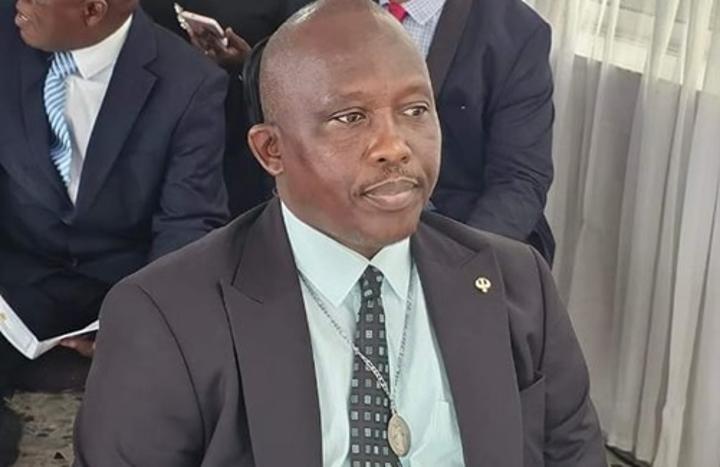
Africa-Press – Liberia. CAPE TOWN, South Africa, April 17, 2026 — Liberia cannot achieve lasting peace without criminal accountability for atrocities committed during its civil war, Dr. Cllr. Jallah A. Barbu of the Office for the Establishment of the War and Economic Crimes Court (OWECC-L) told a gathering of scholars, human rights advocates, and transitional justice experts.
Barbu, executive director of OWECC-L, spoke Thursday during events marking the 30th anniversary of South Africa’s Truth and Reconciliation Commission (TRC). He said Liberia is at a decisive moment in its push to establish a War and Economic Crimes Court (WECC). “The Liberian TRC provided truth, but the WECC must deliver justice,” he said.
He said that although Liberia’s TRC investigated and documented abuses and recommended a war crimes court in its final report, many recommendations have not been implemented—leaving what he described as “truth without accountability” and reinforcing a culture of impunity.
Barbu contrasted Liberia’s experience with South Africa’s, saying Liberia’s process did not create a workable amnesty-for-truth framework and left a gap between truth-telling and prosecutions—an issue he said is driving the current push for the WECC.
He said the proposed court would be a hybrid tribunal, combining domestic and international law, with jurisdiction over both war crimes and economic crimes linked to the conflict.
Barbu said the WECC would align Liberia with international criminal justice norms, curb elite impunity and help restore public confidence in the rule of law.
He cited what he called strong political will behind the initiative, including legislative resolutions and executive orders by President Joseph Nyuma Boakai. He said preparatory structures, including OWECC-L, are already in place and that international partners are providing technical support.
Barbu pointed to Sierra Leone’s hybrid accountability model as a lesson for Liberia, noting it prosecuted senior perpetrators, including former Liberian President Charles Taylor. “No one is above the law,” he said, arguing that political commitment and international backing are essential.
He said the effort still faces hurdles, including political resistance from elites who could be implicated, limited resources, weak witness protection and the need to balance public expectations with a realistic prosecutorial scope. “Without accountability, reconciliation remains incomplete,” Barbu said.
He urged international partners to support the process. “The real question is no longer whether Liberia should pursue accountability but whether it can afford not to,” Barbu said.
Enabling legislation for the WECC is under review and is expected to reach the Legislature soon, he said, calling the moment a “historic crossroads” for the country.
If successful, the court would help transform Liberia from a case of delayed accountability into what Barbu called a model of corrective transitional justice for Africa and beyond. -Dispatch
For More News And Analysis About Liberia Follow Africa-Press