Africa-Press – Liberia. The United Nations has called for stronger, more coordinated anti-corruption action in Liberia, warning that billions of dollars lost to corruption are directly undermining human rights, weakening public institutions, and deepening inequality across the country and the African continent.
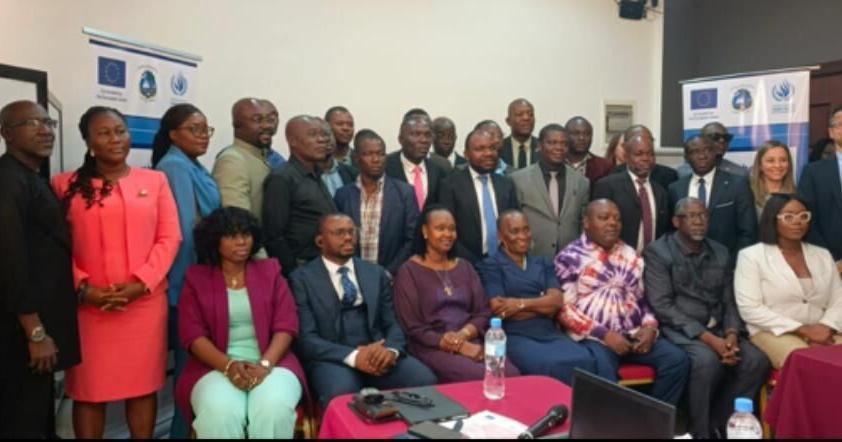
The call was made at the opening of a two-day specialized training on investigation and prosecution of corruption using a human rights-based approach, held in Monrovia on April 21–22, 2026.
The training is organized by the Office of the United Nations High Commissioner for Human Rights (OHCHR) with financial support from the European Union (EU).
The workshop brings together prosecutors, investigators, and justice sector actors as part of broader efforts to strengthen Liberia’s anti-corruption framework and align enforcement with international human rights standards.
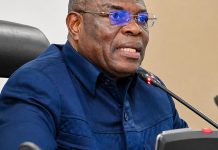
Opening the training, Mr. Pradeep Wagle, Chief of Economic, Social and Cultural Rights at OHCHR, described corruption as a global crisis of resource diversion with direct consequences for human dignity and governance.
“We gather here today not only for the training exercise but to confront a global crisis, the crisis of resource diversion that strikes at the very heart of state legitimacy and human dignity,” Wagle said.
He revealed that globally, “around 10 to 25 percent of total public funds is lost in corruption,” representing at least “$3 trillion per year.”
Wagle contrasted this with global development financing needs, noting that achieving the Sustainable Development Goals requires about $4 trillion annually.
“The gap between the money lost in corruption and the money needed to fulfill the sustainable development goal is not very huge,” he said.
Focusing on Africa, he stated that the continent loses “more than $140 billion per year to corruption,” while needing approximately $170 billion annually to meet its development targets.
“These are not just numbers or abstract figures. They are the measurement of stolen property,” Wagle emphasized.
Wagle warned that corruption is not merely an economic issue but a direct violation of human rights, citing its impact on essential public services.
Referencing the UNCTAD 2022 Economic Development in Africa report, he noted that African governments spend “25 percent less on health and 58 percent less on education” compared to countries with stronger governance systems.
“The loss of resources due to corruption has a clear immediate and negative impact on human rights and fundamental freedom,” he said.
He added that corruption weakens institutions, erodes the rule of law, and undermines access to justice, often resulting in “injustice and impunity.”
Wagle also highlighted how corruption disproportionately affects vulnerable populations, describing them as “shadow taxpayers,” including children, youth, persons with disabilities, elderly populations, migrants, and ethnic minorities.
“Corruption is never a victimless crime,” he said. “While the entire state suffers, the burden of corruption often falls on those already in situational vulnerability.”
Commending Liberia’s reform efforts, Wagle acknowledged progress in establishing institutional frameworks such as the proposed War and Economic Crimes Court and the planned National Anti-Corruption Court.
He also pointed to strengthening efforts within the Liberian Anti-Corruption Commission (LACC), describing them as “a critical and positive turning point.”
However, he warned that serious gaps remain in enforcement and accountability.
Liberia currently scores 28 out of 100 on Transparency International’s Corruption Perception Index and ranks 136 out of 182 countries globally.
Wagle also cited Afrobarometer findings from 2024 indicating that “50 percent of respondents consistently experienced or believed corruption is rampant in public institutions.”
According to LACC data, 252 corruption cases were reported between 2023 and 2024, but only 52 contained sufficient evidence for action.
“This underscores a massive institutional hurdle—the constraint of data, evidence, integrity, and technical capacity,” he said.
“Strengthening institutional capacity and data management systems is not just a technical upgrade. It is a human rights obligation,” Wagle added.
Wagle stressed that corruption has direct consequences on public services and national development.
In Liberia, he noted that millions of dollars in public funds have been lost or underutilized, including an audit finding of approximately “$80 million in unauthorized public spending linked to a major public institution.”
He warned that such losses delay or prevent essential public projects and weaken service delivery, particularly in the health sector.
“There is ample evidence around the world of health system-related corruption, including informal payments, diversion of medicines, and payroll issues,” he said.
“These practices may become part of everyday life, but the violation of the right to health is never discussed.”
He emphasized, corruption is not only draining public resources—it is denying rights, weakening governance, and undermining Liberia’s development trajectory.
Wagle concluded: “When we improve coordination across agencies… we reinforce public trust and support the realization of the rights of citizens.”
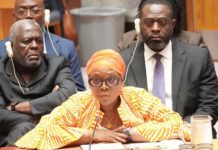
UN Resident Coordinator to Liberia, Christine Umutoni, reinforced the connection between corruption, governance failures, and Liberia’s historical experience of conflict.
“Corruption is a serious human rights issue,” she said, noting its impact on democracy, rule of law, and fundamental freedoms.
She recalled that corruption was identified by the Truth and Reconciliation Commission as one of the drivers of Liberia’s civil war.
“Many countries that have gone through conflicts… sometimes triggers come from behaviours like corruption that really undermine development and leave people in difficult situations,” she said.
Umutoni highlighted Liberia’s 20 years of sustained peace, calling it a significant achievement that must be protected through stronger institutions.
“We are here. We have sustained this peace for that long,” she said. “There is a lot we are learning from Liberia on resilience.”
She also urged continued reform, noting that corruption must be addressed as part of transitional justice and national development priorities.
Representing the European Union, Chargé d’Affaires Zoltan Szalai said the EU’s support reflects its commitment to strengthening governance and accountability in Liberia.
“Corruption is not just merely a financial crime, it’s much more than that. It’s a fundamental threat to the rule of law and the very fabric of a fair society,” he said.
He noted that diverted public resources directly harm citizens, especially vulnerable groups who rely on public services.
“When public resources are diverted, the citizens are paying the price,” Szalai said.
He added that the training aims to strengthen enforcement while ensuring respect for human rights.
“This means due process, protecting whistleblowers, and maintaining the highest standards of integrity,” he said.
Speaking on behalf of the Ministry of Justice, Deputy Minister for Administration Cllr. Cora Hare Konuwa acknowledged the deep-rooted nature of corruption in Liberia.
“Speaking about corruption is like talking about your neighbor or a member of your household,” she said. “I think the first time I heard those words was like 35 or 36 years ago.”
She warned that corruption continues to persist despite decades of national efforts.
“And the thing about it, unfortunately, many times when we talk about corruption, we’re thinking about someone else. We’re not thinking about ourselves,” she said.
Citing Liberia’s ranking, she added: “At least the place Liberia holds in the world right now… I think it was 136 out of 186. For me, that means that most of us are involved, unfortunately.”
She also pointed to institutional constraints affecting prosecutions.
“It’s true that there are many indictments, but it’s also true that resources are limited to ensure people are prosecuted,” she said.
“The music is not sweet anymore,” she added, describing long-standing frustrations with slow progress.
OHCHR Human Rights Officer Marion Deniaud said the training is part of support to Liberia’s transitional justice process, including the planned establishment of both a War and Economic Crimes Court and a National Anti-Corruption Court.
She said the goal is to strengthen a “victim-centered judicial response for corruption-related offenses in Liberia.”
Over the two-day workshop, participants are expected to explore investigative techniques, improve inter-agency coordination, and strengthen prosecution capacity while integrating human rights principles into anti-corruption work.
For More News And Analysis About Liberia Follow Africa-Press