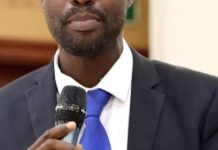
Africa-Press – Liberia. Sweden’s Ambassador to Liberia, H.E. Karl Backeus, has expressed optimism about the emergence of stronger and more capable legislators in Liberia following the 2029 general and presidential elections, despite his government’s decision to close its embassy in Monrovia.
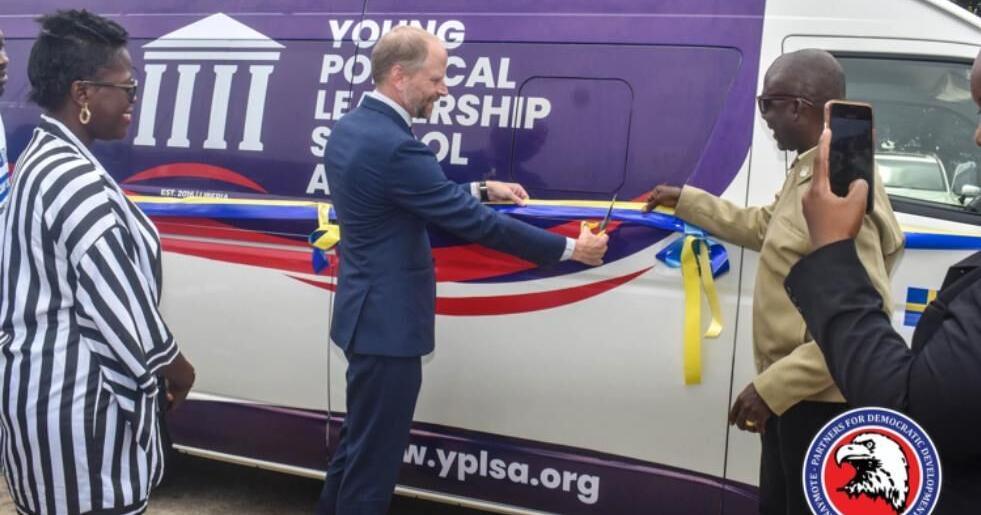
Speaking during the official donation ceremony of the Young Political Leadership School Africa (YPLS Africa) “Democracy on Wheels” bus project held at the Liberia Learning Center on April 23, 2026, Ambassador Backeus described the embassy’s closure as “sad,” but emphasized that Sweden is leaving Liberia in “very good hands.”
Reflecting on his government decision, the Ambassador recounted that the Swedish government announced in December last year its decision to close its embassy in Liberia along with a few others globally. However, the Ambassador stressed that the move does not signal a permanent disengagement from Liberia.
Reflecting on Sweden’s partnership with Naymote Partners for Democratic Development, Backeus noted that years of collaboration have contributed significantly to strengthening Liberia’s democratic foundations. He expressed confidence that the impact of such initiatives would endure for generations.
According to him, Liberia stands out as a country with a vibrant and resilient democracy—an achievement he said citizens must value and protect. He emphasized that democracy thrives on active civic engagement, accountability, and transparency, urging citizens to consistently speak out against corruption and misuse of public resources.
At the same time, the Swedish envoy acknowledged persistent challenges in Liberia’s political culture, particularly the tendency of some public officials to prioritize personal enrichment over public service. He stressed that public office should be viewed as a responsibility to serve the people rather than an avenue for personal gain.
He further called on voters, especially young people, to play a more proactive role in shaping governance outcomes. Backeus highlighted leadership training initiatives like YPLS Africa as critical platforms for nurturing ethical, competent, and service-driven leaders.
Looking ahead, he underscored the importance of preparing a new cadre of legislators who clearly understand their responsibilities and are committed to national development. “We must ensure that stronger and more capable legislators emergeleaders who truly understand their role in building a stronger Liberia,” he said.
The Ambassador also praised efforts to decentralize political engagement across the country, noting that initiatives extending beyond Monrovia, including outreach activities in places like Gbarnga, are essential for inclusive national development.
He described the “Democracy on Wheels” project as a key tool to expand civic education and leadership training nationwide.
Meanwhile, a fellow of the program, Pranam Adhoji, shared reflections on the training, describing it as transformative. He noted that the fellowship has equipped participants with practical knowledge on governance, anti-corruption, and civic responsibility, while also providing opportunities to engage institutions such as the Liberia Anti-Corruption Commission (LACC).
He added that the program has strengthened fellows’ understanding of national challenges and empowered them to actively contribute to policy discussions and community-level change.
Providing an overview of the initiative, Naymote Executive Director Mr. Eddie D. Jarwolo explained that the Young Political Leadership School Africa, established in 2016, is designed to address gaps in leadership, political representation, and governance across Africa.
He said the program targets young people aged 18 to 35, equipping them with skills in electoral strategy, public service, ethics, digital campaigning, and public speaking.
The initiative, he noted, aims to raise a new generation of “character-driven” leaders who are accountable and accessible to their constituents.
ED Jarwolo emphasized that the program has expanded significantly over the years, attracting participants from across the continent and producing alumni who are increasingly taking up leadership roles in political parties and governance institutions.
He described the “Democracy on Wheels” bus project as a major step toward decentralization, enabling the institution to take its training and civic engagement initiatives to communities across Liberia.
The ceremony marked not only the donation of the bus but also a renewed commitment by stakeholders to strengthen democratic governance by investing in the next generation of leaders.
For More News And Analysis About Liberia Follow Africa-Press