Africa-Press – Liberia. President Joseph Nyuma Boakai has called for urgent and coordinated action across Africa to invest in youth leadership, strengthen peace education, and expand opportunities for young people as a critical pathway to sustaining peace on the continent.
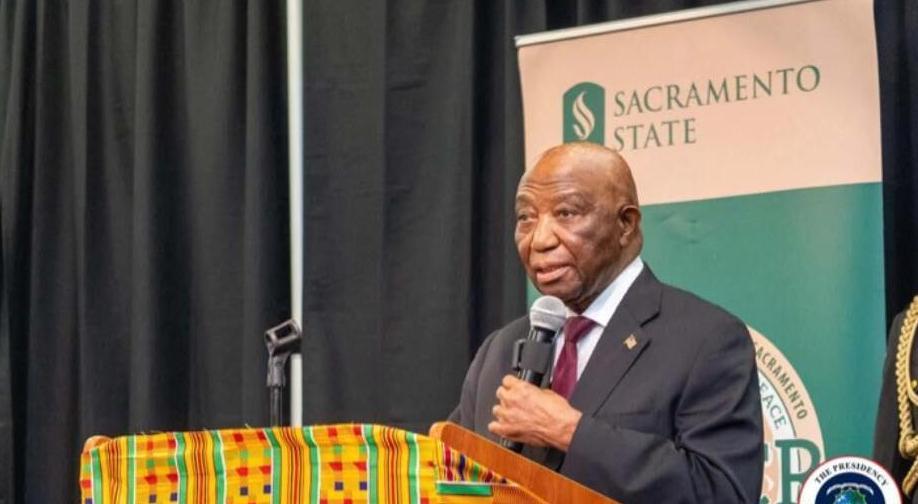
Speaking on Saturday, April 25, 2026, at the 34th Africa Peace Awards organized by the Center for Africa Peace and Conflict Resolution at California State University Sacramento, President Boakai emphasized that Africa’s peace and stability depend on how effectively governments engage the continent’s youthful population.
Delivering the keynote address under the theme “Building the Next Generation of Peace Leaders in Africa & Her Diaspora,” President Boakai described peace not as an abstract concept but as a lived and continuous responsibility.
“Peace is not merely the absence of war. It is the presence of justice, opportunity, and dignity for all,” he said.
He recalled Liberia’s civil conflict between 1989 and 2003, which claimed more than 250,000 lives and devastated national institutions, noting that the country’s recovery has been anchored in reconciliation, dialogue, and democratic renewal.
“Even in our darkest hours, the Liberian spirit did not yield. We chose reconciliation over revenge, dialogue over division, and hope over despair,” he stated.
President Boakai stressed that Liberia’s ongoing peace process includes efforts to confront past injustices, including national apologies, dignified reburials, and plans to establish a War and Economic Crimes Court to ensure accountability alongside reconciliation.
He also highlighted Liberia’s current role on the United Nations Security Council for the 2026–2027 term, noting that the country intends to use its position to promote global dialogue and peacebuilding.
However, the Liberian leader warned that Africa faces urgent challenges driven by youth exclusion, unemployment, and inequality, which continue to expose young people to migration risks, criminal networks, and social instability.
“With nearly 70 percent of Sub-Saharan Africa’s population under the age of 30, we face both a powerful opportunity and a serious risk,” he said. “It can become an engine for peace and innovation—or, if neglected, a source of fragility and conflict.”
He described youth marginalization as one of the continent’s most pressing threats, urging governments to integrate young people into national development and governance systems.
“Governments in Africa must take deliberate and bold measures to ensure that the aspirations, energy, and potential of young people are fully integrated into governance and development processes,” Boakai said.
The Liberian President proposed a series of policy directions, including expanded investment in youth leadership programs, stronger partnerships with universities and regional institutions, and increased mentorship opportunities for young people.
He also called for a transformation of education systems across Africa, urging the inclusion of peace education, civic responsibility, and conflict resolution from primary to tertiary levels.
“Our schools must teach peace building, civic responsibility, and critical thinking. Education must connect young people to service, patriotism, and national development,” he noted.
President Boakai further emphasized the role of technology in modern peacebuilding, calling for its use in promoting dialogue, countering misinformation, and strengthening cross-border youth collaboration.
He also encouraged the revitalization of youth organizations into structured platforms for mediation, leadership development, and peace advocacy.
“Africa is blessed with elders, diplomats, women, and civil society actors whose wisdom must be transferred to the next generation,” he said. “We must transform our demographic strength into productivity, innovation, and shared prosperity.”
Addressing Africa’s diaspora communities, Boakai called for stronger collaboration in reconciliation and development efforts, urging them to play an active role in rebuilding the continent.
“Peace leaders are not only presidents and diplomats. They are teachers, community leaders, entrepreneurs, and citizens who refuse to allow hatred to define their future,” he said.
He urged young Africans to embrace leadership rooted in justice and service, warning that exclusion and inequality undermine trust in peace processes.
“If young people do not see justice, they will not believe in peace,” he cautioned.
President Boakai concluded by reaffirming Liberia’s commitment to peacebuilding, both at home and internationally, saying the country remains dedicated to inclusion, justice, and democratic stability.
“I accept this honor with humility and renewed commitment to a Liberia that is just, inclusive, and prosperous, and to a continent that embraces peace, opportunity, and dignity for all,” he said.
For More News And Analysis About Liberia Follow Africa-Press