Africa-Press – Malawi. Civil Society Organisation (CSOs) have challenge SADC nations leaderships to embrace digital learning from pre schools to tertiary levels for education transformation.
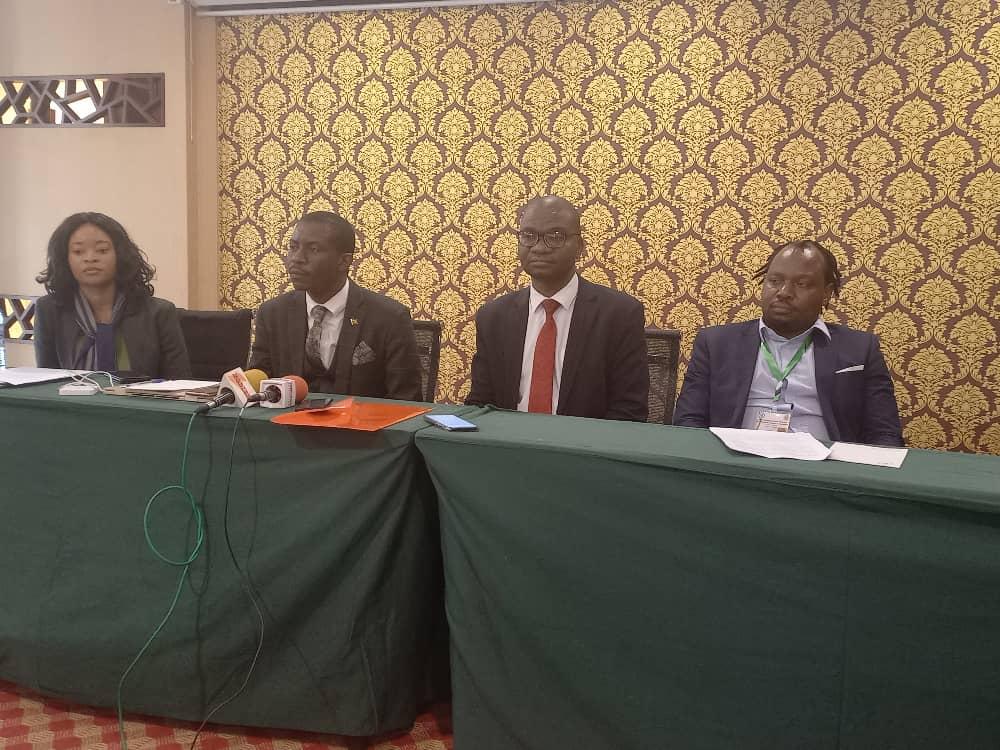
SADC CSOs under the umbellar body Civil Society Education Coalition (CSEC) told the news conference on Thursday, June 16, 2022 in the capital Lilongwe that governments must ensure that appropriate governance and regulation are in place to protect education as a basic human right and a
public good while also leveraging the capacities of the private sector to accelerate and improve digital learning. The civil rights groups were speaking after submitted its report to the Southern African Development Community (SADC) Ministers of Education and Training and Science, Technology and Innovation, during their meeting in Lilongwe, Malawi, 13th -17th June, 2022.
“We, CSOs working in the education sector in the SADC region, would like to illuminate how technology can play a role as a part of the larger systemic efforts to transform education, making it more inclusive, equitable, effective, relevant and sustainable.
“We are convinced that technology alone cannot achieve our education goals, but it can be a catalytic component of education reforms that will prepare children, young people, as well as adults, to lead needed transformations,” reads part of the statement.
Added, “Therefore, we posit to the SADC Education leadership that technology can – and must – help advance our aspirations for quality inclusive education (From Pre-School) based on principles of social and economic justice, equity, and respect for human rights.
“We are aware that digital technologies in education can contribute to wider systemic efforts to improve learning for all by: leveraging technology that is fit to the country context, and foster parental engagement in the child learning process and noting the considerable promise of digital technologies to support positive change and transformations in education, its potential is regularly stymied by several interrelated challenges including insufficient access to electricity and internet connectivity especially among the rural communities”.
CSOs demands on digital learning including: appropriate governance and regulation are in place to protect education as a basic human right and a public good while also leveraging the capacities of the private sector to accelerate and improve digital learning.
“Member states invest in having electricity accessible to all schools and communities in rural areas; the
region has untapped potential for solar power in areas not connected to the main grid member states should provide friendly and inclusive sensitive hardware to enable teaching and learning processes. “Member states must build and maintain robust, free public learning content and platforms that
catalyze human-centered learning experiences. stronger effort is made to develop trusted online spaces that share quality-controlled, free, curriculum-aligned, easy-to-access, and contextually relevant digital learning resources. Member states establish mechanisms to increase access to connectivity to schools,” reads the statement.
CSEC Executive Director Benedicto Kondowe added that the achievement of Sustainable Developmental Goals (SDG) 4 and the transformation of education within the SADC region will depend heavily on teachers and education personnel that are empowered, adequately recruited, well trained and supported.
For More News And Analysis About Malawi Follow Africa-Press