Africa-Press – Malawi. Malawi Government has urged communities to create spaces for Adult Learning and Education (ALE) classes to ensure that the country achieves its dream of making 2 million people literate by 2025 as stipulated in the National Adult Literacy and Education Policy which was approved in February 2020.
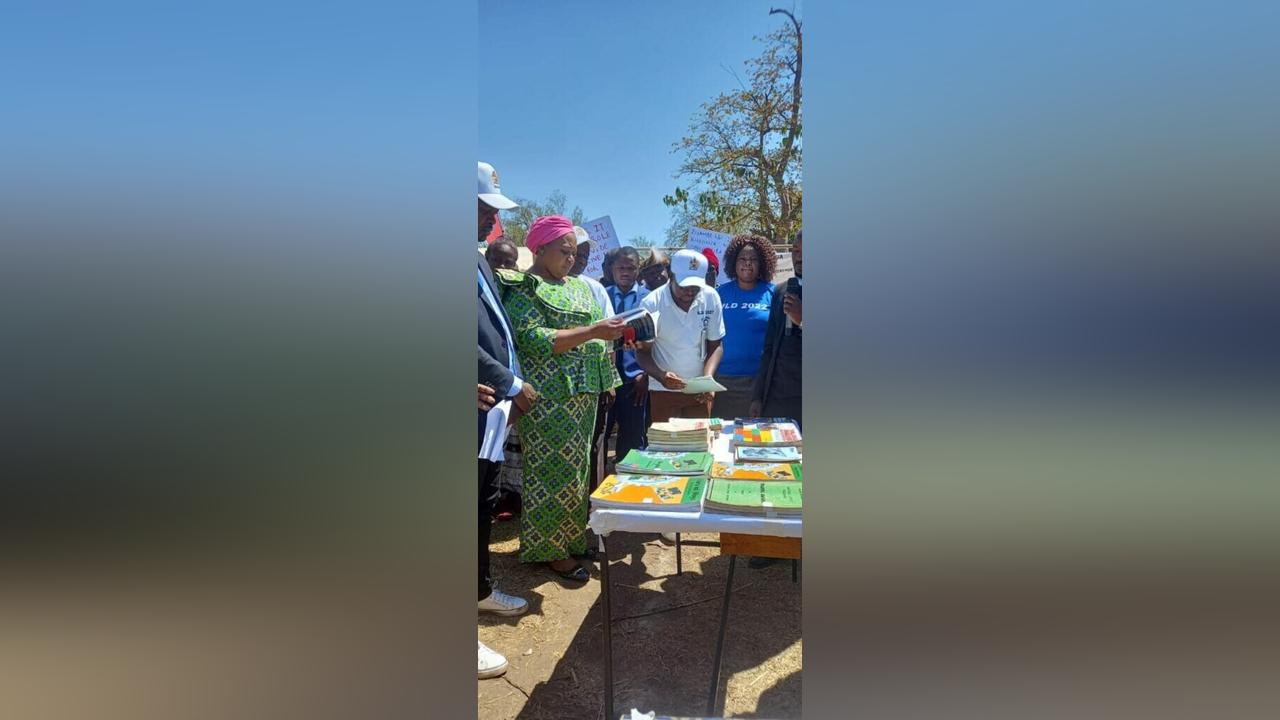
Deputy Minister in the Ministry of Gender, Community Development and Social Welfare, Agness Nkusankhoma, made the call on Thursday during the 2022 International Literacy Day commemorations which was held at Nkhonde Primary School in Malawi’s eastern region district of Balaka under the theme ‘Transforming Literacy Learning Spaces.
This year’s commemoration brought great excitement among the ALE stakeholders as it came at a time Malawi Government has just approved the National Adult Literacy and Education Strategic Plan (2022-2027) which will be a pillar for the already approved ALE policy.
Nkusankhoma said ALE is critical in achieving sustainable development both at national and community levels. “The economic role of adult education in development is apparent in its contribution to human capital formation. Adult Learning and Education, equips recipients with essential literacy and numeracy skills that are prerequisite in enhancing standard of living and labour productivity. ALE facilitates achievement of progress in agriculture, entrepreneurship, good governance, health care, sanitation, and nutrition, among others,” she said.
International Literacy Day is observed every year on September 8th to highlight the importance of literacy and to throw light on issues that exist and affect local communities around people.
The Malawi’s event enlightened the masses on the importance of ALE as the country implements the Vision 2063, the development blue print. Nkusankhoma said ALE provides life-changing opportunities for many people. “Yet for many years it has remained a forgotten corner of education, lacking co-ordination and sharing of best practices; its learners and teachers often stigmatized; and its programmes underfunded, and disconnected from social policy and education at large. However, there is hope as the National Adult Literacy and Education Policy; and National Adult Literacy and Education Strategic Plan (22-2027) will help the country deal with challenges that the ALE sector is facing,” she said.
The minister thanked stakeholders mainly Non-Government Organisations for their efforts to promote ALE in Malawi. In her appreciation, she singled out a German orgnaisation, DVV International for financially supporting Malawi Government to develop National Adult Literacy and Education Policy; and the National Adult Literacy and Education Strategic Plan (2022-2027).
Furthermore, the minister hailed DVV International for its funding towards the development of ALE Management Information System which is being piloted in Malawi’s central region districts of Mchinji, Ntcheu and Lilongwe.
Speaking on the sidelines of the event, DVV International Communications/Programme Officer, Dyson Mthawanji, said the 66 page Strategic Plan will be officially launched anytime soon.
“This Strategic Plan will increase financial resources for improved service delivery of ALE programmes by 2027. It also aims at improving human and technical resources capacity in ALE,” said Mthawanji, adding: “In the past there was low visibility of ALE. Therefore, this Strategic Plan will enhance visibility, communication and advocacy for ALE among all stakeholders by the end of 2027.”
Member of Parliament for Balaka Central Constituency, Chifundo Makande whose area hosted the event promised to work closely with traditional leaders to ensure that ALE has space.
“I know that the national level stakeholders are working hard to promote ALE in Malawi. However, their success relies on the cooperation among the local communities. It is from this background that I will take an additional step to work with chiefs to create enough and conducive spaces for the adult learners,” he said.
Speaking at the same event, The United Nations Educational, Scientific and Cultural Organization (UNESCO) deputy executive secretary, David Mulera, said people should realize the importance of ALE on development for the country to prosper at all levels.
“Everyone should know that ALE is very important in all aspects of development. Therefore, everyone should take role in promoting it in the community. This event should help us reflect on what we can do to uplift ALE in our communities,” said Mulera.
The Malawi’s concerted efforts to fight illiteracy stretches back to the colonial period. The first classes were launched by the British Government in cooperation with UNESCO at Mponela in Dowa in 1947. In most cases, churches and Government partnered to reduce illiteracy through the Ukani Literacy programme.
Globally, about 774 million people are illiterate. Out of this 5 million people are in Malawi representing 25 percent of Malawi’s population. Currently, Malawi Government, through the Ministry of Gender, is providing 8,000 adult classes for Chichewa lessons and 1,633 for English.
In addition to basic literacy and numeracy provision to adult learners, Malawi with support from DVV International has taken a new approach whereby it also provides lifelong learning education such Integrated Adult Education which is embedded with citizenship education.
For More News And Analysis About Malawi Follow Africa-Press