Africa-Press – Malawi. Vice-President Jane Ansah has doubled down on her controversial, almost daily taxpayer-funded journeys across the country, brushing aside growing public outrage over what critics describe as wasteful, arrogant and tone-deaf leadership in the face of strict government austerity measures.
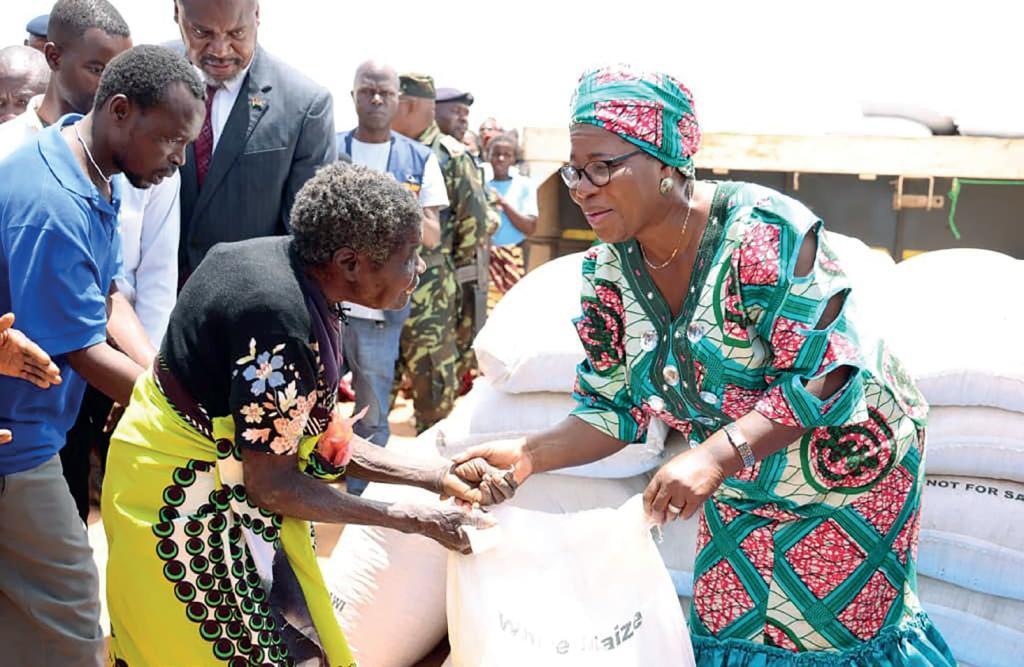
In a written response on Friday, spokesperson for the Office of the Vice-President, Richard Mveriwa, insisted Ansah will not retreat from her countrywide tours, arguing that she must personally supervise operations under her delegated disaster management portfolio.
The response follows mounting criticism questioning the necessity, frequency and cost of the Vice-President’s relentless travel spree under the Lean Season Food Response Programme and visits to people affected by stormy rains—duties ordinarily handled by full-time officials at the Department of Disaster Management Affairs (Dodma) and district councils.
Yet in just four days last week—from Monday to Thursday—Ansah travelled to at least eight districts: Mangochi, Thyolo, Nsanje, Chikwawa, Zomba, Ntcheu, Lilongwe and Mchinji, distributing maize and inspecting flood-damaged households.
Observers warn that the Vice-President’s defiance flies directly in the face of her own government’s austerity measures, which demand sharp reductions in both internal and external travel to control spiralling public expenditure.
But Mveriwa defended the Vice-President’s movements as unavoidable.
“As Vice-President responsible for disaster management, she is expected to assess the impact of disasters firsthand, verify reports and provide informed guidance on immediate and long-term mitigation measures,” he said.
He insisted disaster management “cannot be done from an office,” adding that Ansah’s physical presence is necessary for verification, coordination and timely decision-making during emergencies.
However, critics say this justification is not only weak but dangerously undermines government’s own call for fiscal discipline.
Mzuzu University-based economist Christopher Mbukwa described the Vice-President’s defence as “baffling and incomprehensible.”
“It is a missed opportunity to enforce expenditure controls if the very leaders calling for austerity are openly violating it. You cannot expect Ministries, Departments and Agencies to tighten belts when their superiors are loosening theirs,” said Mbukwa.
Centre for Social Accountability and Transparency executive director, Willy Kambwandira, warned that visibility must never replace functioning institutions.
“The country already has Dodma, district councils, humanitarian clusters and NGOs whose job is exactly this—assess, distribute and monitor aid. When the Vice-President makes routine daily trips to ‘appreciate damage,’ serious questions arise on efficiency, duplication and cost,” he said.
Kambwandira further warned that Ansah’s explanation falls short on necessity, scale and frequency.
“When a country is under strict austerity and a leader insists she cannot stop daily travels, it looks less like leadership and more like political theatrics disguised as humanitarian concern,” he said.
National Advocacy Platform (NAP) chairperson Benedicto Kondowe said while disaster oversight is important, it must never override fiscal responsibility.
“Excessive executive mobility during austerity raises legitimate concerns about tone-deaf governance, blurred institutional roles and the risk of humanitarian engagements being used for political optics rather than efficiency,” said Kondowe.
Human rights activist Gift Trapence went further, bluntly calling the situation a symptom of entrenched executive arrogance.
“The culture of executive arrogance has long been a problem in Malawi. Politicians behave one way outside government and completely differently when they enter power. Austerity must not be turned into a national joke,” he said.
Governance pundit George Chaima warned that power breeds arrogance when left unchecked.
“Leadership comfort zones quickly create unchecked excess. Oversight does not mean endless travel. The Vice-President should be using reports and data from her officers unless a fresh disaster strikes,” said Chaima.
In November, the Office of the President and Cabinet announced sweeping austerity measures, including a 30 percent fuel entitlement cut for Cabinet ministers, deputy ministers and senior public officers—measures now appearing increasingly hollow as top leaders openly defy the very discipline they demand from the public.
For More News And Analysis About Malawi Follow Africa-Press