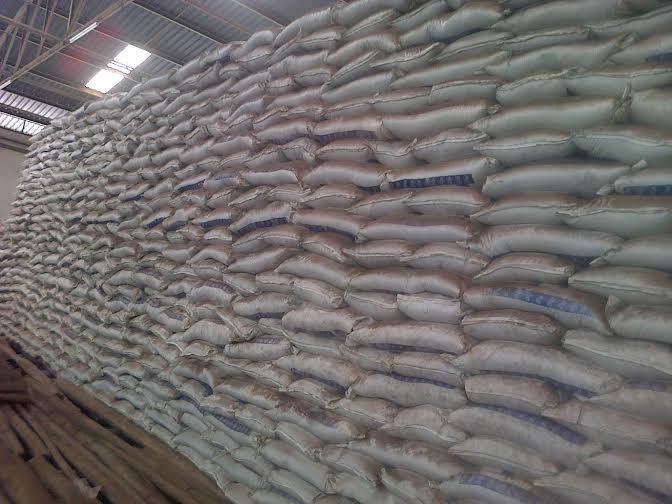
Africa-Press – Malawi. The deepening fertiliser crisis has once again exposed Malawi’s chronic failure to plan for food security, as scarcity worsens and opportunistic vendors openly exploit desperate farmers—selling fertiliser at exorbitant prices right outside authorised agro-dealer shops.
Nation on Sunday spot-checks yesterday found vendors selling fertiliser at K3 800 per kilogramme—translating to a shocking K190 000 per 50kg bag, far above the official prices ranging between K155 000 and K166 000.
Once again, ordinary Malawians are paying the price for government indecision, delayed payments and policy paralysis—raising the troubling question: how long will this fertiliser crisis be allowed to persist year after year?
At one of the largest fertiliser distribution points in Limbe, Blantyre, desperation was written on farmers’ faces as stocks ran dry.
“I came to buy fertilisers only to be told that it is out of stock,” said Alfred Banda. “I planned to apply the first fertilisers this weekend.”
Pressed on whether he would turn to vendors, Banda shook his head.
“I budgeted for the official price. I simply cannot afford the prices being offered by the vendors,” he said.
But vendors remain unyielding.
“It is either you buy or not—these are our prices,” said one trader who admitted that they stockpiled fertiliser in anticipation of shortages.
“We were told that foreign currency problems would cause scarcity, so we bought earlier and kept it,” the vendor said. “If there was no scarcity, we would have sold at the same price as agro-dealers.”
For some farmers, however, hunger leaves no room for choice.
Samantha Mkangama, whom we met at the same shop, was forced to buy two bags at the inflated vendor price.
“I could not miss applying fertiliser this weekend. I also could not risk waiting for the official supply,” she said.
Behind the spiralling prices lies a deeper systemic failure. Importers say outstanding government arrears and shrinking credit lines have delayed the importation of at least 265 000 metric tonnes (MT) of fertiliser—placing the entire farming season in jeopardy.
This delay has left thousands of smallholder farmers stranded at a critical stage of crop growth, with maize already in the ground but without nutrients.
The suffering is even more severe for the 1.1 million beneficiaries of the Farm Input Subsidy Programme (Fisp).
In Nkhaka Village, Traditional Authority Masumbankhunda in Lilongwe, farmer Moveni Dimba, who planted two acres of maize, fears total crop failure.
“I am just waiting to be told when to buy. But if this delay continues, our season will be ruined. If inputs can come now, maybe we can still save our harvest,” he lamented.
The crisis has spilled into Parliament. Kasungu South East MP Golden Chizimba warned that only half of fertiliser depots in the Central Region are stocked.
“If we do not have fertiliser, then we must anticipate worse hunger next year,” he cautioned.
This year’s Fisp was launched with an 80 000MT deficit, with government betting on private traders to close the gap. At the official launch on November 12, Minister of Agriculture Roza Mbilizi admitted that Malawi had only 30 000MT against a requirement of 110 000MT.
Yet as of yesterday, both Mbilizi and ministry spokesperson Arnold Namanja were unreachable for comment. Minister of Finance Joseph Mwanamveka referred the matter back to the Agriculture Ministry—another sign of bureaucratic buck-passing as farmers suffer.
Fertiliser Association of Malawi (FAM) executive administrator Hannah Makhambera confirmed that government arrears have crippled suppliers’ access to credit.
“Failure to secure credit lines is affecting the importation process,” she said. “If government clears these arrears, suppliers can re-establish credit and stabilise fertiliser supply.”
Makhambera said local firms currently have 42 432MT in warehouses, with 140 752MT in transit and 124 636MT still at sea.
But economic thinkers warn that these numbers may come too late.
Mwapata Institute executive director William Chadza warned that the fertiliser crisis is now a direct national food security threat.
“Without fertiliser, food production will fall. That means hunger. The implications are severe,” he said.
Agricultural policy expert Tamani Nkhono Mvula was even more blunt, describing the crisis as a product of poor planning and fiscal indiscipline.
“Government must pay suppliers. Whatever happens here affects the entire farming season. These issues should be resolved before launching programmes like Fisp—not after farmers are already in the field,” said Mvula.
As fertiliser prices soar, depot shelves remain empty and government explanations grow quieter, one painful question refuses to go away:
How long must Malawian farmers continue to suffer the same fertiliser crisis year after year—while hunger looms closer with every delay?
For More News And Analysis About Malawi Follow Africa-Press