By nyasatimes
Africa-Press – Malawi. President Peter Mutharika’s effort to shut down controversy surrounding Vice President Jane Ansah’s UK trip has instead exposed a deeper and more troubling contradiction at the heart of government. His assertion that the Vice President did not use public funds directly clashes with an earlier, clear statement by government spokesperson Shadrick Namalomba, who confirmed that K168 million in taxpayer money had been approved for the trip.
This is not a communication error.
It is a fundamental inconsistency about public finance, executive authority and truthfulness. You cannot approve K168 million, list accompanying officials, and brief the nation through an official spokesperson—then later declare the trip privately funded without explaining how or why the official position changed. One of these versions is wrong, and the failure to confront that fact is itself an act of evasion.
The President’s own language deepens the problem.
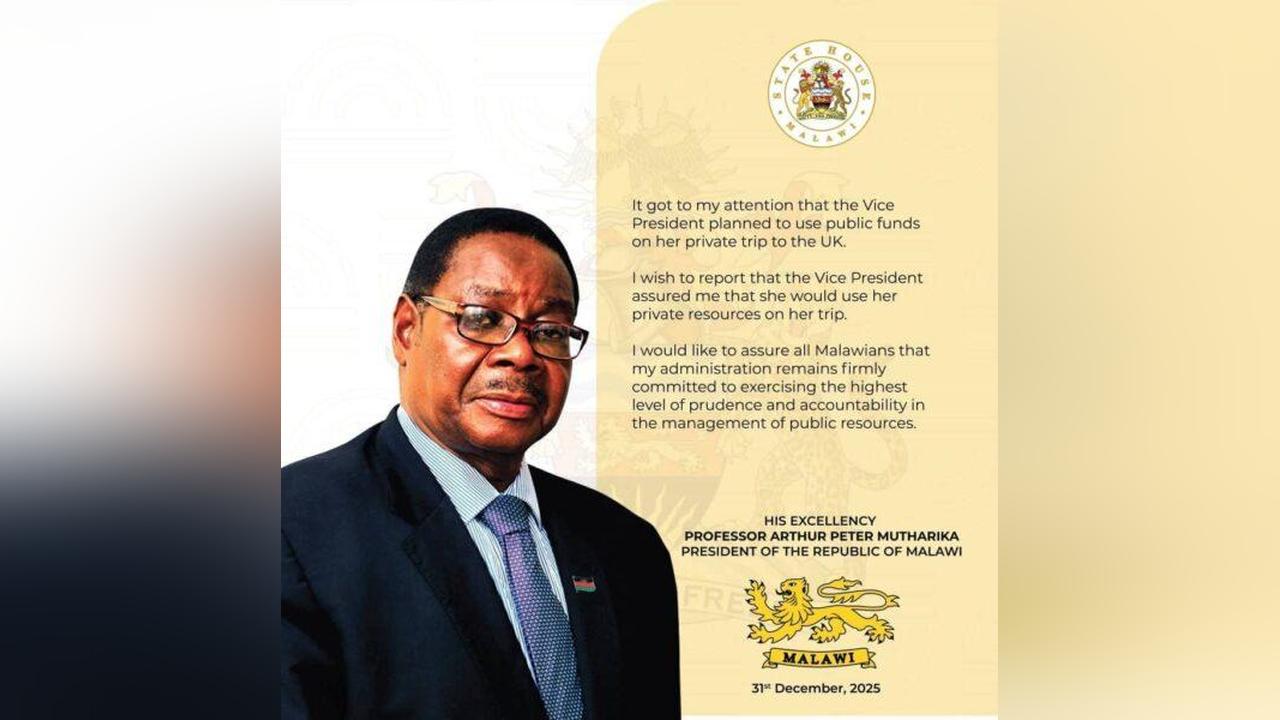
By saying, “I wish to report that the Vice President assured me…”, Mutharika rhetorically diminishes his authority. Presidents do not “report” on their deputies; they direct them. They authorise expenditure. They exercise control. The phrasing unintentionally casts the Head of State as a messenger rather than the ultimate decision-maker.
Equally revealing is the phrase, “It got to my attention that…”.
This framing distances the President from the decision, as though the matter emerged independently of his administration. But public travel involving hundreds of millions of kwacha is not incidental information that “gets” to a President—it is an executive decision that should fall squarely under his oversight. The attempt to appear reactive rather than responsible only invites further doubt.
This controversy did not originate from rumours or social media speculation. It came from official government communication. Namalomba’s statement was detailed, precise and authoritative—naming figures, officials and funding sources. Such specificity can only come from an approved plan. If that plan was cancelled or altered, the public deserved a formal, transparent explanation, not a quiet reversal under pressure.
Instead, the President’s statement replaces accountability with assurance. Public finance, however, is not governed by personal trust. It is governed by documentation, approvals, Treasury procedures and audit trails. An assurance from the Vice President is not evidence. It is not a receipt. It is not proof that public funds were untouched.
The closing pledge about transparency and prudent resource management reads like boilerplate crisis language—designed to soothe rather than clarify. Without addressing the contradiction between what was said before and what is being said now, such declarations risk sounding like virtue signalling rather than leadership.
At a deeper level, this episode reveals an executive struggling with coherence. A President distancing himself from his deputy. A government spokesperson contradicted by his own Head of State. A public left unsure which version of reality to trust.
This is no longer just about a trip. It is about whether executive decisions mean anything, whether official communication is reliable, and whether accountability still functions beyond press statements.
A credible response would have acknowledged the earlier position, explained the reversal clearly, and asserted presidential oversight without hesitation. Instead, the handling of this matter has exposed unease, confusion and fragility at the centre of power—and that should concern every taxpayer far more than the journey itself.
Source: Malawi Nyasa Times
For More News And Analysis About Malawi Follow Africa-Press