Africa-Press – Malawi. In Traditional Authority Makhwira area in Chikwawa District, learners have to walk uphill to access Nkudzi Community Day Secondary School (CDSS).
That was the only piece of land available for the District Development Fund project, according to authorities.
“It is not an ideal place for a school, but that was the only piece of land available. It was because of land scarcity that the authorities were forced to construct the school there,” said Chikwawa District Council’s Land Officer Peter Jali.
In almost all social indicators, the two districts rank among the poorest in Malawi.
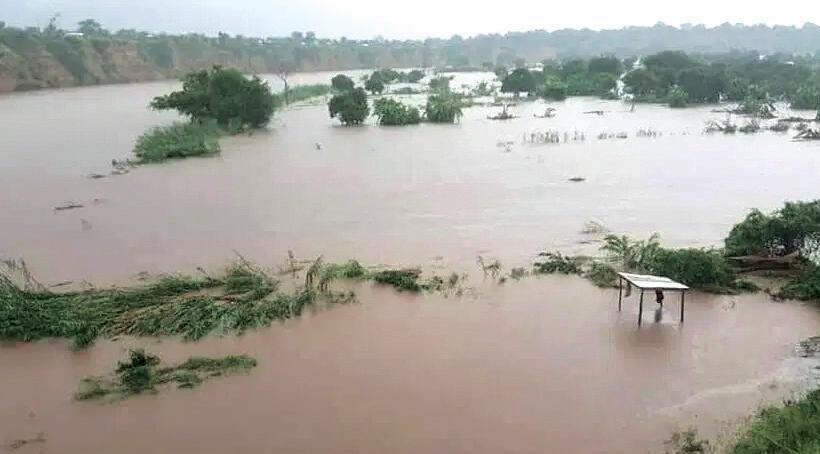
And every time floods hit the valley, communities are urged to move upland.
But land scarcity is an acute problem in Lower Shire, the data we have gathered and analysed show.
The two Lower Shire districts of Chikwawa and Nsanje have a combined 6,823 square kilometres [4,878 square km and 1,945 square km respectively] in total land area.
The 2018 National Population and Housing Census counted more than 800,000 people in the two districts.
But they also have multiple protected areas that take up nearly half of the total land area. These include Majete Wildlife Reserve (about 700 sq. km), Lengwe National Park [900 sq km] , Mwabvi Game Reserve [135 sq. km], Matandwe Forest Reserve [263 sq. km] and Elephant Marsh [500 sq km during dry season].
In addition, alongside the Shire cutting through the two districts and the Thyolo Escarpment that push out the two districts, they also have Illovo Sugar Estate and some of the largest private-owned cattle ranches in Malawi.
This leaves little productive land for people. Development projects too have suffered.
“In 2022, we were supposed to have a project, called School of Excellence. The developers came.
“As we are speaking the project has not started because of land issues. We were supposed to pay compensations to acquire land from people but we have not started anything,” Jali said.
Among other impacts, scarcity of land is pushing up encroachment in protected areas.
NGABU—We cannot guarantee farmlandDirector of the Department of Parks and Wildlife Director Brighton Kumchedwa said the scramble for more farming land and natural resources in the district is exacting a toll on protected areas.
“Increasing human pessure and poverty mean communities want more land. These are key drivers of encroachment,” Kumchedwa said.
The problem also hampers efforts for permanently relocating people from flood prone areas.
Traditional Authority Ngabu said while his area has some land, it is only enough for settlement and not cultivation by families displaced by floods.
“I can assure you land is available. But we cannot guarantee or provide land for farming.
“The people that are vacating their land because of flooding know where they do their farming – they can go to the wetlands to do their farming, but whenever there is flooding they have to vacate and relocate uplands,” he said.
For More News And Analysis About Malawi Follow Africa-Press