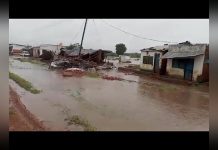
Africa-Press – Malawi. In the breathtaking yet unforgiving terrain of Chitipa, northern Malawi, rural roads tell a painful story. They are dusty in the dry season, muddy death traps in the rains, and for many communities, they are the thin line between abundance and hunger. While Malawi prides itself as an agricultural nation, its farmers are often cut off from the very markets that could turn their sweat into sustenance and their harvests into hope.
Now, the Right to Food Coalition is raising a red flag, warning that without urgent investment in rural road infrastructure, Malawi’s dream of food security will remain an illusion. According to National Coordinator Yamikani Chokhotho, the problem goes far beyond inconvenience. “Bad roads make it expensive to transport food from farms to markets, increasing prices for consumers. Farmers also struggle to reach markets, reducing income and incentives for production,” he explains.
This is not just about potholes and bridges. It is about livelihoods, dignity, and survival. When roads collapse, so does the rural economy. Farmers watch their produce rot because trucks cannot reach them. Traders hike prices to cover transport risks. Consumers, especially the poor, are forced to buy less food at higher costs. In the end, everyone loses.
The numbers support what communities already know from lived experience. Poor road networks drive up transport costs, increase post-harvest losses, and isolate farmers from markets, storage facilities, and agro-processing opportunities. The result is reduced food availability, persistent poverty, and deepening inequality—especially in rural districts where the majority of Malawians live.
Senior Chief Mwaulambia puts it bluntly: “Poor roads are a significant obstacle to our development.” His words reflect a wider frustration shared across villages that feel forgotten by national development plans that rarely move beyond urban centres.
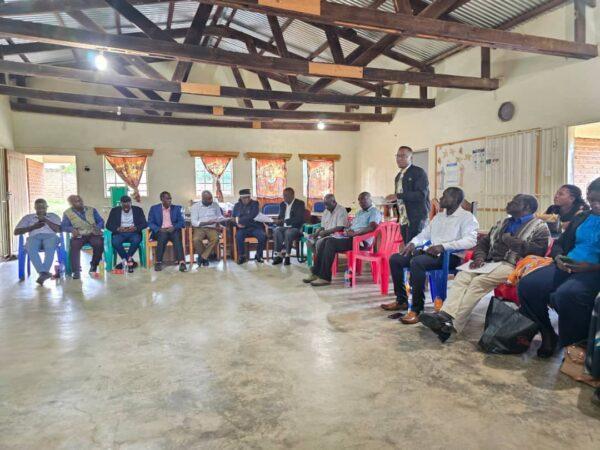
At a recent high-level meeting convened by the Catholic Commission for Justice and Peace (CCJP), and supported by Welthunger Hilfe (WHH), a broad coalition of faith leaders, traditional authorities, civil society actors, and business representatives reached a rare consensus: rural roads are not a luxury—they are a national emergency. Without them, all other development efforts in agriculture, health, education, and trade are undermined.
CCJP Program Officer Stella Zimba underscored the urgency of collective action: “The coalition’s efforts aim to address these challenges and promote food security in Malawi.” But she also acknowledged that civil society alone cannot fix what is essentially a policy and budget failure.
The truth is uncomfortable but unavoidable: Malawi cannot talk seriously about ending hunger while leaving rural communities stranded. Food security is not just about fertiliser, irrigation, or seed varieties. It is about access. Access to markets. Access to services. Access to opportunity.
The equation is simple but powerful: build better roads, and food moves faster. Food moves faster, and prices stabilise. Prices stabilise, and families eat better. Families eat better, and the nation grows stronger.
Improving rural roads is not just an infrastructure project—it is a moral obligation. It is a statement about whose lives matter and which futures Malawi chooses to invest in. Until the last village is connected, the promise of food security will remain unfulfilled.
If Malawi is serious about breaking the cycle of hunger and poverty, the journey must begin with what lies beneath our feet: solid, reliable rural roads that carry not just vehicles, but the hopes of millions.
For More News And Analysis About Malawi Follow Africa-Press