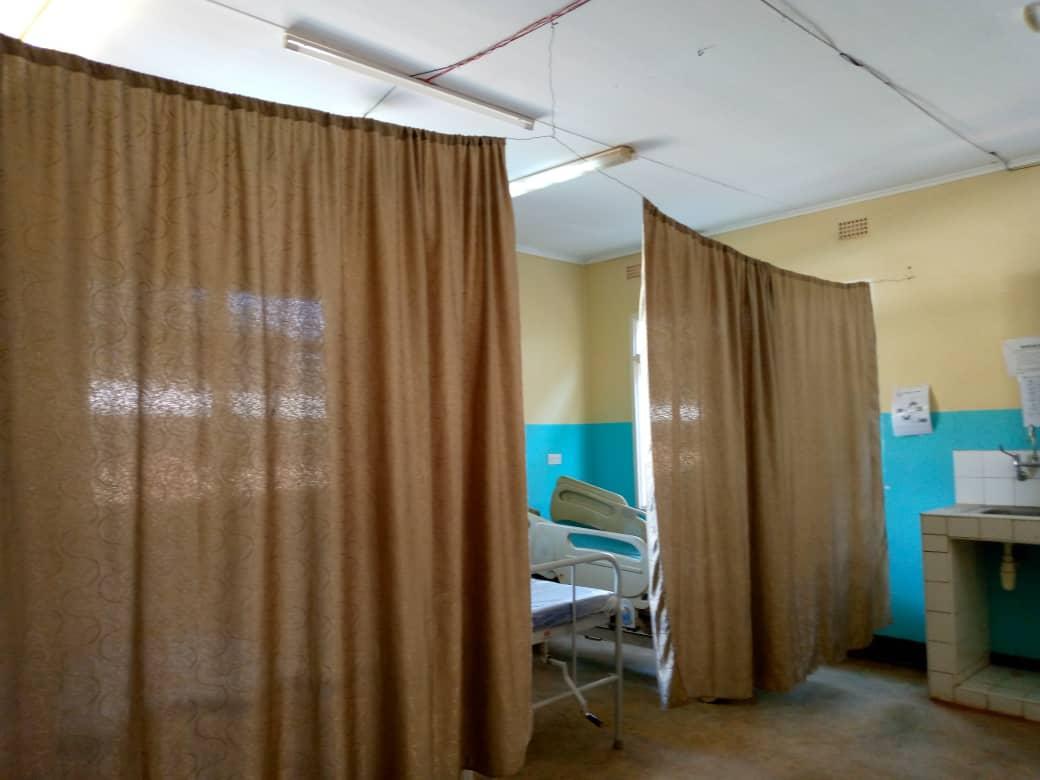
Africa-Press – Malawi. On paper, Malawi’s public hospitals offer free healthcare for all. It is a constitutional promise: that no citizen should be denied treatment because of poverty. In reality, that promise has collapsed.
Across the country, from the congested wards of Queen Elizabeth Central Hospital to the isolated shores of Likoma Island, patients are being forced to pay illegal “fees” to access care that is officially free. Those who cannot pay are left waiting. Some deteriorate. Some die.
This investigation reveals a nationwide shadow economy operating inside public hospitals—a coordinated system in which security guards, clerks, nurses and clinicians have monetised suffering. Treatment is auctioned. Ambulances are rented back to citizens. Even death has a price tag.
The poor are no longer patients. They are obstacles.
The Gatekeepers of Queen Elizabeth
At Queen Elizabeth Central Hospital (QECH) in Blantyre, Malawi’s largest referral facility, access to treatment is controlled by an invisible but well-organised network.
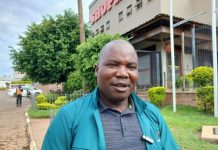
On 16 December 2025, Kumbukani Stafford, a small-scale farmer from Phalombe, arrived at QECH with his niece. She had lived for years with a painful swelling following a botched surgery. This was their final referral. Their last hope.
They arrived at 8:00 am.
Twenty-four hours later, they were still seated on the same plastic chairs.
“We were bounced like a ball,” Stafford recalls. “Room One, burns department, back to reception. They told us our name was not in the system. But we were standing right there. We were human beings.”
While they waited, other patients who arrived later were quietly escorted into consultation rooms. The system, it became clear, was not broken. It was gated.
Undercover reporters discovered that security guards now operate as brokers. One guard explained the rules bluntly:
“Don’t come here like a child. Every department must eat. Once you pay, they call each other. You become urgent.”
When Stafford finally paid K15,000, his niece’s name suddenly “appeared”. The health worker smiled.
“They are being assisted now.”
Behind the scenes, the bribe was divided: scanning staff received K5,000. A security guard pocketed K1,500. Others took their cut.
This was not healthcare. It was a transaction.
In Room 1, a woman from Lunzu seeking a simple dental extraction waited two full days without being seen. She watched others discreetly hand over K10,000 and be ushered inside.
At one point, she whispered to our reporter:
“Can you help me with K10,000 so I can be called too?”
In a public hospital, access had become a cash competition.
The Auction at Kamuzu Central
At Kamuzu Central Hospital, corruption is not petty. It is industrial.
In July 2025, a family from Kasungu arrived with a 27-year-old man whose leg had been shattered. The demand was immediate:
K200,000 for an X-ray and “facilitation”.
“It felt like an auction for human life,” said his uncle. “Families were comparing how much they had been asked to pay.”
He paid. The surgery still did not happen.
Only when he began shouting and demanding receipts did staff finally move.
Another patient who paid the same amount but remained quiet is still waiting.
At the Lilongwe Institute of Orthopaedics and Neurosurgery, under KCH, Deborah, 22, watched her mother become paralysed after being told a neuro-scan drug was “out of stock”—unless she paid K260,000.
She failed to raise the money.
Others who paid were scanned within minutes.
Chiradzulu: Private Clinics Inside Public Wards
In Chiradzulu District Hospital, corruption has become structural.
After Médecins Sans Frontières withdrew, a vacuum emerged. Informal “agents” now roam the corridors, intercepting desperate families.
In one case, an underage pregnant girl was redirected to a clinical officer operating a private business inside a government theatre. The family paid K38,000 via mobile money. Government drugs. Government nurses. Private profit.
Even the mortuary has been commercialised. Families pay between K20,000 and K50,000 for embalming. No receipts. No records.
Job placements reportedly cost up to K500,000.
“We are not just stealing money,” a health worker said. “We are stealing the future quality of our doctors.”
Thyolo: The Weapon of Neglect
At Thyolo District Hospital, the system is more subtle—and more cruel.
Patients without money are ignored until they give up.
Chotsadziwa, admitted with a broken leg, was treated for three days. When staff realised his family was poor, care stopped.
“Doctors pass me like I don’t exist,” he said. “They told me I am not sick.”
Nearby, Wawa Phiri spent K30,000 on transport for his injured child. The child was not examined. He was given eight Panadol tablets and sent home.
“If you have money, you are a patient,” Phiri said. “If you don’t, you are a nuisance.”
Likoma: When Even Ambulances Are for Sale
On 3 March 2025, 18-year-old Laston was mauled by a crocodile on Likoma Island.
At Likoma District Hospital, staff demanded K75,000 for ambulance fuel.
At Nkhata Bay, the land ambulance driver demanded another K55,000.
Neither vehicle stopped for fuel.
“They were waiting for a father too desperate to say no,” Laston’s father said.
Laston lost his leg.
The state never paid for the journey. The family did.
“Forced Payments, Not Bribes”
George Jobe, Executive Director of the Malawi Health Equity Network (MHEN), says what patients experience is not bribery—it is coercion.
“People are sick, desperate, and afraid. They are forced to pay.”
MHEN documents cases where patients are instructed to place cash inside health passports. Those who do not pay are ignored.
“The silence protects the system,” Jobe said. “People fear retaliation. They don’t trust reporting mechanisms.”
Oversight Without Teeth
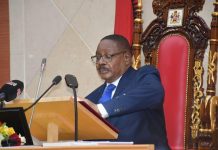
Ombudsman Grace Malera confirmed that in 2025 alone, over 16,000 complaints were recorded through hospital ombudsmen, including 238 linked to informal payments.
But hospital ombudsmen are employed by the Ministry of Health itself.
“They report to the same system they are supposed to investigate,” Jobe noted.
Malera acknowledged that bribery falls under the Anti-Corruption Bureau, but conceded that conditioning care on payment violates constitutional rights.
The Ministry of Health admits the problem exists.
“This is about mindset change,” said Principal Secretary Bestone Chisamire.
No numbers. No timelines. No public prosecutions.
A Health System That No Longer Belongs to the Poor
This investigation reveals a terrifying truth:
Malawi’s public health system no longer belongs to its citizens. It belongs to syndicates.
Treatment is sold.
Ambulances are rented.
Jobs are bought.
Death is monetised.
The Constitution promises free healthcare. The reality is a market where survival is negotiated in whispers, sealed in envelopes, and enforced through silence.
In Malawi today, illness is no longer a medical condition.
It is a financial test.
And for millions of poor citizens, it is one they are already failing.
For More News And Analysis About Malawi Follow Africa-Press