By nyasatimes
Africa-Press – Malawi. Because of this, everyone has suddenly become a financial analyst on Facebook. Every hour there are new “experts” explaining the Public Pension Fund issue with confidence and anger, yet many of these opinions are built more on emotion than on facts. Even anthu ouma mutu—people who refuse to think carefully—are now shouting the loudest, and unfortunately the loudest voices are not always the most informed ones.
The real problem is simple: opinions and emotions are running far ahead of facts. Before accusing anyone of theft, corruption or abuse of public funds, Malawians must slow down and first understand how pension funds actually work. What is being discussed in this debate is not government pocket money, and it is not a political slush fund. It is the retirement savings of thousands of workers who expect security and dignity when they leave employment.
In 2011, Malawi introduced a contributory pension system through reforms implemented by the Malawi Government. The key word here is contributory, meaning that the pension fund is built from contributions made every month by both employees and employers. Each worker contributes 5 percent of their salary, while the employer contributes 10 percent. This means that for every K100 earned by an employee, K5 comes from the worker and K10 comes from the employer, creating a combined savings structure meant to grow over time.
Government is the largest employer in the country, and therefore the largest contributor to this system. Teachers, nurses, doctors, police officers, soldiers, drivers, council workers and thousands of civil servants working at Capital Hill all contribute to the Public Pension Fund Trust (PPFT). Altogether, these contributions represent the retirement savings of close to half a million public workers across Malawi.
This point must be clearly understood: this money does not belong to government. It belongs to workers who have spent years serving the nation and who expect their savings to grow so that they can retire with security.
Because pension money must grow, pension funds do not simply keep the money sitting idle in bank accounts. If money is left idle for many years, inflation slowly destroys its value as prices rise while the value of the money remains the same. For this reason, pension funds around the world invest in income-generating assets so that the contributions made today grow into larger retirement savings tomorrow.
The Public Pension Fund Trust has been investing in various assets for this very reason. It owns the Public Pension Fund House in Lilongwe, located opposite the Golden Peacock Shopping Complex. The building was purchased for about K1.7 billion in 2017, and today it generates rental income while its value has likely increased significantly. The fund has also invested in the Lifestyle Boutique Hotel, formerly known as Sigelegele in Area 11. In addition, it holds shares in companies listed on the Malawi Stock Exchange and owns a significant stake in MPICO Plc, one of the country’s leading property investment firms. The fund is also constructing another hotel in Blantyre as part of its long-term investment strategy.
These investments are not unusual. They are exactly what pension funds across the world are expected to do: invest, diversify and generate returns so that workers’ savings grow over time.
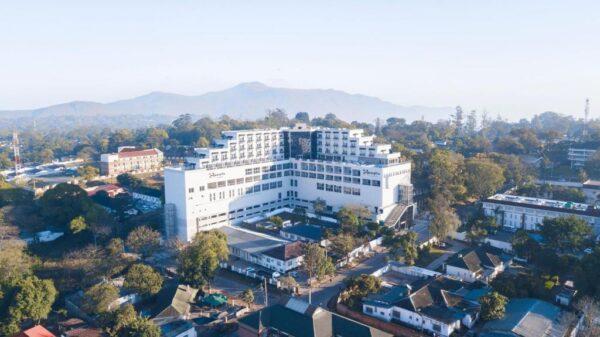
This brings us to the controversy surrounding the proposed purchase of Amaryllis Hotel Blantyre. Much of the public discussion has immediately jumped to accusations of corruption and political manipulation. Yet these accusations miss the central issue entirely.
The real concern should not simply be that the pension fund wants to buy the hotel. The real question should be whether buying the hotel at the proposed price makes commercial and financial sense.
According to information that has circulated in the public domain, the hotel was initially valued at about K43 billion. At that price, analysts estimated that the investment could take roughly 35 years to recover its cost through profits. Even at that stage, many investors would already consider the payback period quite long for a real estate investment.
However, because of the sharp devaluation of the Malawi Kwacha, the valuation of the hotel reportedly increased to more than K100 billion. If the purchase price rises dramatically while the profit generated by the hotel remains the same, the payback period becomes extremely stretched, raising legitimate concerns about whether such an investment would be financially prudent.
This is where serious discussion should begin. The public debate should not revolve around slogans or political accusations, but around basic investment questions that any responsible pension fund must answer.
People should be asking: what is the hotel’s annual net profit? What return on investment is expected? What financial risks are involved? And does the investment meet the strict thresholds required for pension fund investments?
In real estate and hospitality investment, a reasonable project should ideally recover its cost within 15 to 20 years. If it recovers within 10 years, that is considered excellent. A payback period of 35 years raises concern, and a period stretching toward 100 years becomes commercially unrealistic.
These are the issues that should guide public debate. Pension fund trustees have a legal and fiduciary duty to protect and grow the savings of workers, and if an investment appears weak or unprofitable, it is right and necessary to question it using facts, financial analysis and sound reasoning.
However, accusing people without understanding the basic mechanics of pension investment does not help pensioners. It only creates noise.
The uncomfortable truth is that Facebook debates will never replace financial analysis. Noise will never replace facts, and shouting will never replace thinking. If Malawians truly care about the retirement savings of public workers, then the discussion must move away from emotional accusations and toward careful examination of numbers, risks and returns.
Because in the end, the money being debated does not belong to politicians or commentators. It belongs to workers who spent decades serving this country and who deserve a pension system built on serious thinking, responsible investment and informed public debate—not Facebook noise.
Source: Malawi Nyasa Times
For More News And Analysis About Malawi Follow Africa-Press