
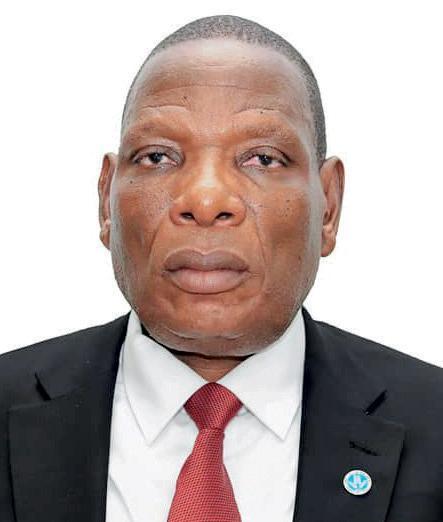
By Kingsley Jassi:
Just after Minister Joseph Mwanamvekha delivered a budget statement on Friday, somewhere over 9 000 kilometers away, missiles and fighter jets crisscrossed the middle-east skies, sprawling marks of damage across the region.
The US/Israel-Iran war may be too far from home, geographically, but it is as economically close as any global shockwave in oil prices may catch Malawi in its frailty.
There comes a possible threat to the K10.97 trillion budget that hinges on inflation at 15 percent. The God-fearing nation may as well bend knees to pray for quick reopening of Strait of Hormuz in Iran, a major trade route that controls up to 30 percent of global oil supply.
The budget promises to deliver a higher “fiscalised” economic growth rate of 3.8 percent, before a higher 4.9 percent. For the first time in four years, there would be a growth rate above average population surge of 2.6 percent. Recovery at last!
– Advertisement –
The hysteria about the middle-east showdown may be shaken off, for now. But what about internal threats like the usual fiscal slippages that emanate from indiscipline?
Finance Minister Joseph Mwanamvekha found his predecessor had already borrowed nearly K600 billion by the mid-2025-26 fiscal year, leaving no space to maneuver.
Mwanamvekha a disclosed revenue over-performed from the budgeted K5.46 trillion to K5.52 trillion, a K59 billion extra.
And then comes another pull, a K158 billion saving from the budgeted K8.58 trillion total expenditure. Ultimately, the budget outturn has seen a deficit narrowed by K228 billion from a projected K3.12 trillion to the actual K2.9 trillion.
– Advertisement –
– Advertisement –
This has culminated into reduced fiscal pressure and less borrowing appetite.
The fiscal consolidation efforts results can also be observed by recent rejections of treasury bills, signaling subdued fiscal pressure.
Banks would be expected to draw enemy lines with the Treasury for killing their business. But Bankers Association of Malawi (BAM) President Phillip Madinga congratulates the Minister, instead.
“This is a wakeup call to banks. Time for making, what some call, and easy money is gone. We need to find ways of financing the real sector and that’s what the government is communicating here,” Madinga said.
Such gains would be very important to be replicated in the next fiscal year which has set the deficit at 9 percent. It’s still high but lower than the current 11.9 percent.
One would understand the catch 22 scenario in framing the budget. Before Mwanamvekha thought of setting optional priorities, rigid budget lines screamed the loudest.
About K2.8 trillion is already taken up by interest payments, K2.2 trillion goes to wages and pensions, K1.5 trillion for goods and services and public institutions yawned for K867.8 billion subventions. That’s about K7.4 trillion already gone before the Minister thought about development when revenue is set at K8.1 trillion.
Nevertheless, there is a bold 74 percent increase in the development budget at nearly K3.4 trillion.
With K1.33 trillion going towards the priority sectors of Agriculture, Tourism, Mining and Manufacturing, the budget makes attempts to navigate towards its own theme; ‘Driving Economic Recovery and Sustainable Growth through Impactful Reforms and Fiscal Consolidation.’