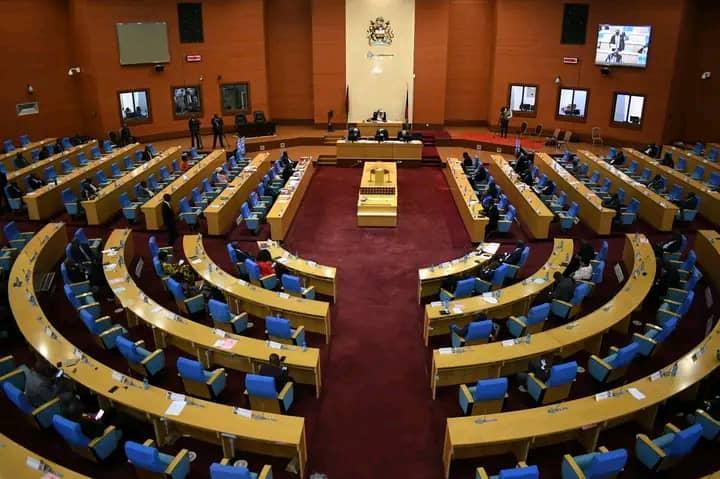
Africa-Press – Malawi. Parliament has passed the 2026/2027 National Budget, approving a total allocation of K10.978 trillion for government expenditure following weeks of intense scrutiny, debate, and detailed vote-by-vote consideration of allocations.
The approval comes after the completion of the Committee of Supply stage—one of the most critical phases in the budget process—where Members of Parliament (MPs) examined, debated, and adopted individual budget lines (votes) for ministries, departments, and agencies. This stage allowed legislators to interrogate spending priorities, propose adjustments, and demand accountability from controlling officers before granting final approval.
The K10.978 trillion budget outlines government spending priorities across key sectors considered central to Malawi’s socio-economic development. Agriculture, health, education, infrastructure, and governance institutions dominate the allocation framework, reflecting both immediate service delivery needs and long-term development goals.
The Ministry of Agriculture has received the largest share at K971.3 billion, underlining government’s continued focus on food security, irrigation development, and agricultural productivity. This allocation is expected to support input programmes, extension services, and climate-resilient farming initiatives in a sector that remains the backbone of the country’s economy.
The Ministry of Health and Sanitation has been allocated K558.07 billion to strengthen the delivery of healthcare services. The funding is expected to support drug procurement, health infrastructure, recruitment and retention of medical personnel, and the ongoing fight against both communicable and non-communicable diseases.
In the education sector, the Ministry of Education has been allocated K316.6 billion. The funds are aimed at improving access and quality across primary, secondary, and tertiary education, including infrastructure development, teacher recruitment, and learning materials.
Infrastructure development has also received significant attention, with K447.1 billion allocated under the Roads Fund Administration. The funding is expected to facilitate road construction, rehabilitation, and maintenance projects, which are critical for improving connectivity, trade, and economic activity across the country.
Security institutions have not been left out, with substantial allocations directed to the Malawi Defence Force and the Malawi Police Service to support national security, law enforcement, and public safety operations. Similarly, governance and oversight institutions—including the Anti-Corruption Bureau and the National Assembly—have received funding to enhance accountability, transparency, and legislative effectiveness.
The passage of the budget marks a key milestone in Malawi’s fiscal calendar, setting the stage for government operations and development programmes in the 2026/2027 financial year. Attention now shifts to implementation, where the effectiveness of the budget will ultimately be measured by its impact on service delivery, economic stability, and the livelihoods of Malawians.
For More News And Analysis About Malawi Follow Africa-Press