Africa-Press – Malawi. A stormy sitting of Parliament’s Public Accounts Committee (PAC) on the controversial K128.7 billion Amaryllis Hotel deal has exposed not just the deep fractures in accountability over the transaction—but also a growing political defence line forming around Attorney General Frank Mbeta, led by legislator and lawyer Slyvestre Ayuba James.
In a striking public intervention, James openly praised Mbeta’s performance before the committee, portraying him as composed, intellectually sharp, and unjustly targeted by public outrage—even as serious questions continue to swirl around the legal handling of the deal.
“One thing coming out is that Attorney General Frank Mbeta is very intelligent, articulate and eloquent,” James wrote, adding that while many may question Mbeta “morally,” his conduct before PAC demonstrated clarity and precision. He went further, dismissing criticism of the Attorney General as “mob justice,” suggesting that public expectations for Mbeta to emerge “wounded” were driven more by emotion than reason.
The remarks amount to a calculated political shield at a moment when Mbeta is under intense scrutiny—effectively reframing the narrative from one of accountability to one of intellectual performance.
But beneath the praise lies a far more troubling picture.
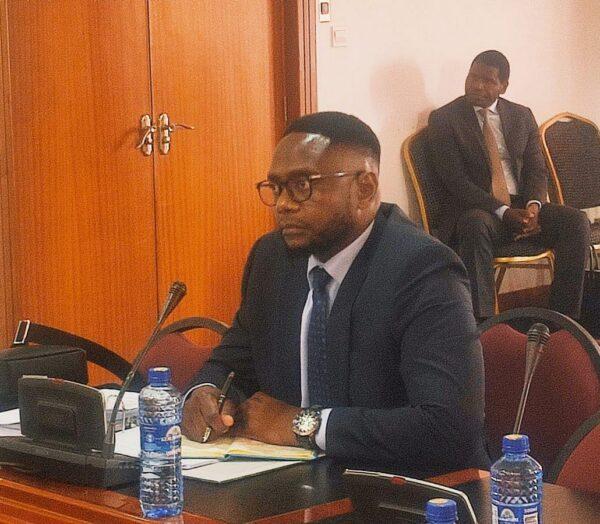
Appearing before PAC, Mbeta forcefully distanced himself from the controversial transaction, insisting he neither authorised nor endorsed the purchase of the Blantyre-based hotel. He argued that his legal advice had been conditional, rooted in caution, and ultimately subordinate to the decision-making authority of the Public Service Pension Trust Fund (PSPTF) trustees.
“I did not authorise or endorse the purchase,” Mbeta told MPs, reading from a December 20, 2025 advisory in which he urged the board to review risks and ensure compliance before proceeding.
In a move that shifts the burden squarely onto the pension fund, Mbeta blamed trustees for engaging EMJ Advisory Public Accountants—a firm that later admitted it is not a registered property valuer—to conduct valuation work for the multi-billion-kwacha deal. According to him, the trustees failed in their duty to carry out proper due diligence.
He maintained that his office acted only on the information available at the time, including a complaint from the Malawi Law Society, and insisted that the facts before him did not establish corruption or collusion. Instead, he described the issue as one of “prudential” failure rather than criminal conduct.
Yet, that position raises difficult questions.
The Reserve Bank of Malawi’s decision to quarantine K70 billion from the transaction signals serious institutional concern, while the very admission that an unqualified firm handled valuation strikes at the core of fiduciary integrity. If due diligence collapsed so fundamentally, critics argue, how did the Attorney General’s office not detect or interrogate these red flags more aggressively?
Mbeta also took aim at the role of former Secretary to the President and Cabinet Colleen Zamba, stating she had no authority under the PSPTF trust deed to chair meetings related to the transaction. He stressed that decision-making power rested solely with the trustees, not external actors—directly contradicting accounts from suspended PSPTF principal officer George Jimu, who alleged he was pressured by Zamba to expedite the deal.
Further tightening his defence, Mbeta accused the media of distorting his role, arguing that reports suggesting he greenlit the transaction were false and misleading. He insisted his mandate is strictly legal compliance—not commercial judgment—and that ultimate responsibility lies with the pension fund’s board.
But James’ intervention changes the stakes.
By elevating Mbeta’s courtroom performance over the substance of the allegations, the MP effectively attempts to recast the Attorney General not as a central figure in a questionable transaction, but as a victim of public misjudgment. It is a narrative that risks blurring the line between legal brilliance and institutional accountability.
This is the uncomfortable reality now confronting the PAC inquiry: a high-stakes investigation where legal technicalities, political loyalties, and public expectations are colliding.
Because stripped of rhetoric, one fact remains stubborn—K128.7 billion was committed in a deal riddled with irregularities, involving questionable valuation processes, contested authority, and institutional alarm bells loud enough to trigger central bank intervention.
And no amount of eloquence can settle that.
For More News And Analysis About Malawi Follow Africa-Press