Africa-Press – Malawi. What both the United Democratic Front (UDF) and the United Transformation Movement (UTM) have done is not ordinary political positioning—it is a rare, necessary act of national conscience in a system that is increasingly becoming comfortable with institutional imbalance.
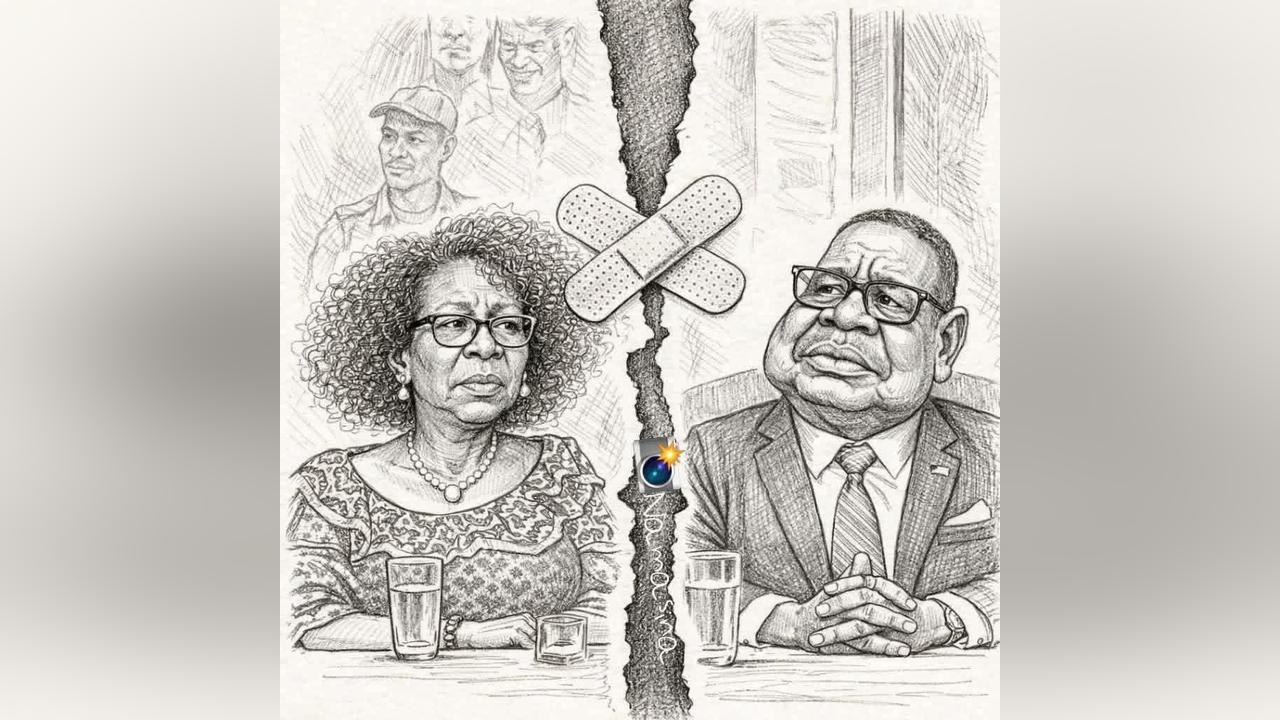
Strip away the party colours, the rivalries, and the usual political noise, and a disturbing reality comes into view: the steady weakening of the Office of the Vice President, currently held by Jane Mayemu Ansah. This is not an isolated episode or a matter of “internal misunderstandings.” It is part of a longer, more troubling pattern—one that reveals how easily constitutional offices can be undermined when power becomes too concentrated and too defensive of itself.
Let’s be direct about it.
When a Vice President is allegedly underfunded, denied full administrative backing, stripped of effective security support, and publicly diminished in both role and authority, that is not administrative friction. It is institutional erosion. It is the quiet but deliberate suffocation of an office that exists to stabilise governance, not to be reduced to symbolism.
The UDF’s outrage is not misplaced. It carries historical memory—of a democracy built through struggle, sacrifice, and political risk under Bakili Muluzi. That legacy was never meant to produce a system where constitutional offices become optional accessories depending on political convenience. Their argument is simple but powerful: the Constitution is not decorative language. It is binding structure.
The UTM, on the other hand, sharpens the critique further. It points not just to institutional strain but to national consequences—a government increasingly consumed by internal power tension while ordinary Malawians face economic pressure, rising costs of living, and uncertainty. When governance turns inward and becomes preoccupied with control rather than delivery, the public is always the first casualty.
And this is where the alarm becomes impossible to ignore.
Because what is unfolding is not new. Malawi has seen this pattern before—across administrations and personalities—where Vice Presidents from Cassim Chilumpha to Joyce Banda to Saulos Chilima have, at various points, operated under strained or contested institutional conditions. The message that keeps emerging is uncomfortable but clear: the Vice Presidency is too often treated not as a constitutional partner in governance, but as a political risk to be managed.
That reality should trouble every citizen, regardless of political affiliation.
Today it is the Vice President under scrutiny and constraint. Tomorrow it could be Parliament. The Judiciary. Or any institution whose independence becomes inconvenient to those in power.
Defenders of the status quo will dress this in the language of politics, strategy, or survival. But there is nothing strategic about weakening the architecture of your own constitutional order. It is not clever governance—it is institutional self-sabotage with long-term consequences.
President Arthur Peter Mutharika now stands at a defining constitutional moment. Not as a party figure, but as a custodian of the republic’s democratic framework. The oath of office demands more than political management—it demands protection of the institutions that hold the state together.
What UDF and UTM have done, whether intentionally or not, is draw a line in the sand.
Not for advantage. But against silence.
Because when constitutional erosion becomes normalised, it rarely stops at one office. It spreads—slowly, quietly, and then all at once.
And history has never been kind to those who saw it happening, understood it clearly, and still chose to look away.
For More News And Analysis About Malawi Follow Africa-Press